Check the latest research performed by CICECO members and interact with them using twitter.
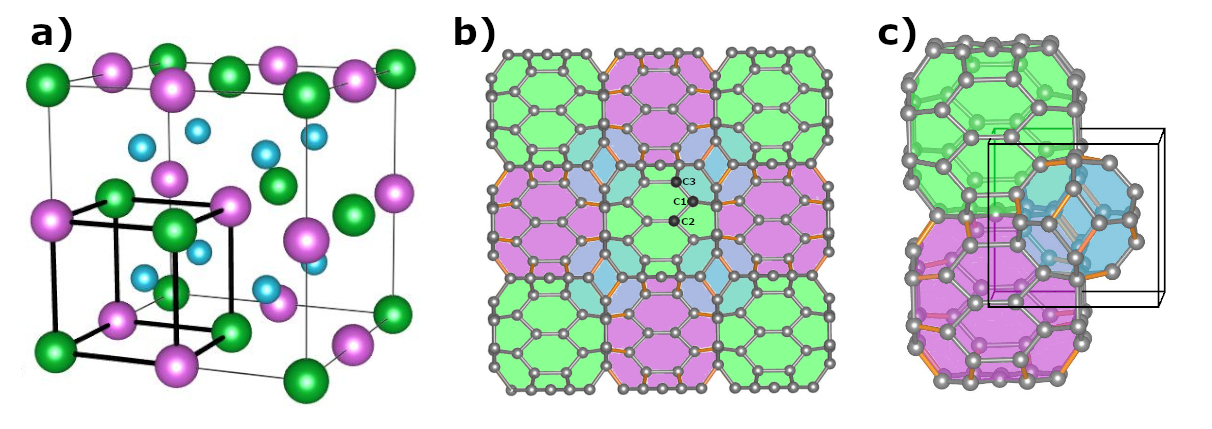 Density functional theory (DFT) methods were used to investigate a new 3D C60 polymer with clathrate structure and its electronic and elastic properties. Double 5/5 2+3 cycloaddition bonds are formed between each C60 molecule and its twelve nearest neighbors in the face centered cubic lattice. Extraordinarily, this bonding generates, on octahedral sites new C60 cages, identical to the original ones, and on tetrahedral sites distorted sodalite-like cages. Only twenty per cent of its atoms are sp2-hybridized, leading to a narrow gap semiconducting behavior. Above the fermi level there is a huge density of states peak which indicates that proper doping may yield the structure metallic and thus a possible high Tc superconductor. This new phase is likely to be prepared by subjecting C60 to high pressure and high temperature conditions.
This work was supported by the projects POCI-01-145-FEDER-031326 and IF/00894/2015 financed by the Portuguese Foundation for Science and Technology (FCT) and co-financed by FEDER. CICECO Aveiro Institute of Materials, UIDB/50011/2020 & UIDP/50011/2020, financed by national funds through the FCT/MEC and when appropriate co-financed by FEDER under the PT2020 Partnership Agreement. J. Laranjeira acknowledges a PhD grant from FCT (SFRH/BD/139327/2018).
Twitter Poster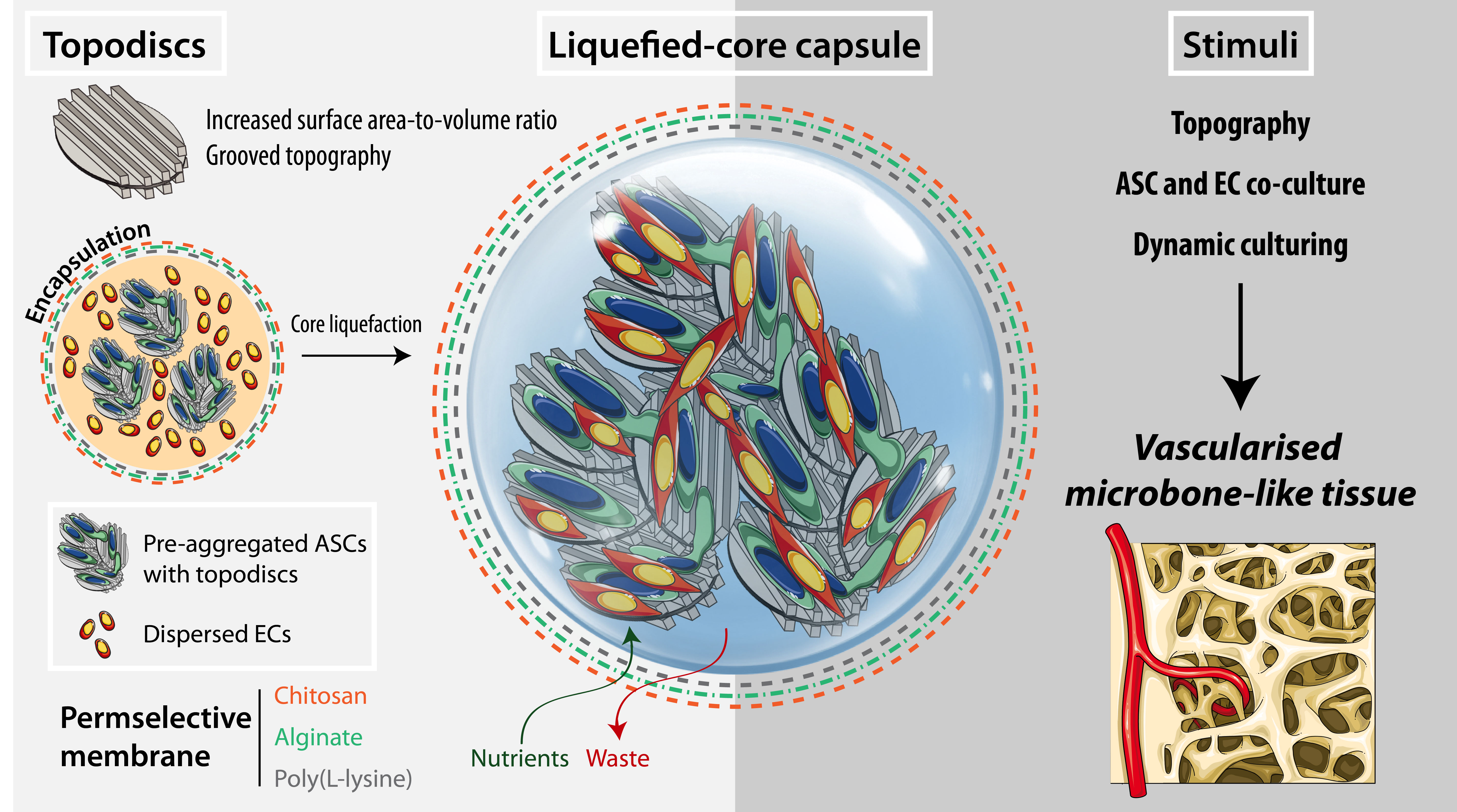 Cell behaviour and stromal cell differentiation into distinct lineages have been shown to be actively influenced by surface topography. Whereas this has been verified in a 2D context, the role of topography in 3D, which better mimics the natural cell environment, needs to be explored. To this end, we developed nanogrooved microdiscs (topodiscs) as substrates for a bottom-up cell-mediated 3D-construct fabrication and combined them with the technology to produce compartmentalised liquefied-core capsules. The liquid core is established upon mild liquefaction, enabling previously formed 3D aggregates of topodiscs and ASCs to serve as living support for freely dispersed HUVECs, via sequential seeding. While topodiscs are expected to provide topographical cues to direct osteogenic differentiation of previously adhered ASCs, the resultant 3D aggregates will provide living domains for junctional intercellular communication with HUVECs. Our hypothesis is that by combining topographical cues with cell signalling pathways, bone-like microtissues can be developed by a truly tissue engineering strategy and without requiring cell culture supplements. Mineralised microaggregates composed of ASCs and topodiscs were effectively achieved within compartmentalised liquefied-core capsules. The nanogrooved surface of topodiscs proved to be an impacting factor to induce osteogenic differentiation of ASCs. ASC-topodisc aggregates were demonstrated to be optimal supports for HUVEC adhesion. Next, neo-vascularisation of the established co-culture will be studied, as well as the effects it may have on the quality of the bone-like microtissue formed. We envision to propose the developed technology as a patient-specific bone TE strategy for minimally invasive procedures.
I. M. Bjørge acknowledges financial support by the Portuguese Foundation for Science and Technology (FCT) with doctoral grant SFRH/BD/129224/2017. This work was supported by the European Research Council grant agreement for the project “ATLAS” (ERC-2014-ADG-669858) and the FCT project “CIRCUS” (PTDC/BTM-MAT/31064/2017). This work was developed within the scope of the project CICECO-Aveiro Institute of Materials, UIDB/50011/2020 & UIDP/50011/2020, financed by national funds through the FCT/MEC and when appropriate co-financed by FEDER under the PT2020 Partnership Agreement.
Twitter Poster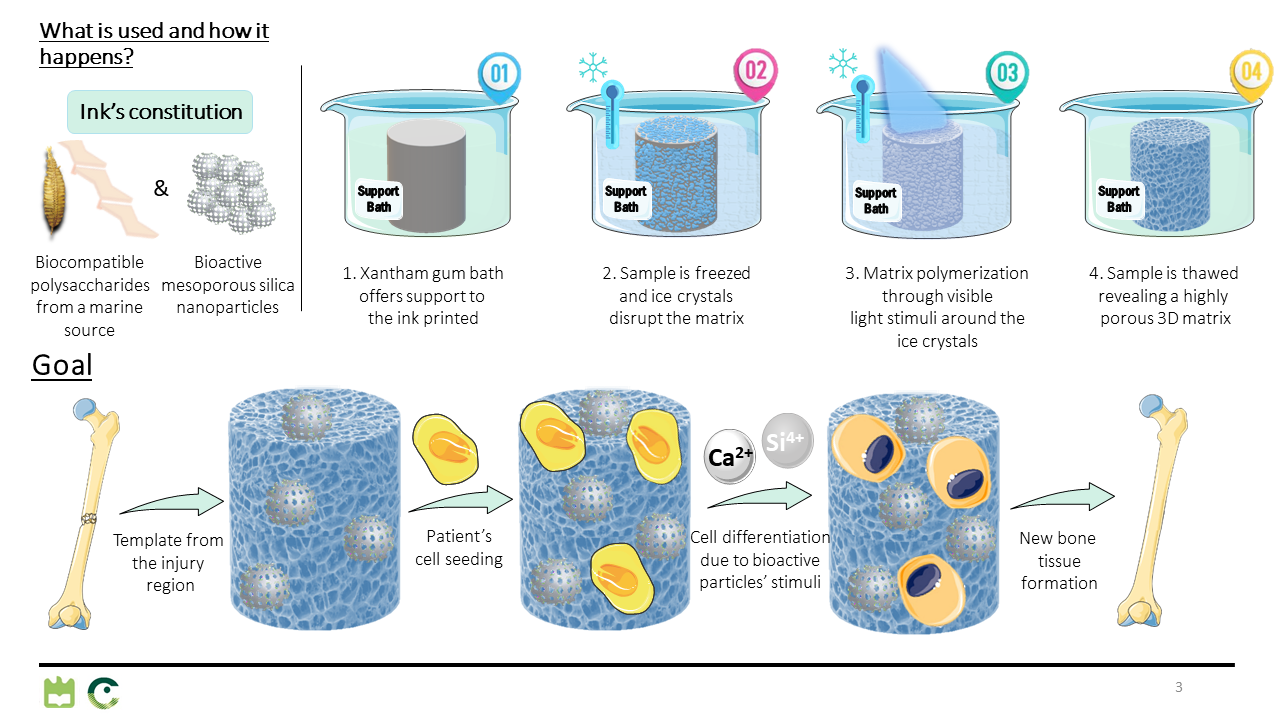 Bone damage is a very common occurrence, where about 10% of the cases require some type of graft. Alternatively, strategies have been proposed by combining biomaterials and cells as hybrid devices for tissue engineering. Here we introduce 3D printable cryogels that are bioactive, biocompatible and have excellent mechanical properties. In this work, an ink for 3D printing cryogels was designed based on methacrylated laminarin and methacrylated mesoporous silica nanoparticles. Due to laminarins’ low viscosity, a xanthan gum support bath and alginate solutions were used to conferee all the necessary prerequisites for printing. Our method virtually allows the printability of any desired polymer since the main constituent (laminarin) has no viscosity, which is one of the most important aspects for printing. The design of cryogels, which alternative can be described as sponges, goes by conducting the crosslink below water freezing point in order to obtain a highly porous structure. 3D porous structures are desired in biomaterials due to the increment of nutrient diffusion, cell perfusion and spreading through the gel. In our system, the bioactive silica nanoparticles are known to be able to release calcium and silicon ions that can promote the differentiation of stem cells into osteoblasts and thus stimulating the formation of new bone tissue. Our material allows the personalization of the therapy applied since the structure can be designed in function of the injury. Moreover, the system is built under the use of sustainable materials (polysaccharides of marine origins) and over green principles (nanoparticles synthesis – Stober method).
This work was developed within the scope of the project CICECO-Aveiro Institute of Materials, UIDB/50011/2020 & UIDP/50011/2020, and project COP2P (PTDC/QUI-QOR/ 30771/2017), financed by national funds through the FCT/MEC and when appropriate co-financed by FEDER under the PT2020 Partnership Agreement. E.J. Castanheira also acknowledges FCT for his PhD grant (SFRH/BD/144880/2019).
Twitter Poster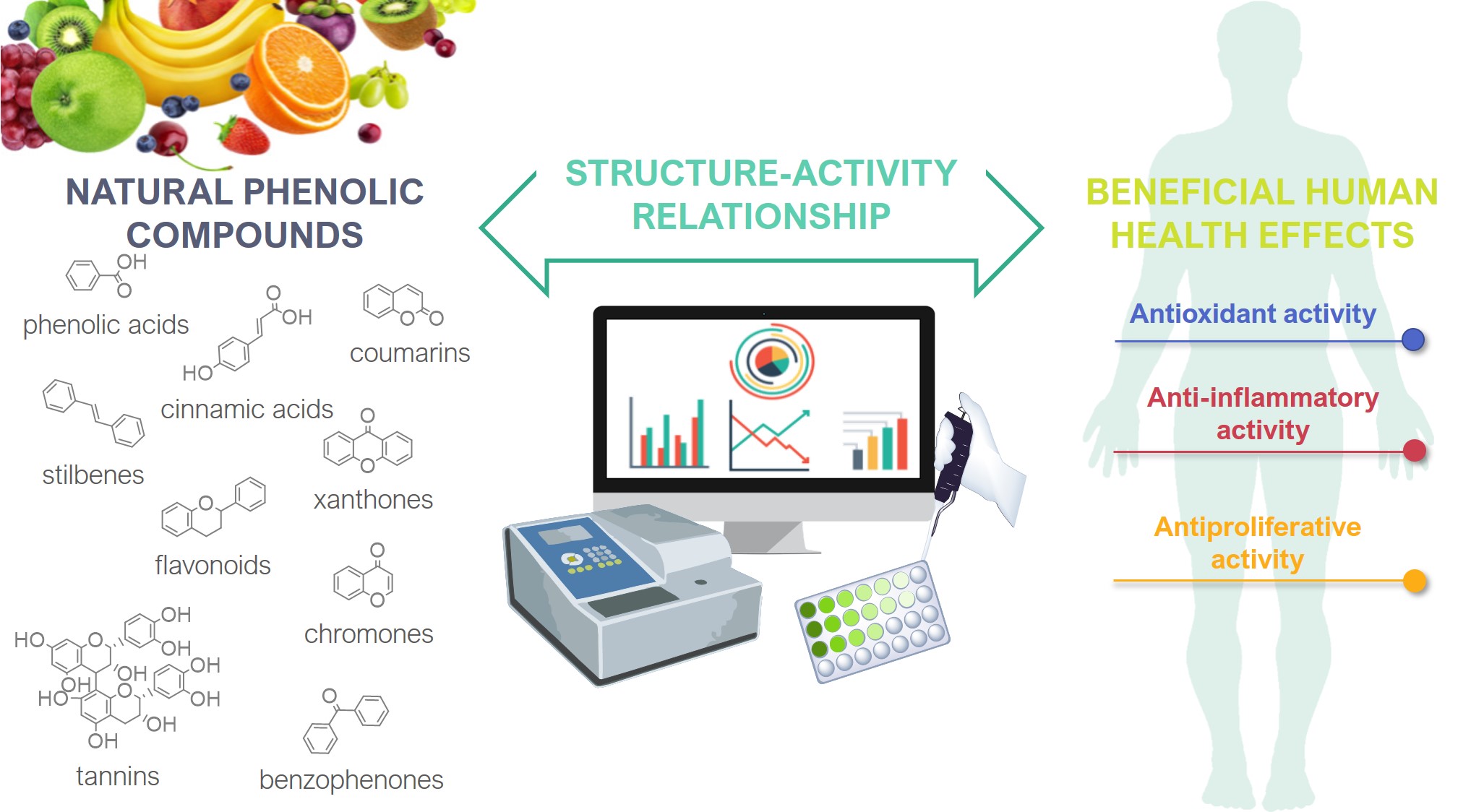 Phenolic compounds, commonly found in human diet, are one of the most structurally diverse and abundant groups of secondary metabolites in plants. They have been widely recognized by their promising effects on human health, namely in diseases prevention and control, due to their vast range of known biological properties, including antioxidant, anti-inflammatory and antiproliferative activities. Notwithstanding, there are some factors which could influence positively or not these beneficial effects, namely the compounds absorption from foods, metabolism and distribution in target tissues and cells –in particular, their bioavailability. In this vein, it becomes crucial to understand how their structural features influence on human health effects. Hence, this work aims to review phenolic compounds structures and biological activities in order to have a better knowledge about the structure-activity relationship and to take advantage of phenolic compounds promising human health effects.
The authors acknowledge FCT/MCTES for the financial support to the CICECO-Aveiro Institute of Materials (UIDB/50011/2020 & UIDP/50011/2020, through national funds and co-financing where applicable by FEDER within the PT2020 Partnership Agreement. S.A.O.S. thanks the “AgroForWealth” project (CENTRO-01-0145-FEDER-000001) funded by Centro2020, through FEDER and PT2020 for the contract. A.C.S.P acknowledge FCT for doctoral grant SFRH/BD/143348/2019
Twitter Poster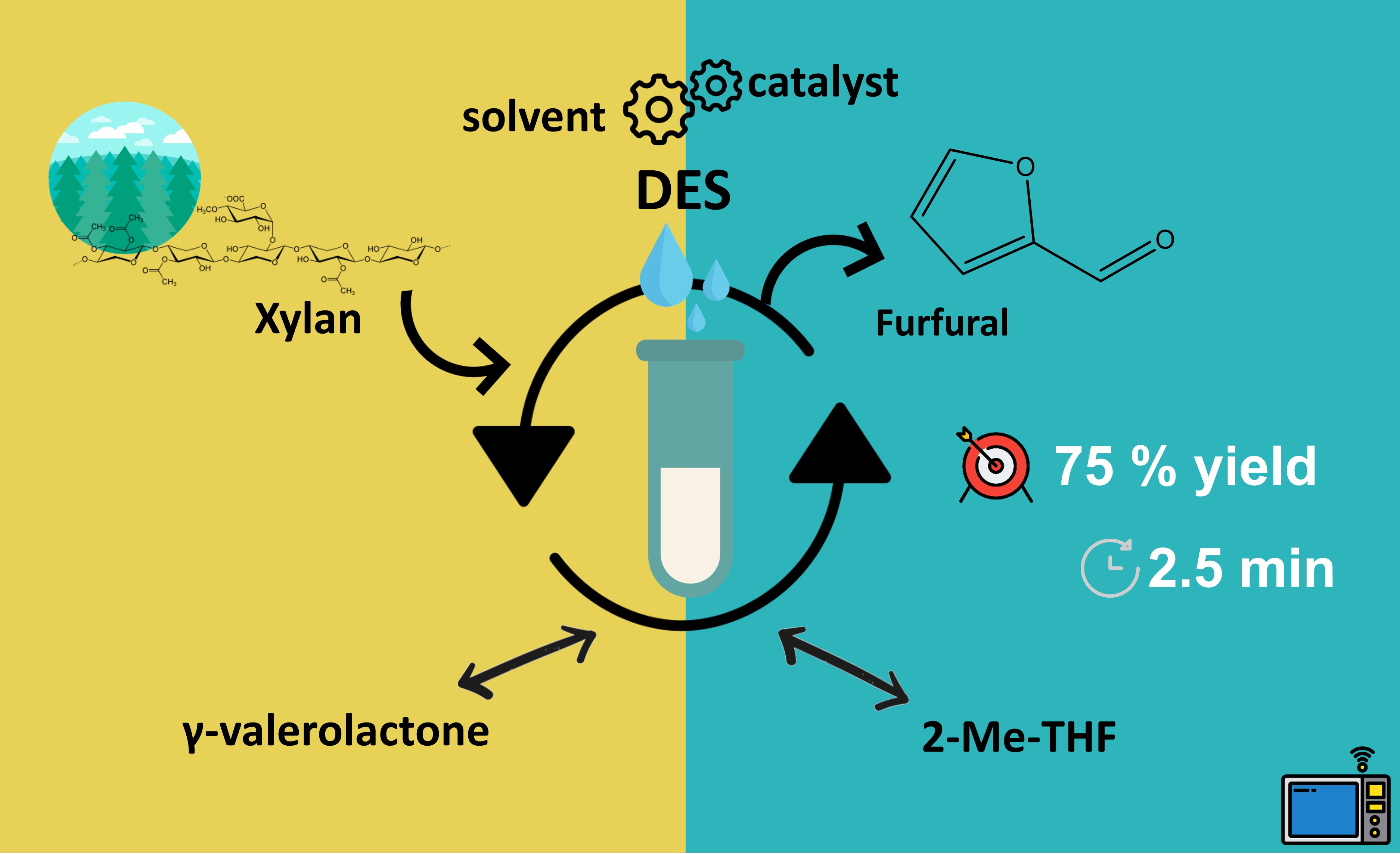 Furfural has been identified as a key platform chemical derived from biomass. This chemical can be obtained from hemicelluloses through acid hydrolysis and subsequent dehydration, followed by separation from the reaction medium using organic solvents. Despite furfural’s potential, the conventional methodologies applied fail in sustainability. Deep eutectic solvents (DES) have emerged as a greener alternative to conventional solvents used in chemical processes due to their simple preparation and unique physicochemical properties. Moreover, and due to their designer solvent characteristic, they can be designed to act as solvents and catalysts for furfural production. In this work, we report the use of acidic deep eutectic solvents for the hydrolysis of xylans into xylose and further dehydration into furfural. The DES composed of cholinium chloride and malic acid was used in microwave-assisted reactions as both solvent and catalyst for furfural production. The process developed allowed 75.0% of furfural yield in 2.5 min of reaction time under microwave heating. The recovery and reusability of the solvent was evaluated, being possible to reuse the DES in at least three cycles. The obtained results highlight the potential of greener and reusable solvents based on deep eutectic mixtures for the creation of integrated platforms for the valorization of hemicellulose fractions in biomass.
This work was developed within the scope of the project CICECO, FCT Ref. UIDB/50011/2020 & UIDP/50011/2020. E. S. Morais acknowledges FCT/MCTES for the PhD grant [SFRH/BD/129341/2017].
Twitter Poster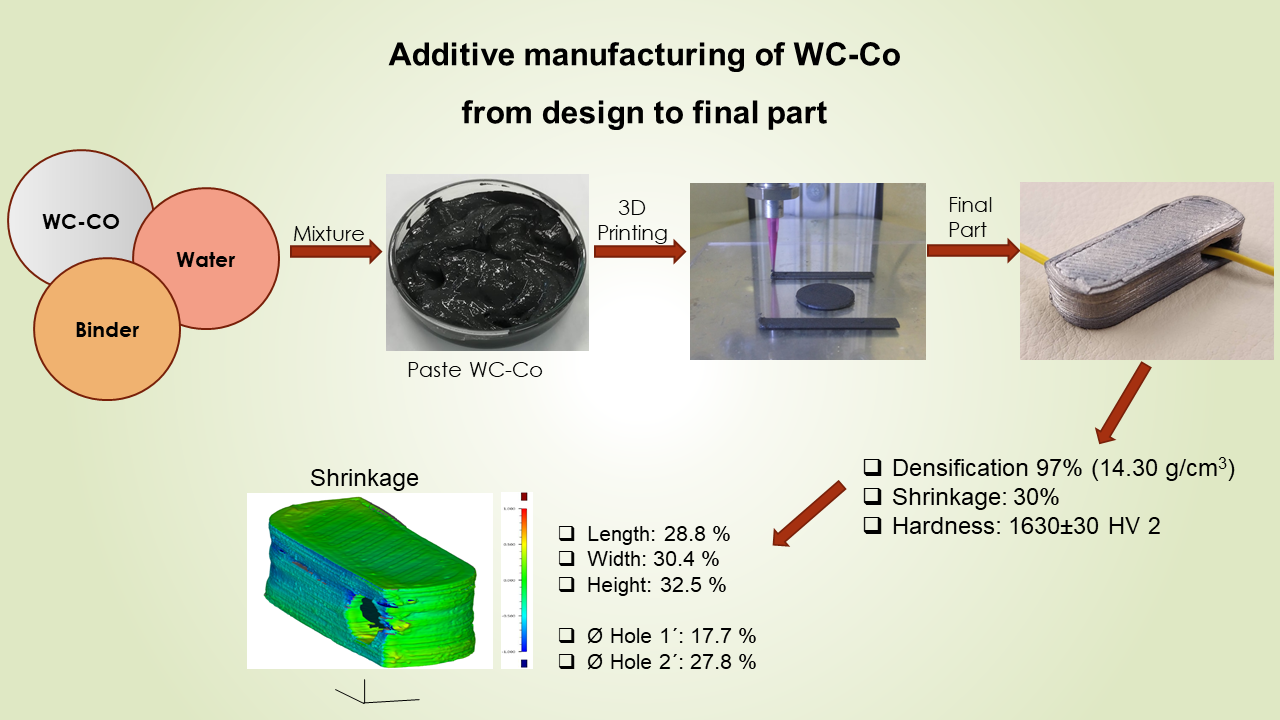 Additive manufacturing enables 3D freeform parts directly produced from a CAD file. It is a faster, cheaper and more eco-friendly process, with a unique capability to produce complex geometric parts without molds or milling. In this work, Robocasting is proposed as an innovation in the WC-Co manufacturing industry to produce freeform parts with a highly reliable and repeatable process.
Project 3D.Carbide- Fabricação Aditiva de Componentes em Metal Duro (POCI-01-0247-FEDER-033618) financed by the European Regional Development Fund - ERDF, through POCI - Operational Programme Competitiveness and Internationalization (COMPETE 2020).
Twitter Poster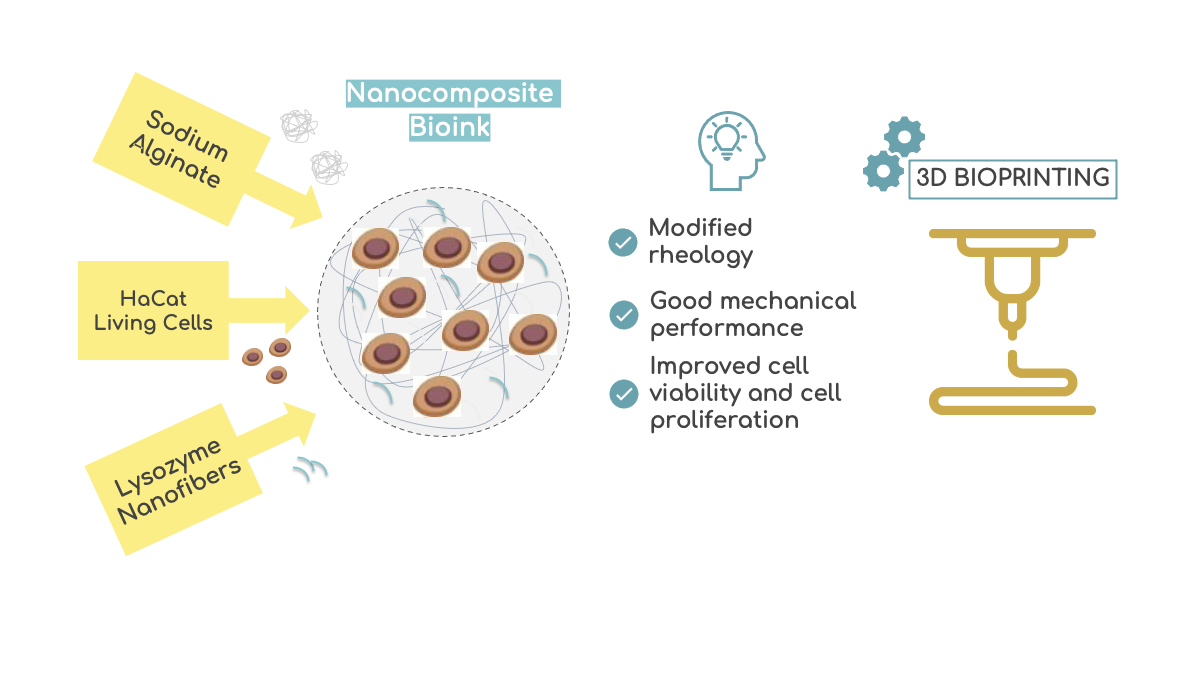 Within the field of 3D bioprinting, the development of high performance bioinks with adequate mechanical and rheological properties and high cell viability, is still a major challenge. Engineered hydrogel bioinks based on natural polymers, such as polysaccharides are currently being widely explored. Polysaccharide-based hydrogels, such as alginate hydrogels present low cytotoxicity and high hydrophilicity. However, alginate hydrogels have some limitations, such as poor shape fidelity and cell-adhesion, that are usually overcome via blending with other materials and cell-adherent molecules. Considering this approach, protein nanofibers have excellent properties in terms of mechanical strength and stability, and also antimicrobial and cell-adherent activities, and can be used as building nanoblocks on the design of innovative functional nanomaterials. This work was focused on the development of novel nanocomposite bioinks based on alginate hydrogels reinforced with lysozyme nanofibers. The obtained hydrogels showed improved mechanical performance, good printability and non-cytotoxicity towards Hacat cells (human keratinocytes).
This work was developed within the scope of the project CICECO-Aveiro Institute of Materials, UIDB/50011/2020 & UIDP/50011/2020, financed by national funds through the Portuguese Foundation for Science and Technology (FCT)/MCTES, and was financially supported by the project I&D NANOBIOINKS - Engineering bio-based nanofibers for the development of high-performance nanostructured bioinks for 3-D bioprinting, CENTRO-01-0145- FEDER-031289- funded by the Operational Program of the Center Region, in its FEDER/FNR component, and by national funds (OE), through FCT/MCTES.
Twitter Poster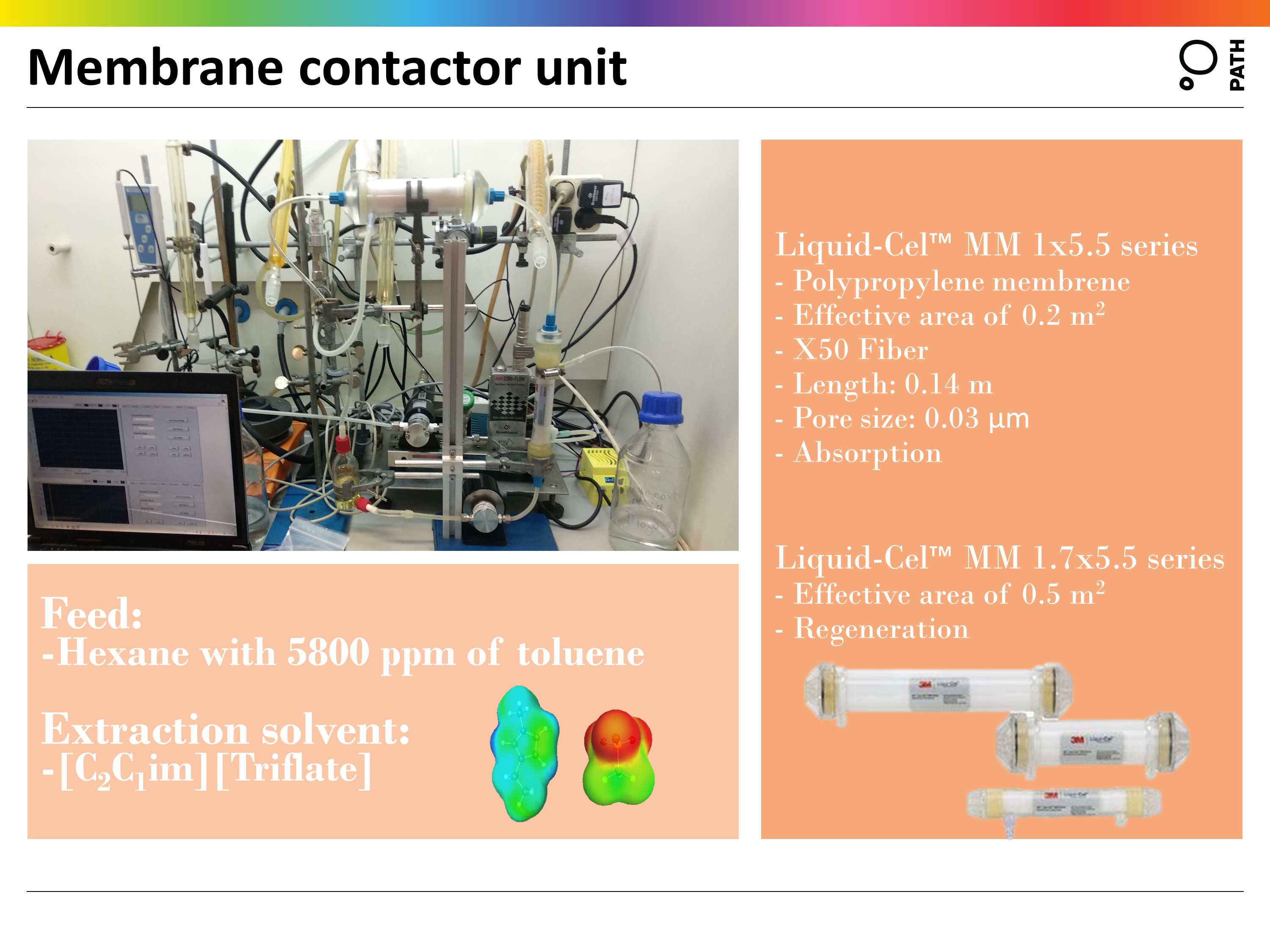 Aliphatic solvents such as hexane and heptane are obtained mainly through the fractional distillation of petroleum. This solvents in turn are used in food, pharmaceutical and polymer industries. With increasing demands and restrictions for higher purity from these markets, it stands crucial for refining companies to invest in processes for the reduction of aromatic and olefinic impurities in their aliphatics to keep themselves competitive. With this in mind, trials were conducted with a membrane contactor unit using the 1-ethyl-3-methyl-imidazolium triflate [C2C1][OTf] IL as extraction solvent in order to optimize the separation conditions for the aromatics and assess the regeneration of the IL as this will greatly increase the economic feasibility of the unit.
This work was co-financed by Fundação para a Ciência e a Tecnologia (FCT) and Galp Energia through the PhD scholarship PD/BDE/142839/2018.This work was partly developed in the scope of the project CICECO—Aveiro Institute of Materials, UIDB/50011/2020 and UIDP/50011/2020, financed by national funds through the Portuguese Foundation for Science and Technology/MCTES. P.J.C. thanks FCT for the contract under the Investigator FCT 2015 (IF/00758/2015).This work was also supported by the Associate Laboratory for Green Chemistry-LAQV-which is financed by national funds from FCT/MCTES (UIDB/50006/2020). Luísa A. Neves acknowledges FCT/MCTES for financial support through FCT Investigator contract IF/00505/2014.
Twitter Poster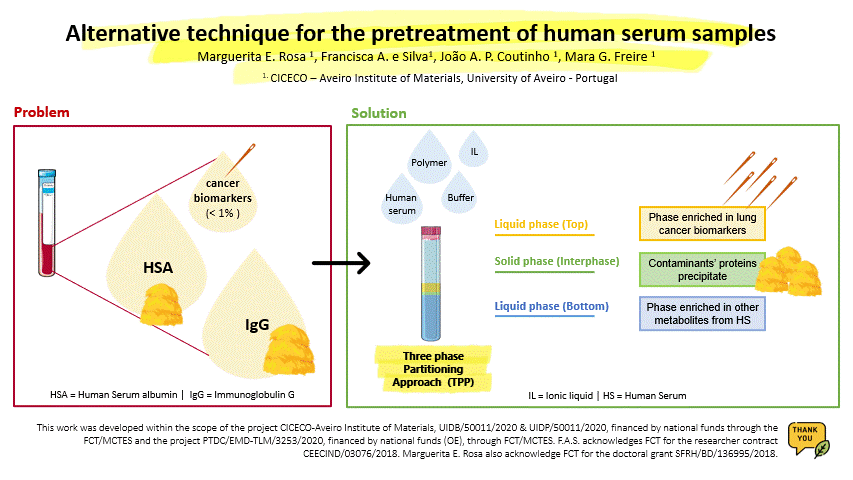 Lung cancer is among the deadliest cancers, mainly because of its long asymptomatic phase and limited early-stage diagnosis. To improve the timeliness of diagnosis, biomarkers’ detection in human serum represents a potential strategy. Nevertheless, biomarkers are normally present at low concentrations in human serum, while other abundant molecules such as immunoglobulin G (IgG) and human serum albumin (HSA) tend to mask them. Therefore, the accuracy and precision of quantification is limited and a sample pretreatment step is required. Three-phase partitioning (TPP) systems composed of polymers or ionic liquids (ILs) and phosphate buffer as well as of polymers, phosphate buffer and ILs as adjuvants were here studied. TPP were designed to simultaneously deplete IgG and HSA at a solid interphase and concentrate target biomarkers in one of the other aqueous phases. So far, studies involving commercial human serum revealed that it is possible to achieve maximum depletion efficiencies of around 86% and 85% for IgG and 90% and 91% for HSA in the interphase, with TPP composed of polyethylene glycol 1000 g.mol-1, phosphate buffer and tetrabutylphosphonium chloride and tetrabutylphosphonium chloride as adjuvants. Although further investigation is in progress, TPP systems show promise as cheaper and faster human serum pretreatment techniques.
This work was developed within the scope of the project CICECO-Aveiro Institute of Materials, UIDB/50011/2020 & UIDP/50011/2020, financed by national funds through the FCT/MCTES and the project PTDC/EMD-TLM/3253/2020, financed by national funds (OE), through FCT/MCTES. M.E.R. and F.A.S. acknowledge FCT for the doctoral grant SFRH/BD/136995/2018 and the researcher contract CEECIND/03076/2018.
Twitter Poster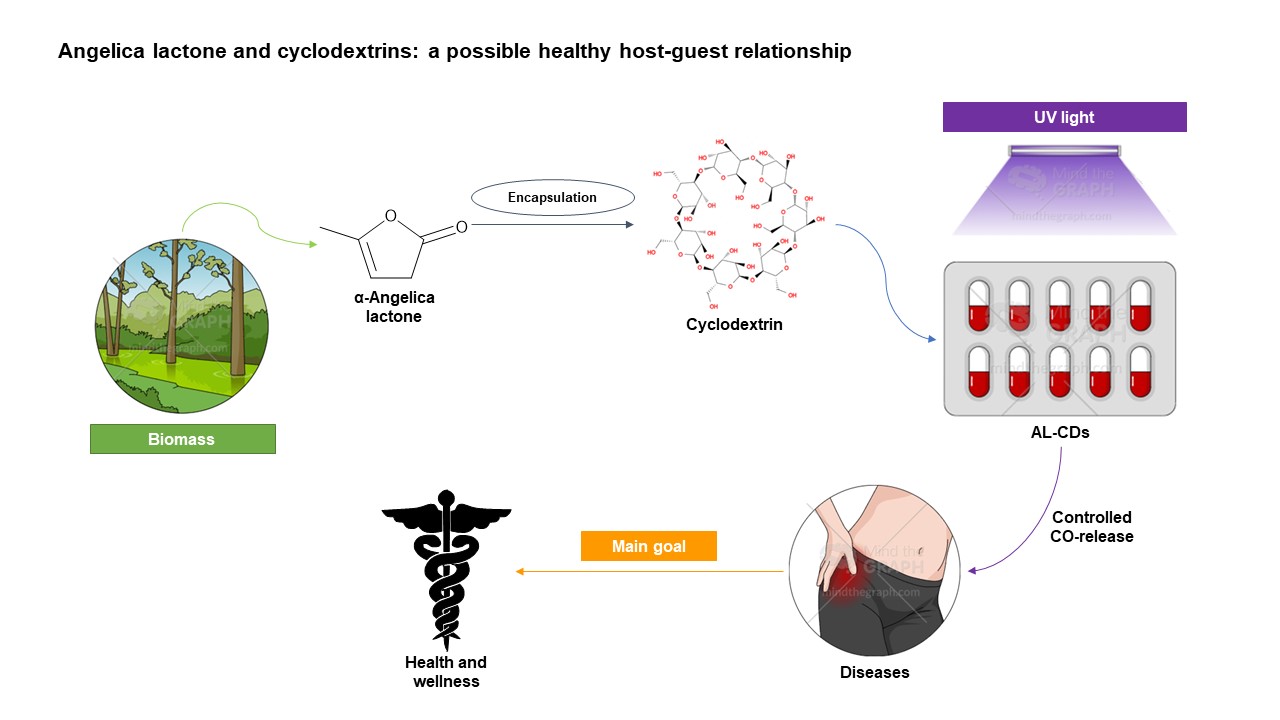 Carbon monoxide (CO) is known for its toxicity. However, in small doses, it has tremendous potential to treat many diseases, which has led to the development of CO-releasing molecules (CORMs) for targeted CO delivery. Most of these compounds are organometallic complexes and, despite their promising pharmacological effects, there are concerns about metal toxicity. Organic metal-free CORMs (oCORMs) are expected to be less toxic than metallic ones. Here, angelica lactone (AL), a biomass derivative, is a potential oCORM since it is known to be susceptible to photodecarbonylation. The present study aims to fine-tune the CO-release properties of AL, and to enable a more controlled CO-release, by encapsulation of in nano- and macromolecular carriers, such as cyclodextrins (CDs). CDs have the capacity to improve the pharmacokinetic properties of encapsulated drug molecules, such as the solubility in physiological medium.
We acknowledge funding provided within the project CICECO, UIDB/50011/2020 & UIDP/50011/2020, the CENTRO 2020 Regional Operational Programme (PTDC/QUI-QOR/28031/2017) and COMPETE 2020 (POCI-01-0145-FEDER-030075), financed by national funds through the FCT/MEC and when appropriate co-financed by the EU through the ERDF under the Portugal 2020 Partnership Agreement. RPM further acknowledges the FCT for a PhD studentship (2020.04758.BD).
Twitter Poster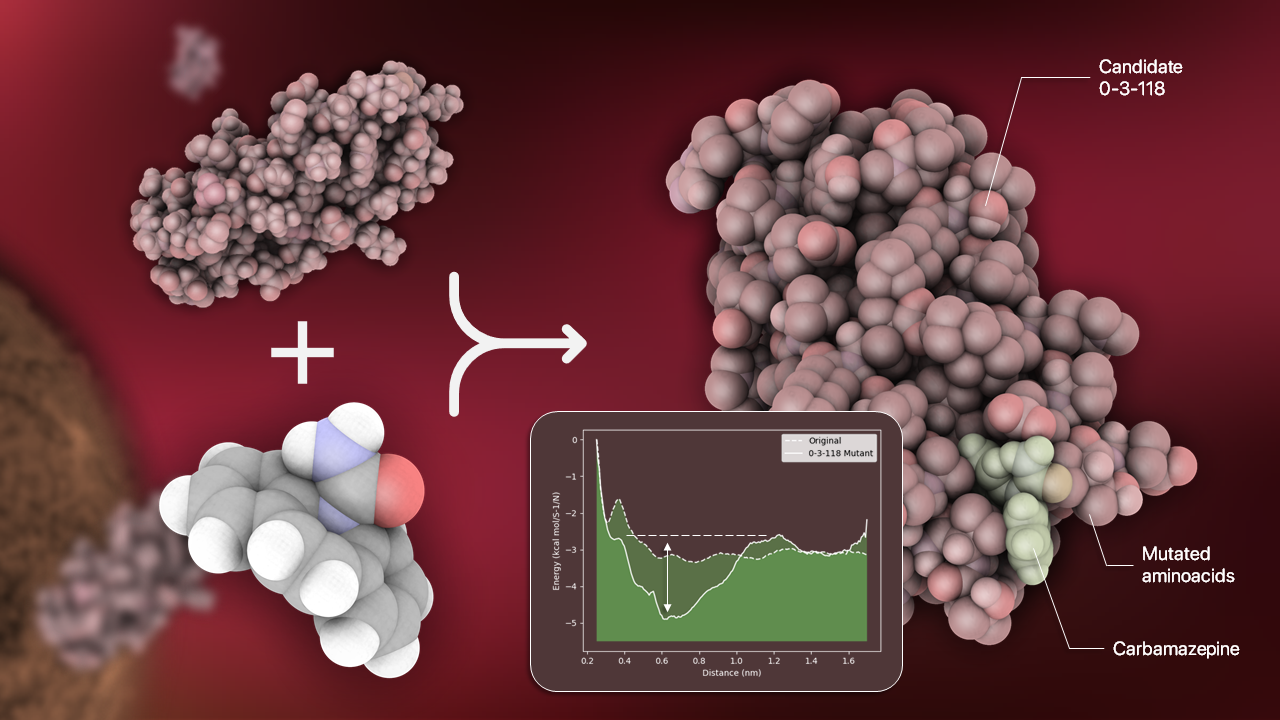 The objective of the present work was to showcase some of the functionalities of the novel ProtoSyn.jl package for Julia, while benchmarking common protein design protocols. Carbamazepine is an anticonvulsant drug used in the treatment of neurological diseases, such as bipolar disorders. This drug has shown high persistence in wastewater treatment plants effluents, with adverse chronic effects on the aquatic life. Although several methods have been previously proposed for its elimination from wastewater treatment plants effluent, applying a specifically designed peptide for its recovery and purification appears to be an unexplored and interesting avenue. As a target peptide, the functionless 2A3D de-novo designed peptide was chosen, based on its thermostability properties. ProtoSyn.jl 1.0 was then employed in the prototyping of a distributed computing protocol for the design of a novel active site in the peptide. A grid-based approach was used to identify anchorage points, applying rigid body translational and rotational movements for the conformational exploration of the local space. For each attempted conformation, 10 distributed replicas were spawned, each running 5000 steps of a Monte Carlo design simulation. In each of these simulations, local mutagenesis was attempted, stabilizing any interacting aminoacid with the ligand. Overall, over 1 million conformations and sequences were explored, from which candidate structures were further studied in molecular dynamics and potential of mean force simulations. Candidate 0-3-118 showed promising early results, generating a new energy well for the specific adsorption of carbamazepine and acting a seed point for further exploration.
This work was developed within the scope of the project CICECO-Aveiro Institute of Materials, UIDB/50011/2020 & UIDP/50011/2020, financed by national funds through the Portuguese Foundation for Science and Technology/MCTES. José Pereira further acknowledges FCT financial support on the scope of the PhD scholarship SFRH/BD/138820/2018.
Twitter Poster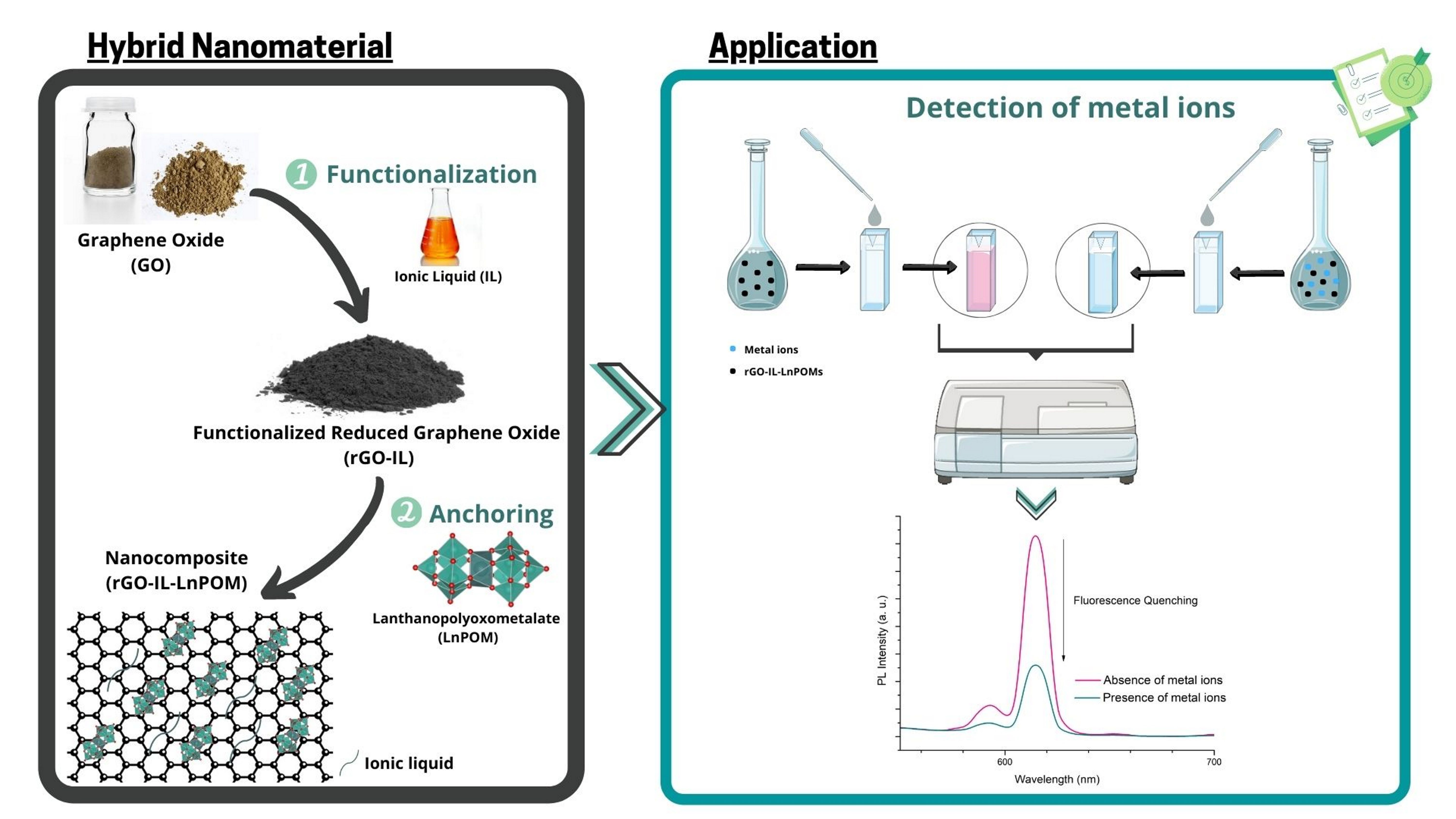 In recent years, the chemical modification of graphene materials has been largely explored in order to obtain materials with new properties. The covalent functionalization of graphene oxide (GO) with an ionic liquid (IL: 1-octyl-3-(3-triethoxysilylpropyl)-4,5-imidazolium chloride) promotes the reduction of GO and results in a hybrid material that can incorporate lanthanopolyoxometalates (LnPOM) through anion exchange processes. LnPOM are interesting functional units in materials science because the photoluminescence of the lanthanide can be explored in the development of optical devices. For example, it has been described that LnPOM containing Eu3+ ion exhibit photoluminescent properties due to the excitation paths that involve ligand-to-metal charge-transfer states associated with O-Ln and O-Mo transitions. However, the preparation of luminescent graphene materials containing this type of LnPOM remains poorly studied.This research aims to prepare new hybrid nanomaterial based on LnPOMs supported in functionalized GO and to study their luminescent behavior. The attachment of Na9[Eu(Mo5O18)2] in reduced graphene oxide (rGO) was carried out by GO functionalization with ionic-liquid cations. In a subsequent stage of the research, the photoluminescent properties of the hybrids were explored as a tool for detecting heavy metal ions in aqueous solutions. The results have shown that the presence of heavy metals induces significant changes on the photoluminescent behaviour of the hybrid nanomaterial. We took advantage on this observation in order to develop rGO-IL-LnPOM hybrid materials that have great potential as nanosensors for environmental pollutants monitoring.
This work was developed within the scope of the project CICECO-Aveiro Institute of Materials, UIDB/50011/2020 & UIDP/50011/2020, financed by national funds through the FCT/MEC and when appropriate co-financed by FEDER under the PT2020 Partnership Agreement. Maria J. Martins thanks the Fundação para a Ciência e Tecnologia (FCT) for the PhD Grant SFRH/BD/131433/2017.
Twitter Poster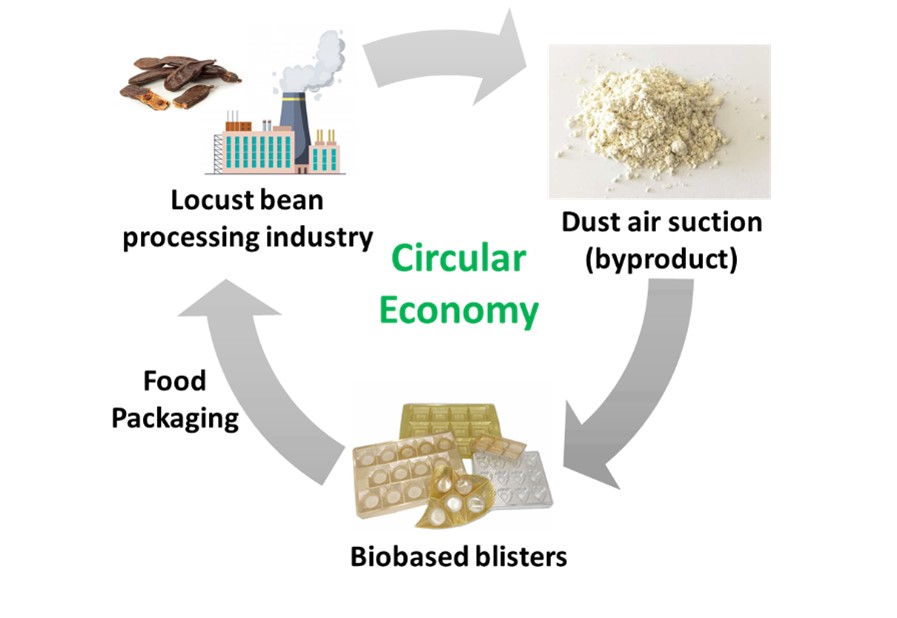 Agrifood industry produces worldwide biobased wastes that are often discarded while containing valuable molecules. Dust from air suction in locust bean gum processing industry is a good example of it. On the other hand, the ecological footprint of non-biodegradable packages demands the development of more sustainable materials. Aiming to establish a strategy to valorize locust bean gum byproduct, in this work, the feasibility of using the dust for developing biobased plastics was studied. The locust bean gum byproduct contained 56% protein, 28% sugars, 6% lipophilic matter, and 2% ashes, thus being a locust bean protein-rich byproduct (LBP). When applied in biobased plastics production, LBP allowed to attain materials with 90% elongation at break and 60-90° surface water contact angle (WCA), depending on the LBP concentration used, thus allowing to develop stretchable and hydrophilic or hydrophobic films, properties conferred by lipophilic compounds present in the sample. When applied for blister’s production, LBP-derived materials were able to be thermoformed.Therefore, LBP revealed to be a suitable raw material for developing thermoformable, flexible, and water tolerant biobased plastics, opening an opportunity for their valorization through a circular economy.
Thanks are due to University of Aveiro and FCT/MCTES for the financial support of CICECO-Aveiro Institute of Materials (FCT ref. UIDB/50011/2020 & UIDP/50011/2020) and LAQV-REQUIMTE research Unit (FCT ref. UIDB/50006/2020) through national funds. The authors acknowledge to Industrial Farense, Lda, for providing locust bean gum byproducts. FCT is also thanked for the Investigator FCT program (PF, ref IF/00300/2015), Scientific Employment Stimulus program (IG, ref. CEECIND/00430/2017), and for funding the JL Doctoral grant (ref. SFRH/BD/136804/2018).
Twitter Poster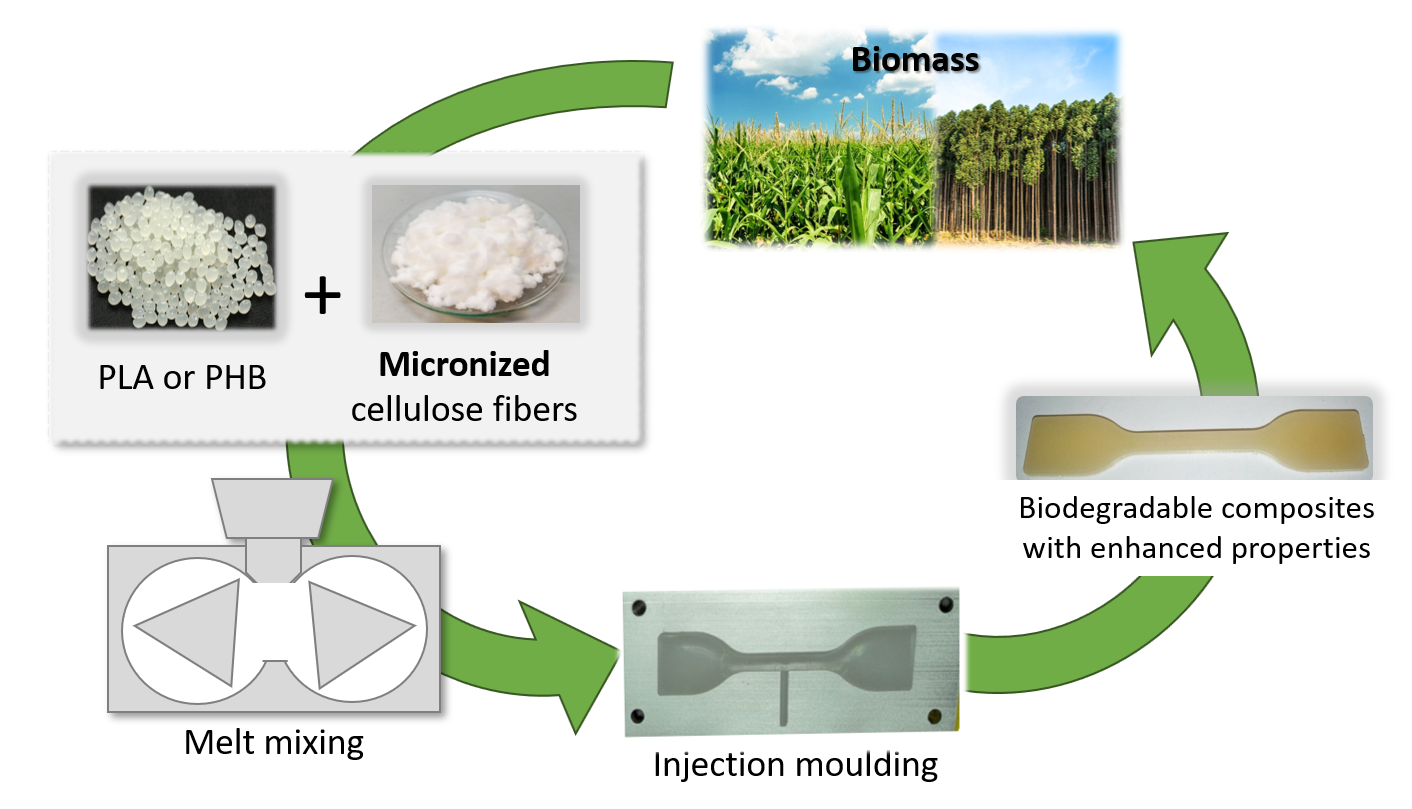 In recent decades, green composites made of biobased thermoplastics and natural fibers have emerged as sustainable alternatives for conventional glass fiber composites. However, the performance and processability of such composites are often insufficient. With that in mind, in the present work, epoxidized linseed oil (ELO) was used as an additive on green composites made of poly(lactic acid) (PLA) or poly(hydroxybutyrate) (PHB) reinforced with Eucalyptus pulp fibers with the aim to improve their performance and processability. The results showed that ELO acted simultaneously as plasticizer and coupling agent, decreasing the Young’s modulus and increasing the elongation at break and impact strength. The water uptake was negatively influenced by the addition of ELO and the biodegradation rate increased for PHB-based composites and decreased for the PLA ones. This additive also improved considerably the melt flow rate of the composites based on PHB, and hence their processability. Therefore, the use of ELO as additive in the production of green composites is a promising methodology to obtain biobased materials with improved performance.
This work was carried out under the Project inpactus – innovative products and technologies from eucalyptus, Project N.º 21874 funded by Portugal 2020 through European Regional Development Fund (ERDF) in the frame of COMPETE 2020 nº246/AXIS II/2017, and project CICECO-Aveiro Institute of Materials, UIDB/50011/2020 & UIDP/50011/2020, financed by national funds through the Portuguese Foundation for Science and Technology (FCT)/MCTES.
Twitter Poster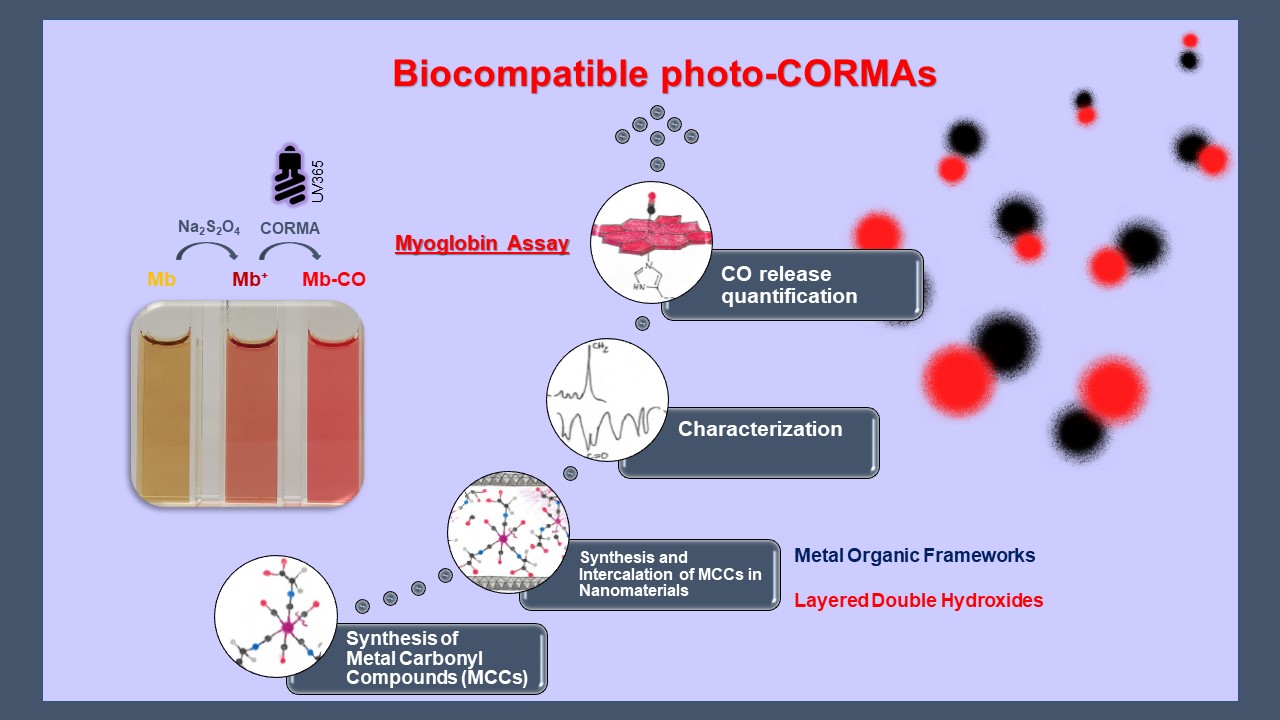 Organometallic carbonyl complexes are of interest as prodrugs for the therapeutic delivery of carbon monoxide (CO). Research on these CO-releasing molecules (CORMs) has advanced in recent years to include CO-releasing materials (CORMAs) that combine the existing CORMs with biocompatible drug delivery vehicles such as metal-organic frameworks (MOFs), polymers, dendrimers, peptides, mesoporous silicas and nanoparticles. In this work the photoactivatable CORM (photo-CORM) [Mo(CO)3(CNCH2COOH)3] (ALF795) has been incorporated into a layered double hydroxide (LDH) by a coprecipitation method, giving the first LDH-based photo-CORMA (LDH-ALF795). Another material was prepared by the inclusion of molybdenum hexacarbonyl in a hafnium-based MOF with the UiO-66 architecture (UiO-66-Mo(CO)6). To test the capability of these materials to act as CORMAs, CO release was quantified by the standard myoglobin (Mb) assay. Both complexes/materials did not release any CO in the dark, but with photoactivation with a lower power UV light (365 nm), LDH-ALF795 released 1.26 mmol CO/mmol Mo and UiO-66-Mo(CO)6 released 0.42 mmol CO/mmol Mo. Stability tests showed minimal (less than 2%) Mo leaching from LDH-ALF795 and UiO-66-Mo(CO)6 under simulated physiological conditions The data confirm the high chemical stability of these two types of materials as well as their ability to act as photo-CORMAs. Overall these studies demonstrate that the LDH and MOF nanomaterials are promising hosts to formulate pharmacologically useful compounds hosting metal carbonyl prodrugs.
We acknowledge funding provided within the project CICECO, UIDB/50011/2020 & UIDP/50011/2020, the CENTRO 2020 Regional Operational Programme (Project SASCOT - PTDC/QUI-QOR/28031/2017), and COMPETE 2020 (Project POCI-01-0145-FEDER-030075), financed by national funds through the FCT/MEC and when appropriate co-financed by the EU through the ERDF under the Portugal 2020 Partnership Agreement. I.B.C. is grateful for the research grant with reference BI/UI89/8610/2019 provided through the project SASCOT.
Twitter Poster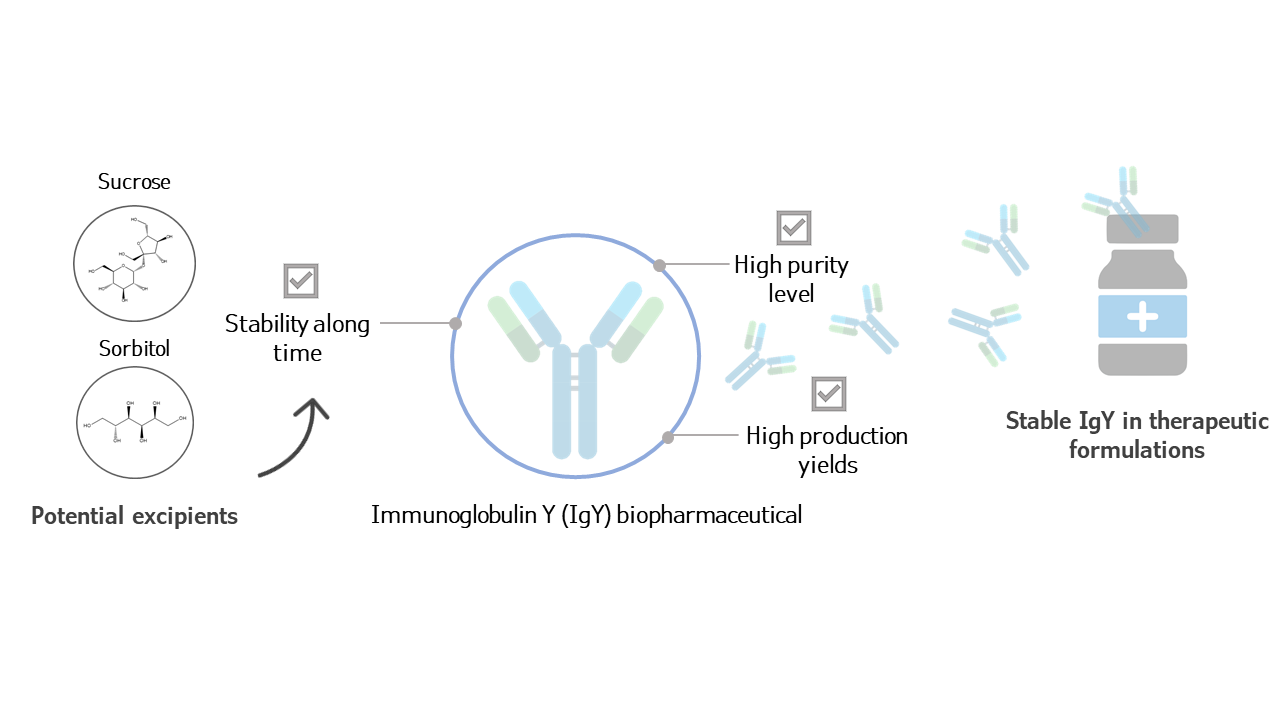 Avian immunoglobulin Y (IgY), present in the chicken egg yolk, has potential to be used as a biopharmaceutical. Compared to its mammalian analogous immunoglobulin G (IgG), IgY presents advantages, namely high binding avidity and immunogenicity, and their recovery by a non-invasive method at high yields. The amount of IgY obtained from an egg is equal to that from 200-300 mL of mammalians blood, being possible for a chicken produce 17-35 g of total IgY. By being a polyclonal antibody, IgY recognize more epitopes on an antigen. Therefore, IgY has various applications, such as the treatment of several diseases. However, IgY derives from a complex media, making difficult their recovery at high purity and yields. Also, IgY is highly labile to changes in temperature, ionic strength, and pH, being difficult to preserve along time. These two drawbacks restrict their use as biopharmaceuticals. In this work, IgY antibodies were isolated from the yolk of commercial chicken eggs and purified by two precipitation steps. Their stability was assessed by Circular Dichroism Spectroscopy (CD) under 1-3 weeks of storage at -20 ºC, with and without sucrose and sorbitol, to evaluate their use as stabilizers agents. The purity level, concentration and percentage of formed aggregates were determined by Size Exclusion- High Performance Liquid Chromatography (SEC-HPLC), and the protein profile revealed by dodecyl sulphate polyacrylamide gel electrophoresis (SDS-PAGE). Novel bio-based compounds have been identified as promising stabilizers to improve the stability of IgY antibodies, paving the way for their use as excipients in IgY therapeutic formulations.
This work was developed within the scope of the project CICECO-Aveiro Institute of Materials, UIDB/50011/2020 & UIDP/50011/2020, financed by national funds through the Fundação para a Ciência e Tecnologia/ Ministério da Educação e Ciência (FCT/MEC) and when appropriate co-financed by Fundo Europeu de Desenvolvimento Regional (FEDER) under the PT2020 Partnership Agreement. This project has received funding from the European Research Council (ERC) under the European Union’s Horizon 2020 research and innovation programme (grant agreement No 899921)”. Márcia C. Neves acknowledges FCT, I.P. for the research contract CEECIND/00383/2017 under the CEEC Individual 2017.
Twitter Poster The high failure rate of osteosarcoma (OS) drug discovery is steadily increasing owning to the limited predictability of the current preclinical models. The development of physiologically relevant three-dimensional (3D) in vitro models combining 3D biomimetic materials and multicellular spheroids is a promising approach to study tumor progression, invasion and drug sensitivity. Moreover, recent advances in engineered microfluidic organ-on-a-chip demonstrated the potential of these microsystems to faithfully recapitulate disease pathophysiology. In this scope, the potential of methacryloyl platelet lysates (PLMA)-derived hydrogels to establish an OS tri-culture model to study tumor invasiveness and drug sensitivity was explored in a fully human-based approach. Three configurations of 3D OS models were successfully developed: (i) scaffold-free MG-63 tumor spheroids, and PLMA-embedded tumor spheroids (ii) alone or (iii) co-cultured with human bone-marrow mesenchymal stem cells and human osteoblasts. PLMA hydrogels supported tumor growth and the formation of tumor invasive branches from the spheroid in both settings, reproducing the tumor architecture and synergistic tumor cell-microenvironment and tumor-stromal cell interaction. The stem cells alignment toward OS spheroid suggested that tumor cells chemotactically attracted the surrounding stromal cells, directly interacting with them. Furthermore, a 3-day doxorubicin treatment revealed that the exposure of the established PLMA-based models to this anticancer drug resulted in a higher IC50-value, comparing with scaffold-free spheroids. The established OS models highlighted the potential of PLMA hydrogels to develop accurate tumor invasiveness models and recapitulate tumor-stromal cell crosstalk, opening the possibility of recreating the tumor mechanical stimuli and vasculature-bone tumor barrier in a dynamic osteosarcoma-on-a-chip model.
This work was developed within the scope of the project CICECO - Aveiro Institute of Materials, UIDB/50011/2020 & UIDP/50011/2020, financed by national funds through the Foundation for Science and Technology/MCTES. The authors would like to acknowledge the support of the European Research Council Proof-of-Concept Grant Agreement No. ERC-2017-PoC-789760 for the project MicroBone. This work was also supported by the Fundation for Science and Technology through the individual contract CEECIND/02713/2017 of Dr. Catarina A. Custódio and the doctoral grant SFRH/BD/144640/2019 of Cátia F. Monteiro.Image acquisition was performed in the LiM facility of iBiMED, a node of PPBI (Portuguese Platform of BioImaging): POCI-01-0145-FEDER-022122.
Twitter Poster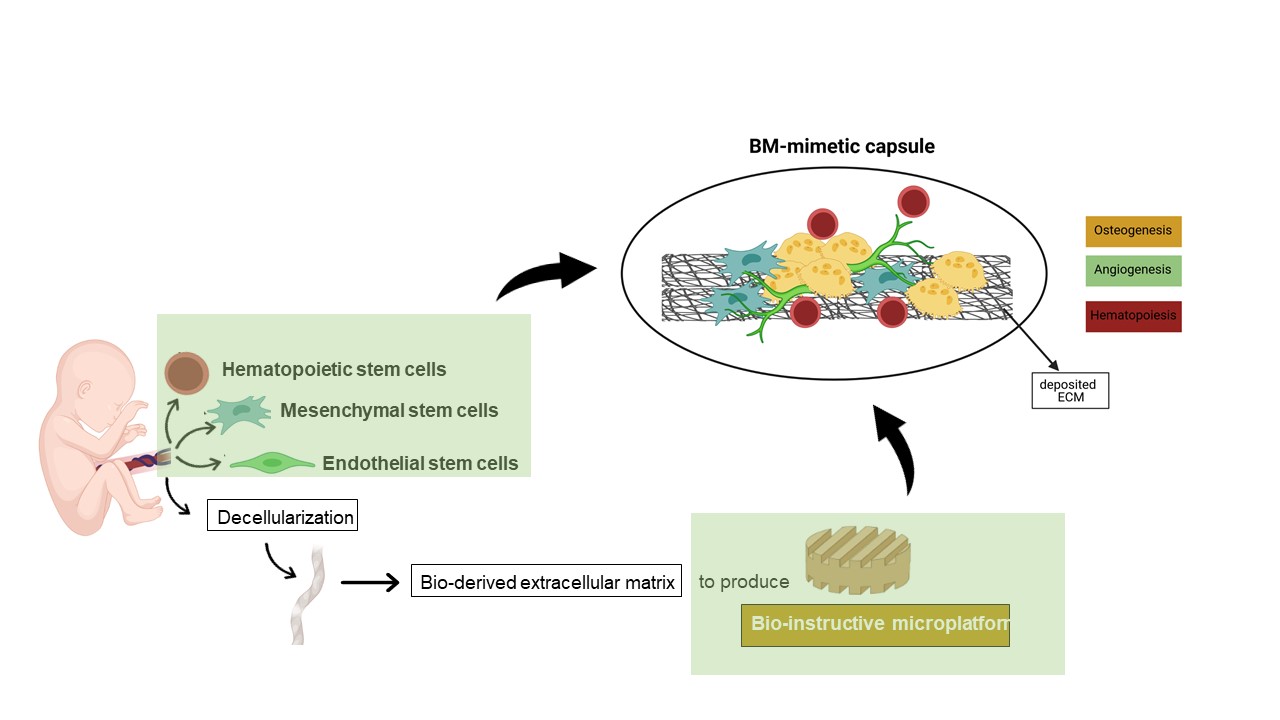 Bone tissue engineering (BTE) provides a plethora of temporary scaffolds to be implanted at the defect site untilbone is endogenously regenerated and the biomechanical function is restored. The majority of BTE strategies aredeprived of an integrated strategy that combines the three co-existing systems of the native bone marrow (BM)microenvironment, namely skeletal, vascular and hematopoietic. The novelty of the present project is to combinethese three systems in liquefied compartments as a revolutionary and promising strategy to recreate theregenerative properties of the BM in vitro. For that, multiphenotypic cells will be strategically combined with bio-instructive microplatforms comprising topographical and stiffness cues and encapsulated in liquefied-corecapsules. The main hypothesis is that by providing cells the structural, biological and bio-instructive requirements,a self-regulated and vascularized bone-like microtissues could be engineered.
The authors acknowledge funding from the European Research Council (ERC) through the project “ATLAS” (ERC-2014-ADG-669858), an Advanced Grant awarded to Professor João F. Mano.
Twitter Poster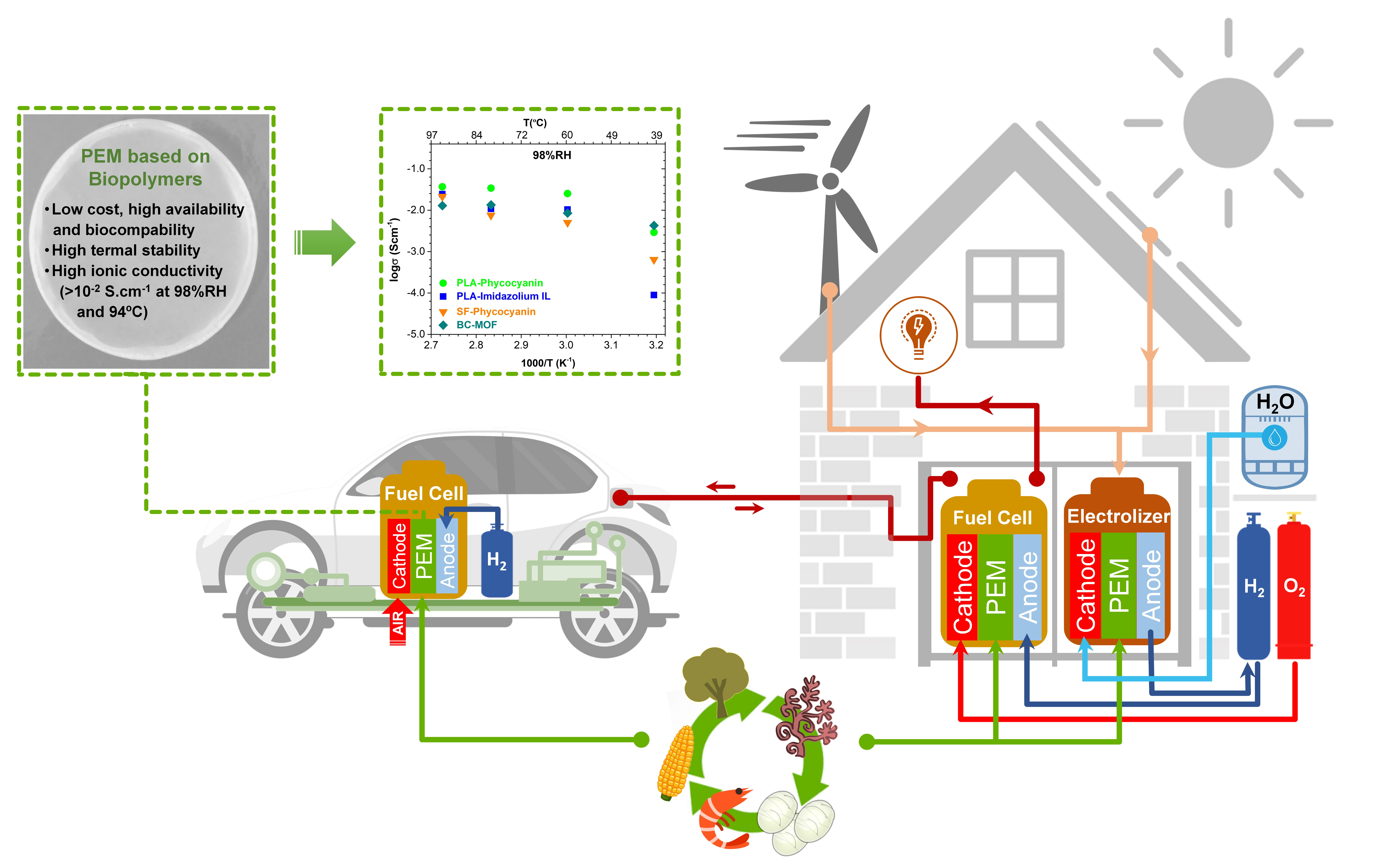 The Unitized Regenerative Fuel Cell (URFC) is an enabler technology which includes in the same device an electrolyzer and a Fuel Cell (FC). The former converts electricity in hydrogen and oxygen and the latter produces electricity on demand using the stored hydrogen and oxygen. The work developed by our group aims at developing a future generation of environmentally sustainable and low-cost materials for the production of renewable electricity using hydrogen as energy vector in URFCs. One of the key components of these devices is the Polymer Electrolyte Membrane (PEM). Hence, exploring low-cost, renewable, earth-abundant, natural materials for preparing PEMs is essential to the development of environmentally friendly electrochemical devices. Biopolymers such as, poly(lactic acid) (PLA), silk fibroin (SF), bacterial cellulose (BC), phycocyanin (PC) are examples of polymer matrices used for the preparation of PEMs with good physicochemical properties for application in URFCs.
This work was developed within the scope of the projects CICECO-Aveiro Institute of Materials (UIDB/50011/2020 & UIDP/50011/2020) and to project UniRCell (Ref. SAICTPAC-0032-2015, POCI-01-0145-FEDER-016422), financed by national funds through the FCT/MEC and when appropriate cofinanced by FEDER under the PT2020 Partnership Agreement. The research contract of P. B. is funded by national funds (OE), through FCT – Fundação para a Ciência e a Tecnologia, I.P., in the scope of the framework contract foreseen in the numbers 4, 5 and 6 of article 23, of the Decree-Law 57/2016, of August 29, changed by Law 57/2017, of July 19.
Twitter Poster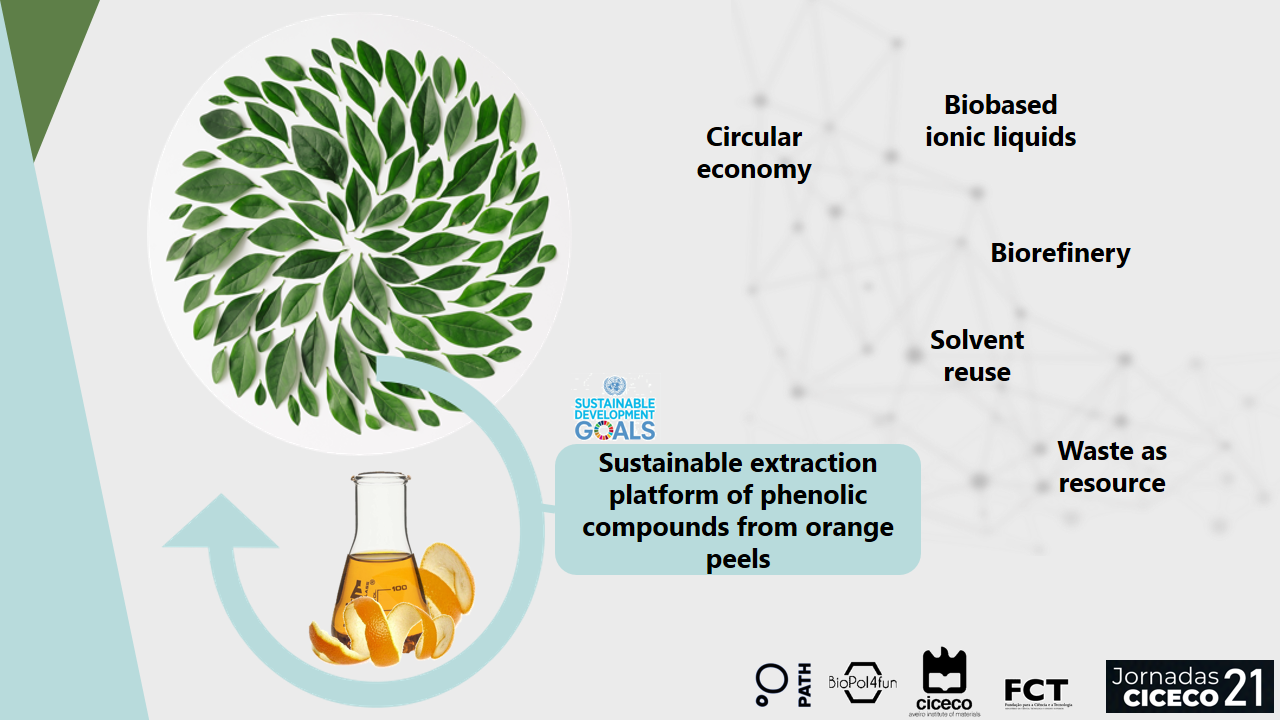 Nowadays, an increasing socioeconomic awareness has shifted the research community interests towards the development of sustainable extraction processes to obtain high value bioactive compounds (HVBCs) from plant biomass (either dedicated crops or by-products), within the circular economy model. To overcome current bioeconomy challenges, the development of new integrated processes is mandatory. This work intends to valorize orange peels, a waste from the food industry, through the isolation of high-value phenolic compounds using novel biobased ionic liquids derived from glycine-betaine, which are able to increase the solubility of rutin and naringin by several orders of magnitude. Experimental design was applied to optimize extraction conditions, resulting in the efficient and selective extraction of rutin and naringin, while allowing the solvent reuse. The developed process is a competitive alternative to conventional processes comprising volatile solvents.
This work was developed within the scope of the project CICECO-Aveiro Institute of Materials, 640 UIDB/50011/2020 & UIDP/50011/2020, financed by national funds through the FCT/MCTES. The work was funded by FCT/MCTES through the project MultiBiorefinery (POCI-01-0145- 654 FEDER-016403) and DeepBiorefinery [PTDC/AGR-TEC/1191/2014], Inês S. Cardoso acknowledges FCT/MCTES for the PhD grant [SFRH/BD/139801/2018].
Twitter Poster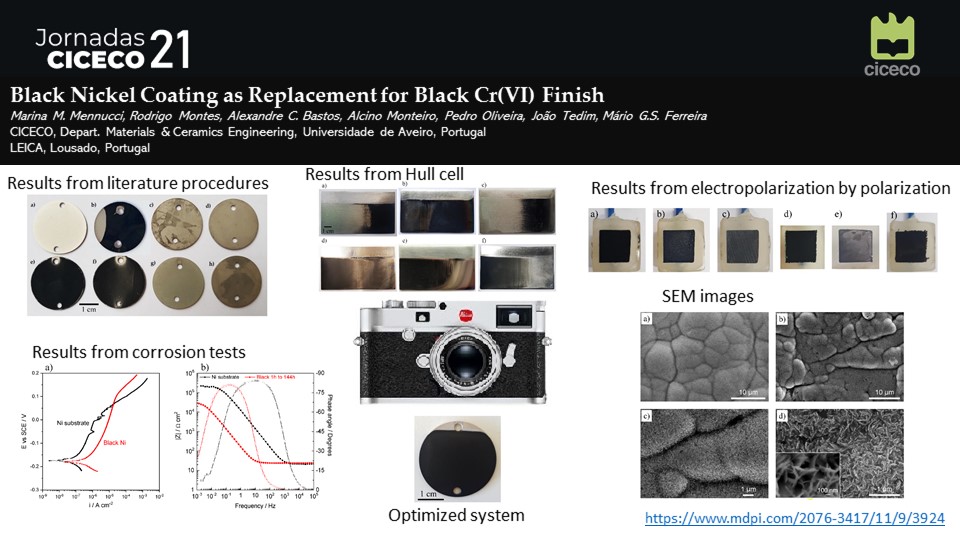 This work compares six different electrodeposition procedures to produce nickel black coatings as greener and less toxic alternatives to Cr(VI)-based coatings used in different applications. Nickel and nickel-plated brass served as substrates in studies with a Hull cell and polarization curves. After a set of comparative experiments, the best electrodeposition procedure was further studied and optimized. Optimal conditions were found with a bath consisting of 75 g/L NiCl2·6H2O + 30 g/L NaCl and a current density of 0.143 A dm−2 applied for 5 min at room temperature. Furthermore, a pre-treatment with 18.5 vol.% of hydrochloric acid in water was found to be necessary to warrant good coating adhesion to the substrate. Corrosion testing was performed in 0.5 M NaCl aqueous solution using electrochemical impedance spectroscopy (EIS) and polarization tests.
This research was funded by project ON-SURF—Mobilizar Competências Tecnológicas em En-genharia de Superfícies, Projeto n.º POCI-01-0247-FEDER-024521. This work was developed within the scope of the project CICECO-Aveiro Institute of Materials, UIDB/50011/2020 and UIDP/50011/2020, financed by national funds through the Foundation for Science and Technology/MCTES. A.C.B acknowledges FCT—Fundação para a Ciência e a Tecno-logia, I.P., in the scope of the framework contract foreseen in the numbers 4, 5, and 6 of the article 23, of the Decree-Law 57/2016, of 29 August, changed by Law 57/2017, of 19 July. M.M.M. acknowledges FCT—Fundação para a Ciência e a Tecnologia for the scholarship (BPD-UA-A nº24521 ERDF).
Twitter Poster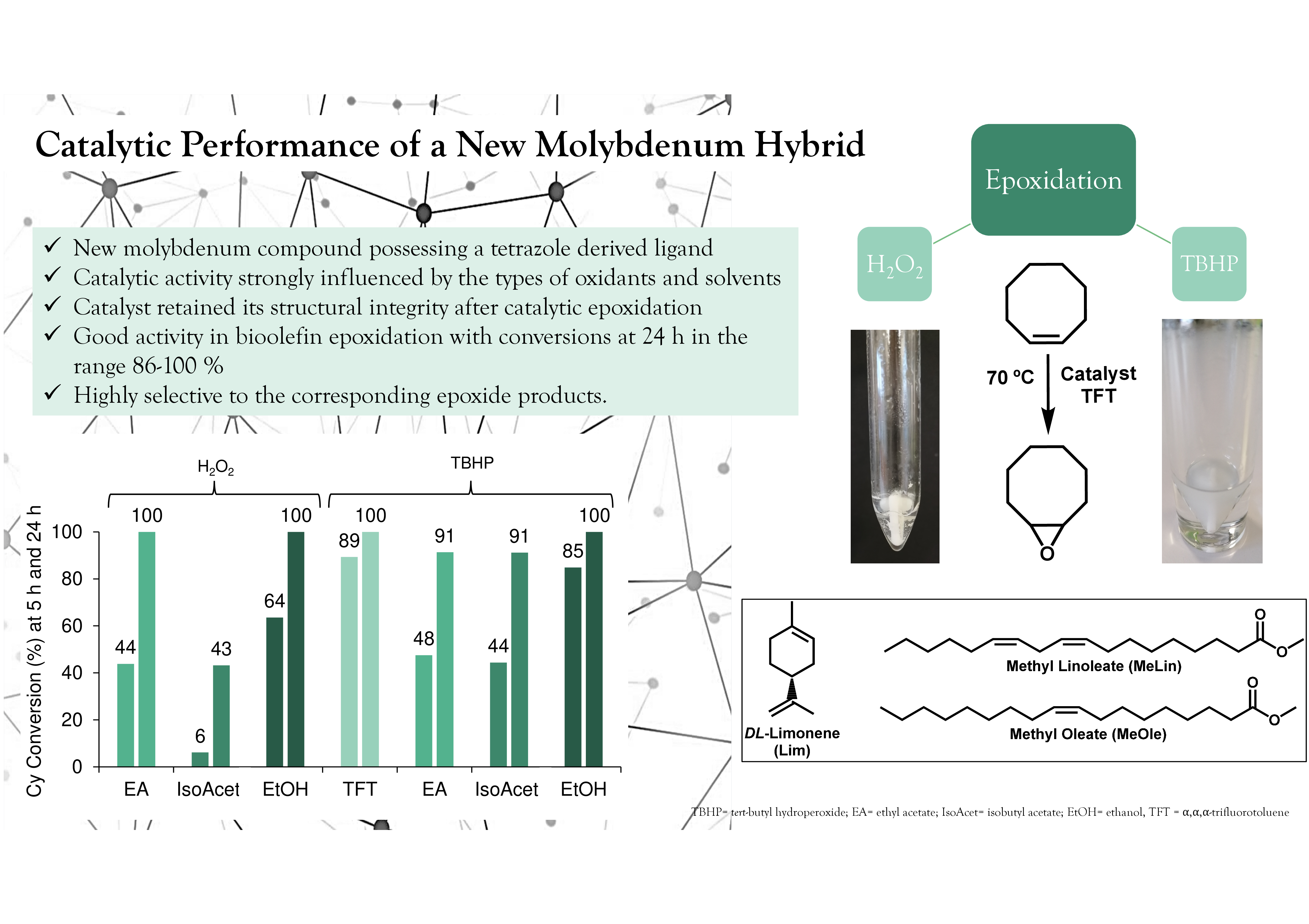 The molybdenum hybrid 1, synthesized in a neat and straightforward fashion via aqueous phase reaction of [MoO2Cl2(ptz)]·(ptz) (2) (ptz=5-(2-pyridyl)tetrazole) under reflux conditions, was tested as a catalyst for olefin epoxidation. The catalytic performance of 1 was evaluated based on the model reaction of cis-cyclooctene (Cy) with tert-butyl hydroperoxide (TBHP) or H2O2, at 70 °C, which indicated that the catalytic activity was strongly influenced by the types of oxidants and solvents. It performed as a heterogenous and stable catalyst in Cy/TBHP epoxidation, retaining its structural and chemical features and activity in three consecutive catalytic runs. The substrate scope was broadened to the monoterpene DL-limonene (Lim) and relatively bulky biobased olefins, specifically fatty acid methyl esters, possessing one or more C=C bonds (methyl oleate (MeOle) and methyl linoleate (MeLin)). Olefin conversions at 24 h were in the range 86-100 % and the reactions were highly selective to the corresponding epoxide products.
This work was carried out with the support of CICECO - Aveiro Institute of Materials [FCT (Fundação para a Ciência e a Tecnologia) Ref. UIDB/50011/2020 & UIDP/50011/2020] and the COMPETE 2020 Operational Thematic Program for Competitiveness and Internationalization (Project POCI-01-0145-FEDER-030075), co-financed by national funds through the FCT/MCTES and the European Union through the European Regional Development Fund under the Portugal 2020 Partnership Agreement. D.G. is grateful for a BI(M) grant from project POCI-01-0145-FEDER-030075.
Twitter Poster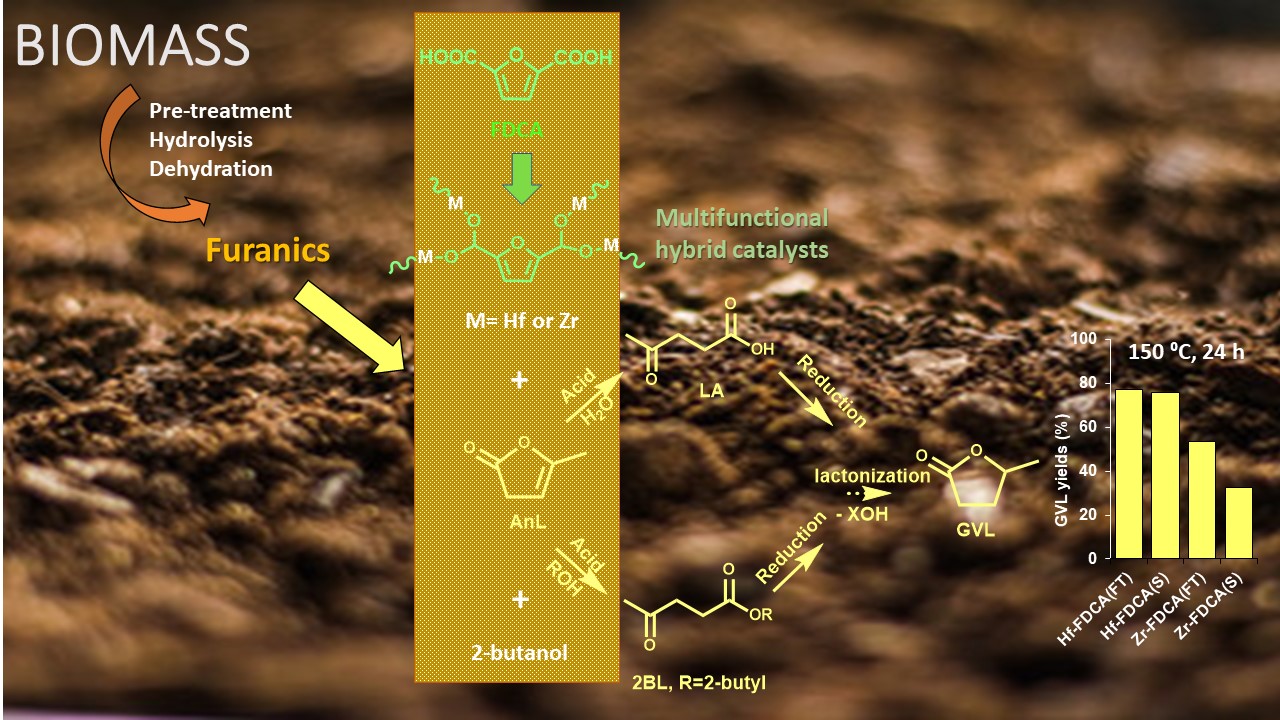 The increasing greenhouse gas (GHG) emissions associated with the extensive use on fossil fuels has a strong impact on climate change. In order to decrease the levels of GHG and answer to stringent environmental legislation, it is important to build a sustainable chemical industry. Vegetal biomass (VB) appears as a renewable alternative that can lead to bioproducts with potential to partly substitute petrochemicals. Carbohydrates are the main components of VB. Angelica lactone (AnLs) and levulinic acid (LA) are versatile carbohydrate biomass-derived building blocks of industrial interest. LA in particular is in the TOP 10 list of most valuable platform chemicals. In this work AnL and LA were converted to the bioproduct gamma-valerolactone (GVL) with several industry applications such as solvents, plasticizers, drugs, and fuel additives. For such an achievement nanohybrids with acid and reduction sites (M-FDCA) were synthesised from bio-based 2,5-furandicarboxylic acid (FDCA) and a transition metal (M= Zr or Hf) precursor through a simple and fast methodology (FT), and a conventional solvothermal (S) method. The Hf-FDCA catalysts were stable and performed superiorly to the Zr-FDCA ones, reaching 76-77 % and 33-53 % of GVL yield respectively at 150 ºC/24 h from AnL. From LA, the GVL yield reached 69 % for Hf-FDCA(FT) and 56 % for Zr- FDCA(FT). Increasing the reaction temperature to 180 ºC enhanced the reaction kinetics (Hf-FDCA(FT) led to 79 % GVL yield at 180 ºC/5 h).
This work was developed within the scope of the project CICECO-Aveiro Institute of Materials, UIDB/50011/2020 & UIDP/50011/2020, financed by National Funds through the Portuguese Foundation for Science and Technology/MCTES. The positions held by M.M.A. and A.F. were funded by National Funds (OE), through FCT, I.P., in the scope of the framework contract foreseen in the numbers 4, 5 and 6 of article 23 of the Decree-Law 57/2016 of 29 August, changed by Law 57/2017 of 19 July. The position held by A.F.S. was funded by Project POCI-01- 0145-FEDER-030075 (COMPETE 2020 Operational Thematic Program for Competitiveness and Internationalization) co-financed by National Funds through the FCT/MCTES and the European Union through the European Regional Development Fund under the Portugal 2020 Partnership Agreement.
Twitter Poster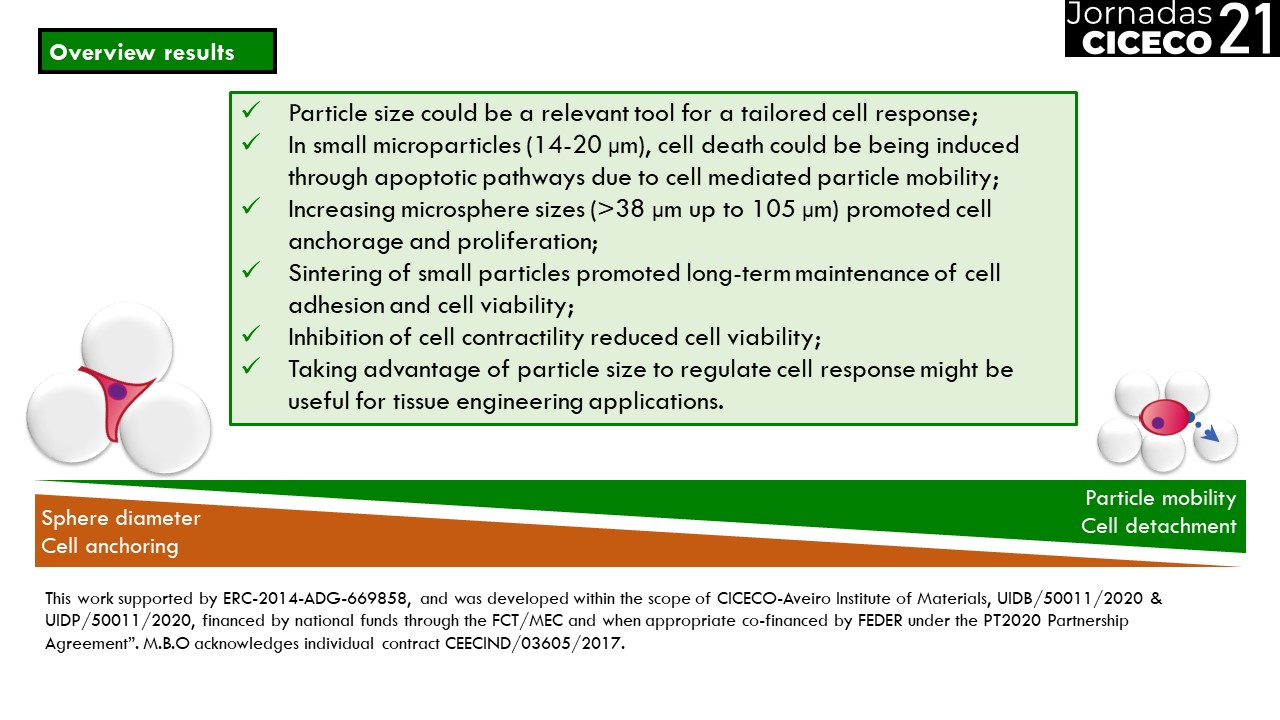 Insight on the interaction of cells and surrounding objects with similar sizes providing different stability patterns due to cellular-mediated forces might be relevant to engineer innovative systems for tissue engineering applications. We hypothesize that there is a lower limit of the traction force necessary for cell-particle bond reinforcement, essential for cells to adhere, effectively spread and move, which could be controlled by microsphere size. We explored our hypothesis using a quasi-3D free-packed microparticle system in a liquid medium. We chose commercial polystyrene microspheres with different size ranges of microparticles - 14-20 µm, 38-45 µm, 85-105 µm - coated with type I collagen and assessed the adhesion and phenotype of human adipose tissue-derived mesenchymal stem cells (hASC), after stipulated incubation timepoints (4 hours, 1, 3 or 4, 7 days). Based on our metabolic activity assessments and microscopy data, we hypothesize that higher and intermediate dimension spheres benefit long-term cell adhesion and spreading. On the other hand, in smaller microparticles there could be a failure in the reinforcement of cell-particle bond resulting in visible cell detachment from the particles and even in the induction of apoptosis. Promoting the packing of small beads allowed cell survival and proliferation due to the decrease of particle mobility. Reducing cell contractility with ROCK inhibitor in larger microparticles decreased cell viability and proliferation as opposed to untreated condition. Specifying a minimum size for cell adhesion might be impactful when addressing healthcare-related challenges.
This work supported by ERC-2014-ADG-669858, and was developed within the scope of CICECO-Aveiro Institute of Materials, UIDB/50011/2020 & UIDP/50011/2020, financed by national funds through the FCT/MEC and when appropriate co-financed by FEDER under the PT2020 Partnership Agreement”. M.B.O acknowledges individual contract CEECIND/03605/2017.
Twitter Poster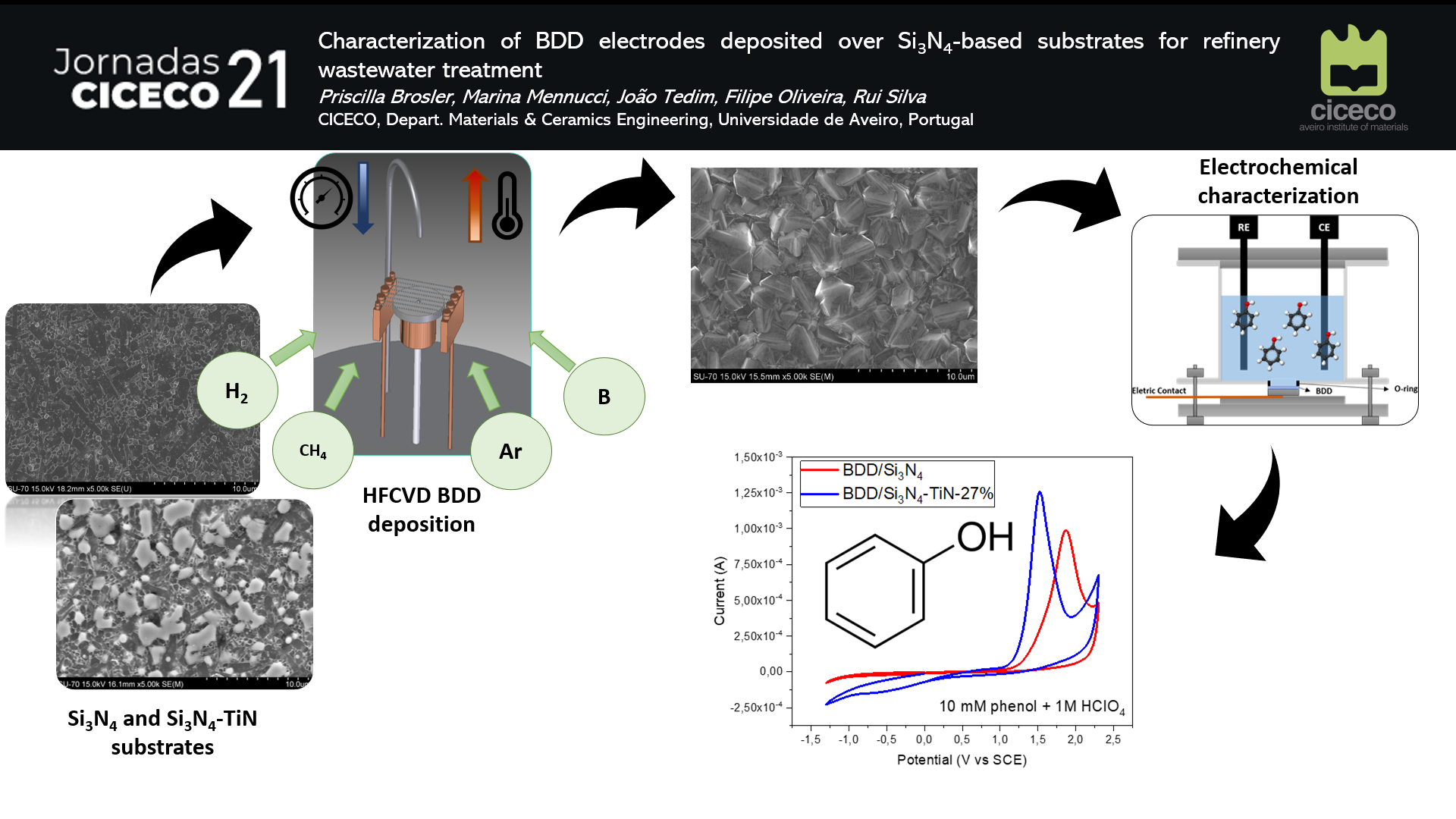 The oil refinery industry generates wastewaters that are rich in aromatic organic compounds such as polyaromatic hydrocarbons and phenols, which are resistant to environmental degradation. The conventional wastewater treatment methods are not effective in removing non-biodegradable species. The most promising and innovative alternative technologies are the electrochemical advanced oxidation processes (EAOPs). The electrode material used for EAOPs is crucial for achieving efficient wastewater treatment. Boron-doped diamond (BDD) has the greatest potential in the electrochemical oxidation of organic contaminants, showing the highest overpotential for water decomposition, the widest known electrochemical window, together with the greatest efficiency in the production of hydroxyl radicals. Yet, compatible substrate materials for Chemical Vapor Deposition of BDD have limitations for large scale applications. In this work, BDD electrodes were produced by Hot Filament CVD, using two types of substrates: Si3N4 (insulating), and Si3N4-TiN, an electroconductive composite, with 27%vol. of TiN. The BDD electrodes were characterized and compared by SEM, EDS, GDOES, Raman Spectroscopy, and XRD. The electrodes' working potential window and electroactivity and sensitivities towards phenol were compared by Cyclic Voltammetry, using a three-electrode cell. In terms of phase identification, crystallinity, grain size, BDD growth rates, B/C ratio, and diamond quality, no significant differences were detected. However, BDD/Si3N4-TiN electrodes have a larger potential window and show higher electroactivity towards phenol compared to the BDD/Si3N4 electrode. Those differences will be further investigated in the continuation of this work.
The authors wish to thank the University of Aveiro and CICECO – Aveiro Institute of Materials for their contributions to this work as well as the organizations responsible for funding the project CICECO-Aveiro Institute of Materials (FCT Ref. UID/CTM/50011/2019) financed by national funds through the FCT/MCTES and the project “ON-SURF - Mobilizar Competências Tecnológicas em Engenharia de Superfícies” (Ref. POCI-01-0247-FEDER-024521) financed by the European Regional Development Fund (FEDER), through the Competitiveness and Internationalization Operational Programme (POCI).
Twitter Poster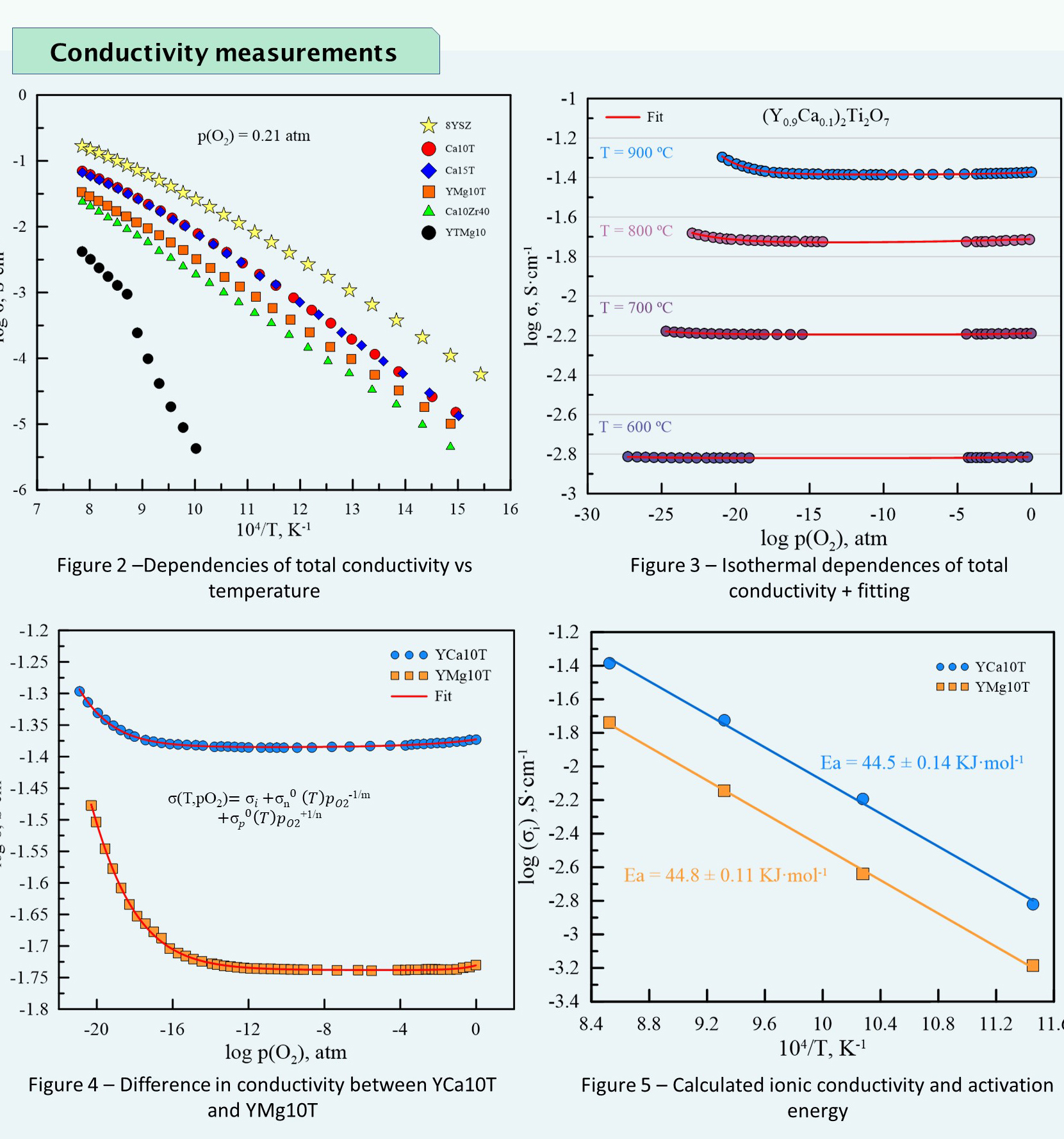 Solid oxide electrolysis cells (SOECs) are electrochemical systems enabling conversion of excess renewable energy via high-temperature steam electrolysis into hydrogen as energy carrier and sustainable fuel. Long-term degradation remains the main issue for the viability of this technology as a practical hydrogen production system. The concept of fuel-assisted SOEC relies on the supply of a low-cost fuel to the anode in order to reduce the operating potential of the cell and enhance the long-term stability of the anode/electrolyte interface1,2. In this configuration, conventional ceria-based buffer layers at the electrolyte/anode interface may not be applicable due to excessive chemical expansion on reducing oxygen partial pressure. The present work explores pyrochlore-type Y2Ti2O7-based titanates as possible alternative to doped ceria in fuel-assisted SOECs. A series of Y2-xAxTi2-yByO7-δ (A = Ca, Mg; B = Mg, Zr, Mn) ceramics were prepared by solid state reaction route. The materials were characterized by XRD, SEM/EDS and thermal analysis. Electrical studies included measurements of total conductivity as function of temperature and oxygen partial pressure (600-900°C) and determination of partial ionic and electronic contributions by the e.m.f. method (700-900°C). Thermochemical expansion was evaluated by controlled-atmosphere dilatometry at 600-900°C. The chemical compatibility at different temperatures was assessed in contact with yttria-stabilized zirconia solid electrolyte and selected oxygen electrode materials.
This work was developed within the scope of the projects SFRH/BD/150704/2020, CARBOSTEAM (POCI-01-0145-FEDER-032295), and CICECO - Aveiro Institute of Materials (UIDB/50011/2020 & UIDP/50011/2020) financed by national funds through the FCT/MCTES and by FEDER through COMPETE2020-POCI and PT2020 Partnership Agreement.
Twitter Poster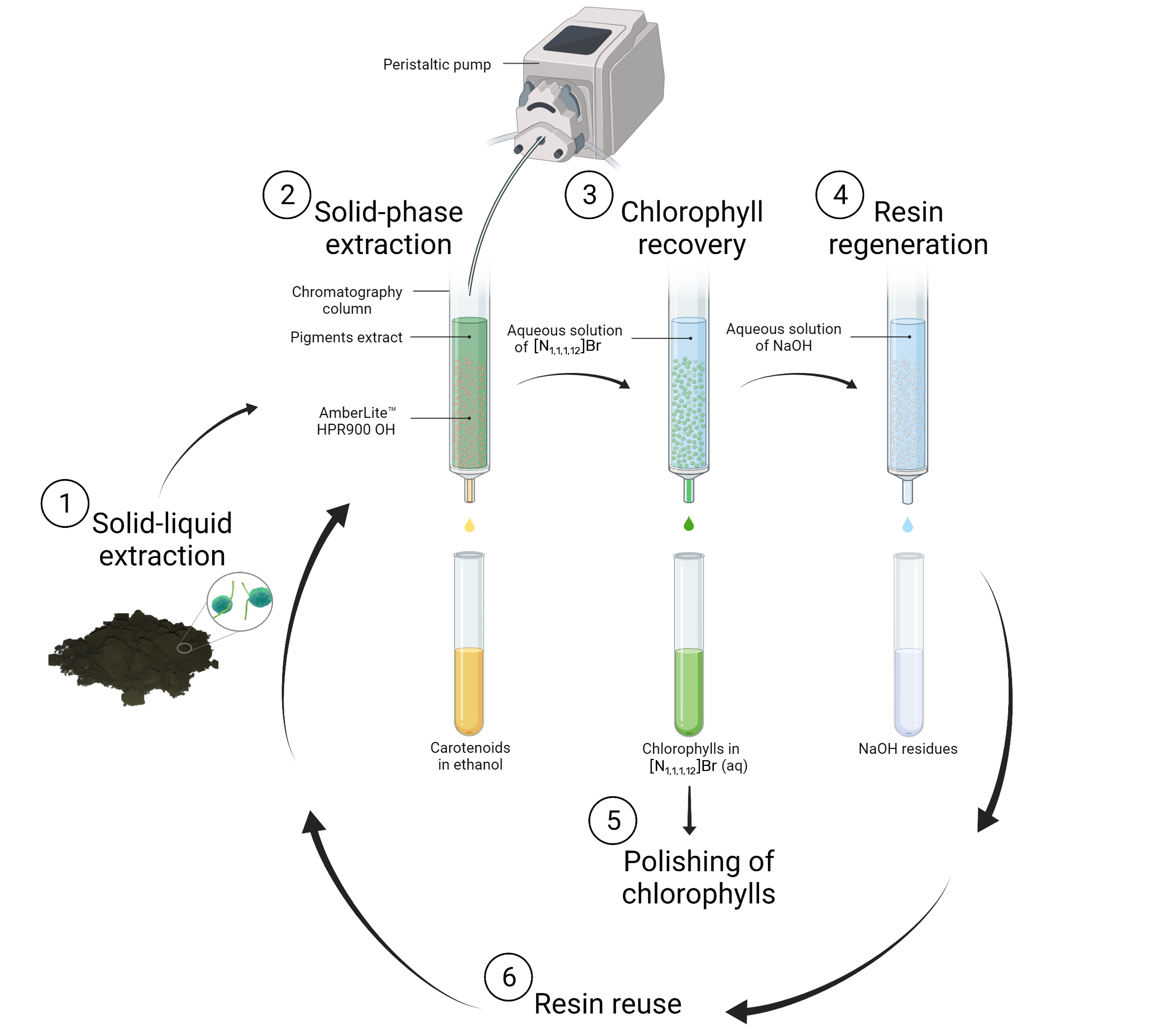 The move to a circular economy is in the near future. However, sustainable processes need to be developed to ensure the future of the planet. Thus, ionic liquids emerges as an alternative to organic solvents. Its effectiveness had been proven in the extraction of pigments from a liquid matrix. However, they were never used as eluents in solid-phase extraction processes. Under this context, aqueous solutions of ionic liquids were tested in chlorophyll elution from the commercial resin AmberLite™ HPR900 OH. After a solid-liquid extraction of chlorophylls and carotenoids from the microalgae Isochrysis galbana, a solid-phase extraction was performed. The carotenoids remained in the liquid extract while chlorophylls were adsorbed into the resin. However, since pigments are valuable natural compounds with many biological activities, and the valorisation of multiple compounds is the utmost importance, the recovery of chlorophylls was the focal point of this work. An optimization of the operational conditions by a response surface methodology and an evaluation of the possibility of resin reuse were assessed. It was found that the efficiency of the resin remained constant through five cycles of resin reuse, being able to recover 97.0 ± 0.9 % of the adsorbed chlorophylls. In addition, a procedure to recover the chlorophylls from the ionic liquid was developed, enhancing the loop closure. Finally, promising results were achieved when the process was applied in a continuous mode, being designed the process diagram for its potential application in the industry.
This work was developed within the scope of the project CICECO-Aveiro Institute of Materials, UIDB/50011/2020 & UIDP/50011/2020, financed by national funds through the Portuguese Foundation for Science and Technology/MCTES. Thanks are also due to the University of Aveiro and FCT/MCT for the financial support of LAQV-REQUIMTE (UIDB/50006/2020). Margarida Martins thanks Fundação para a Ciência e a Tecnologia (FCT) for the PhD grant (SFRH/BD/122220/2016). Márcia C. Neves acknowledges FCT, I.P. for the research contract CEECIND/ 00383/2017 under the CEEC Individual 2017. The NMR spectrometers are part of the National NMR Network (PTNMR) and are partially supported by Infrastructure Project N◦ 022161 (co-financed by FEDER through COMPETE 2020, POCI and PORL and FCT through PIDDAC).
Twitter Poster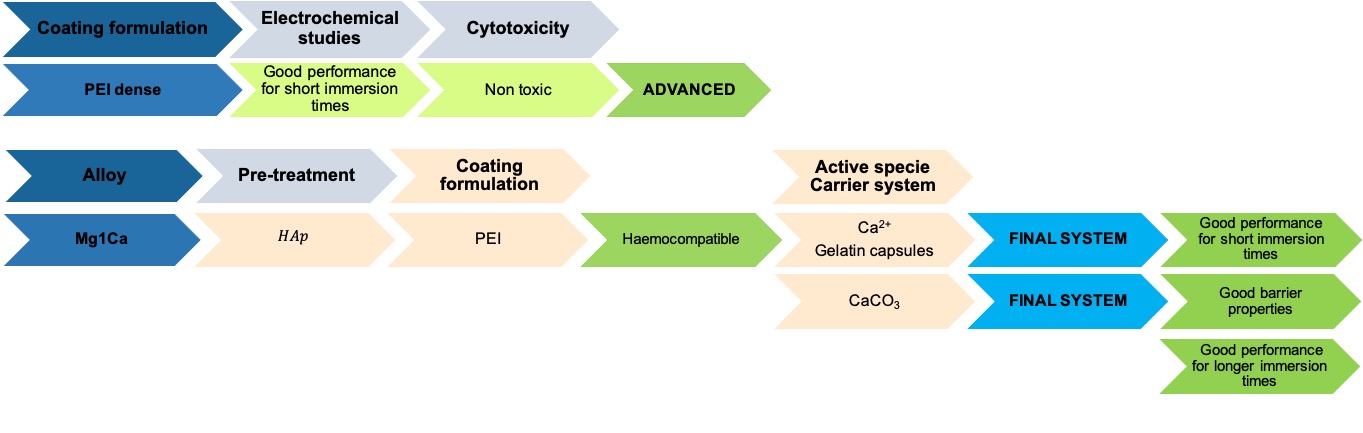 The use of biomaterials in medical applications has risen dramatically over the years. Mg alloys have been increasingly attracting great interest as biodegradable implant materials due to their superior physicochemical and mechanical properties over traditional metallic materials, ceramics and polymers and biocompatibility (Mg key role in human metabolism).[1] Also, their biodegradation makes them good candidates for temporary orthopaedic applications, where a second surgery to remove the implant can be avoided, thus reducing health costs and risks associated with a second surgery. However, Its uncontrolled degradation by corrosion[2], often accompanied by hydrogen formation can cause complications when using these alloys within the human body[3].In this work, we propose the development of a functional, non-toxic, multilayer coating, containing natural-based micromaterials for the control release of calcium to control and delay, Mg alloys degradation.Ca@gel capsules and CaCO3 particles were prepared and then incorporated in Polyetherimide coatings. Coatings containing capsules/particles were then applied onto Hydroxyapatite (HAp-PEI) coated Mg1Ca alloys. Coated Mg1Ca substrates were immersed in MEM (minimum Essential Medium) and characterized, electrochemically, by Electrochemical Impedance Spectroscopy (EIS) to assess coating performance. [1] S. Heise et al., Tackling Mg alloy corrosion by natural polymer coatings-A review, J Biomed Mater Res A, 104 (2016) 2628–2641.; [2] Song, G., Control of biodegradation of biocompatible magnesium alloys. Corrosion Science, 2007, 49(4): 1696.; [3] Staiger, M.P. et al., Magnesium and its alloys as orthopedic biomaterials: A review. Biomaterials, 2006, 27(9): 1728.
This work was financed by Portugal 2020 through European Regional Development Fund (ERDF) in the frame of Operational Competitiveness and Internationalization Programme (POCI), in the scope of the project MAGICOAT POCI- 01-0145-FEDER-016597 / PTDC/CTM-BIO/2170/2014 and in the scope of the project CICECO- Aveiro Institute of Materials, POCI-01-0145-FEDER-007679 (FCT Ref. UID/CTM/50011/2013), and co-financed by national funds through the FCT/MEC.
Twitter Poster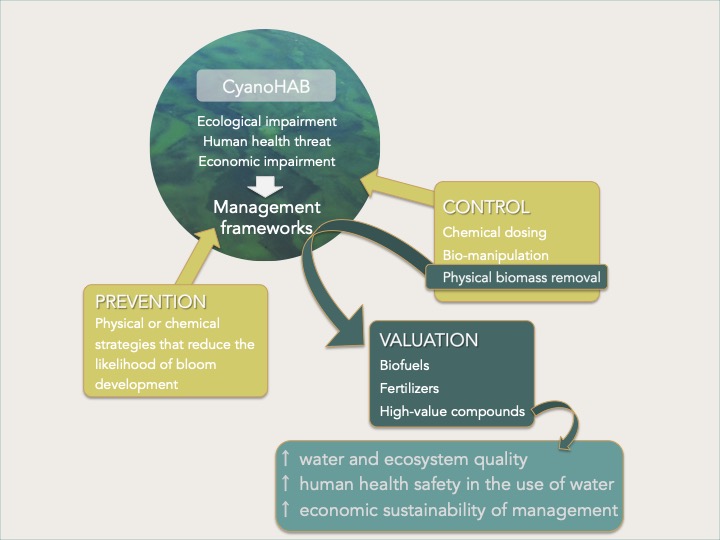 Global warming and the anthropogenic degradation of water quality are pointed out as main causes of the worldwide increase in frequency, severity, and duration of harmful algal blooms (HAB). Cyanobacteria, major constituents of HAB, can cause ecological, economic, and human health problems. Their growth can be potentiated by climate change consequences, highlighting the urgency of improving HAB management strategies to ensure water quality. An innovative perspective for cyanobacteria management is the exploitation of their “bright side”. Several exploitable products produced by cyanobacteria (e.g. bioactive pigments, lipids, proteins) present high market value. Thus, our work provides a critical perspective on how HAB management may be connected with biotechnology in the future. We propose the use of the biomass of cyanobacteria blooms physically removed in traditional control actions as a feedstock for future valorization, thus allying profit to water quality management, in a win-win relationship between economics and sustainability.
This work was developed within the scope of the project CICECO-Aveiro Institute of Materials, refs: UIDB/50011/2020 and UIDP/50011/2020, financed by national funds through the FCT/MEC and when appropriate cofinanced by FEDER under the PT2020 Partnership Agreement. Thanks are due to FCT/MCTES for the financial support to CESAM (Grants UIDP/50017/2020 and UIDB/50017/2020), through national funds. The authors also thank FCT for the Project Reference No. PTDC/BTA-BTA/30914/2017. J. L. Pereira was funded by national funds (OE) through FCT, under a framework contract (art. 23, Decree-Law 57/2016, changed by Law 57/2017). I. P. E. Macário is the recipient of an individual research grant by FCT financed by the FCT/MEC and cofinanced by the FEDER program (Grant SFRH/BD/ 123850/2016).
Twitter Poster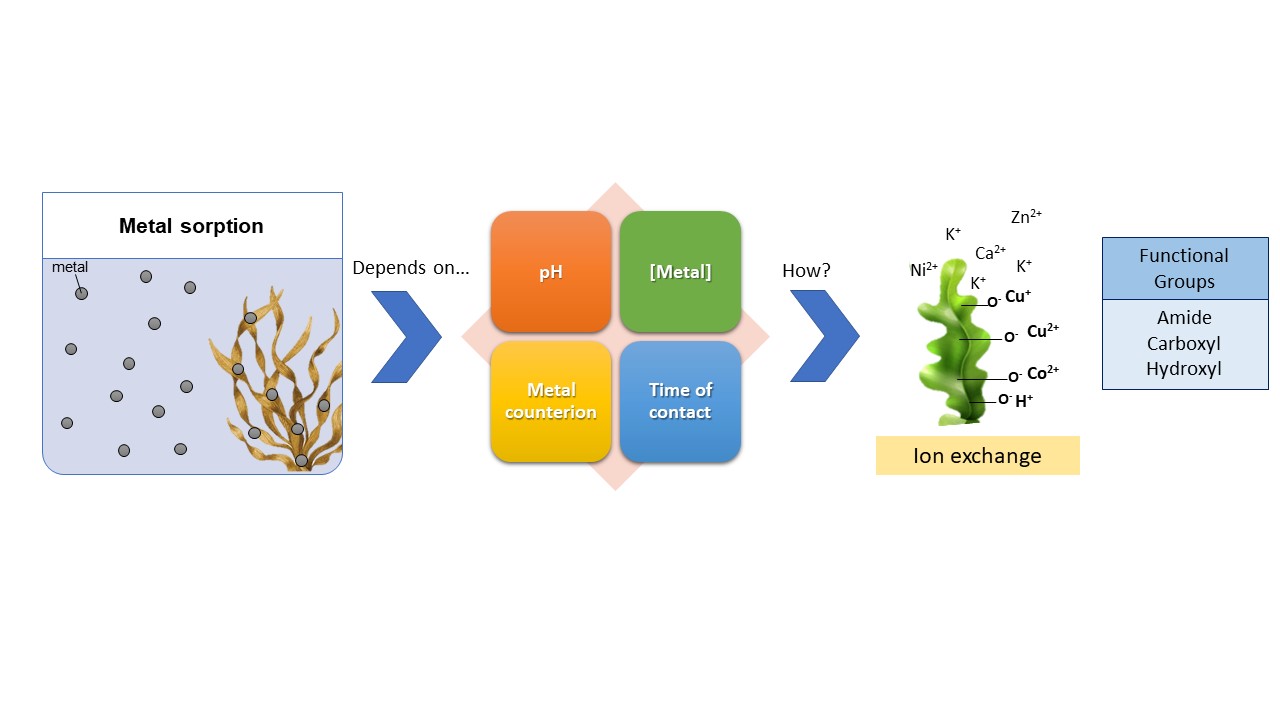 The development of civilization is putting pressure on the natural reserves of essential compounds, such as metals. If the rate of metal exploration does not decrease, it is likely that some metals will be depleted leading to severe supply and demand constraints. To prevent this, it is necessary to find alternative metal sources, such as wastewaters, electronical waste and acid mine drainage waters. It is urgent to develop a novel and sustainable approach for the recovery of metals from secondary sources. Bioremediation is a naturally occurring process that can be used to preconcentrate metals present in wastewaters. To enable this, it is necessary to optimize the sorption process to ensure the maximum amount of metal per gram of biomass, which will reduce costs and increase the efficiency of the process. To optimize this process, eleven varieties of biomass were studied in this work – namely cyanobacteria, macroalgae and microalgae – to determine the best adsorbent. Parameters such as pH, initial metal concentration, the metal counterion and the sorption kinetics were studied to better understand and optimize the biomass sorption capacity of metals. Ionic exchange between transition metals and soft metals, as Ca2+ and K+, was evaluated to see if a correlation could be found. Fourier-transform infrared spectroscopy (FTIR) was performed on all varieties of biomass to examine the types of functional groups found on the biomass.
This work was developed within the scope of the project CICECO Aveiro Institute of Materials, UIDB/50011/2020 &UIDP/50011/2020, financed by national funds through the Foundation for Science and Technology/MCTES. Ana R. F. Carreira acknowledges FCT – Fundação para a Ciência e a Tecnologia for the Ph.D. grant SFRH/BD/143612/2019. H. Passos acknowledge FCT, I.P. for the researcher contracts CEECIND/00831/2017 under the Scientific Employment Stimulus - Individual Call 2017
Twitter Poster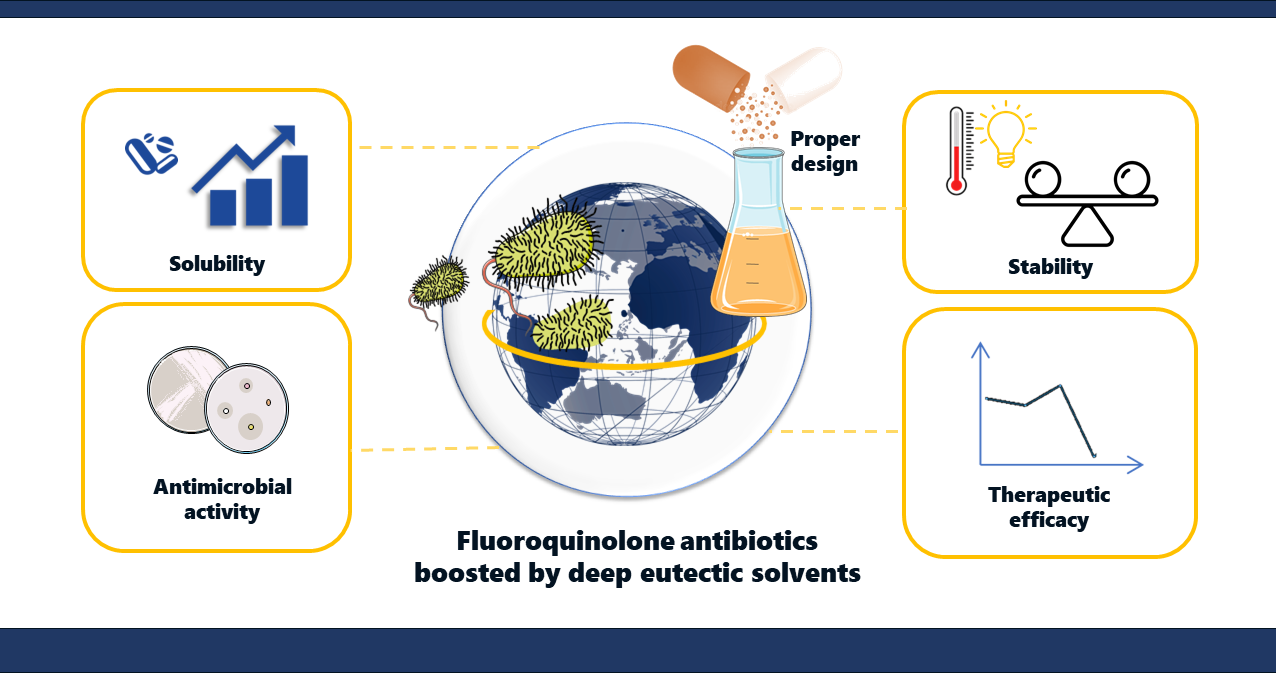 Antibiotic resistance threatens global health and security, as common antibiotics lose antimicrobial activity. To keep these therapeutic options available, new approaches to improve common antibiotics efficacy are mandatory. From the existing formulation alternatives, deep eutectic solvents (DES) have recently emerged as promising options to improve drugs performance. In this work, we designed DES that are capable to solubilize fluoroquinolones and investigated their impact in the solubility, stability, bioavailability and therapeutic action of the ensuing antibiotic solutions in DES. According to the obtained results, a two-fold increase in the antibiotics’ solubility and a remarkable effect on the inactivation of resistant bacteria was observed. The cytotoxicity and therapeutic efficacy of these novel liquid fluoroquinolone formulations was additionally conducted to infer their safety and ability to improve treatment infections, and their performance was compared to the commercial versions of the antibiotics. After incorporation in biopolymer-based systems different drug delivery options could be prepared with controlled release profiles for different administration routes.
This work was developed within the scope of the project CICECO-Aveiro Institute of Materials, UIDB/50011/2020 & UIDP/50011/2020, financed by national funds through the FCT/MEC and when appropriate co-financed by FEDER under the PT2020 Partnership Agreement. S. N. Pedro acknowledges the PhD grant SFRH/BD/132584/2017.
Twitter Poster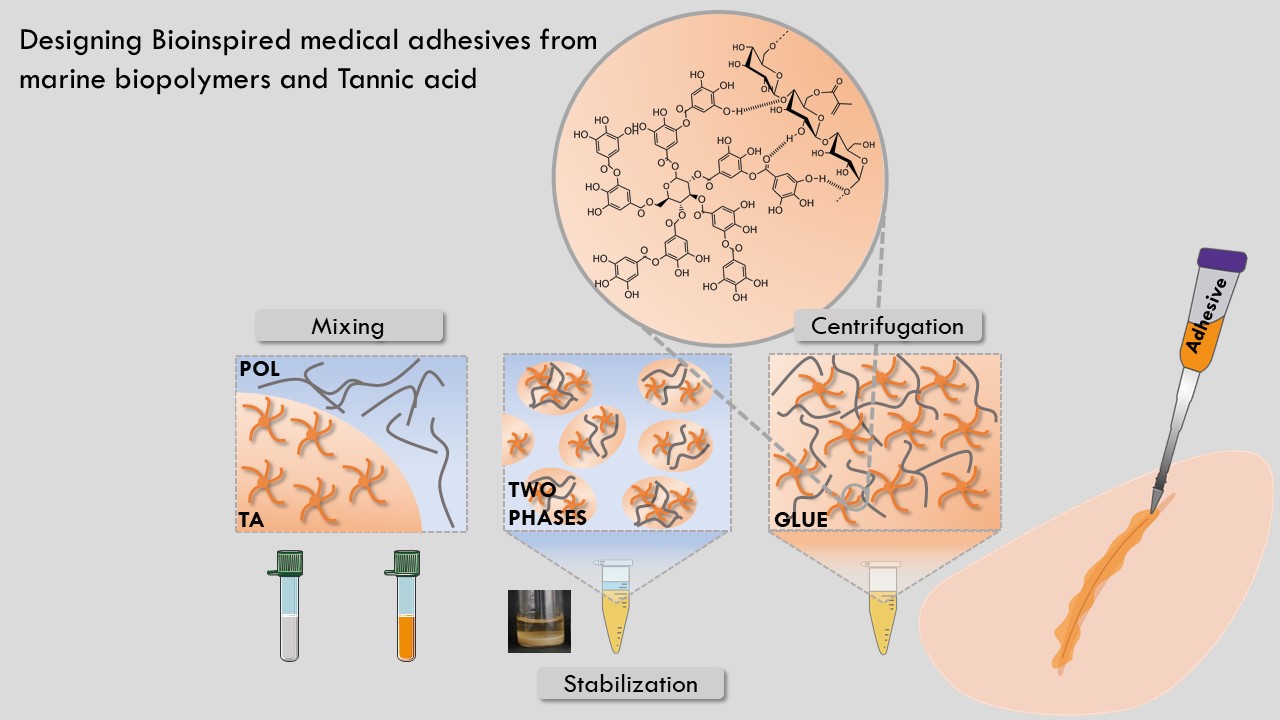 Adhesive biomaterials have been studied to serve as tissue sealants, hemostatic agents and/or accelerate the healing of several types of tissues. Currently available bioadhesives present drawbacks, such as harsh chemical reactions, low biocompatibility or weak wet-adhesion, limiting their biomedical application. To surpass the lack of biocompatibility, marine polysaccharides, have been extensively used to develop new biomaterials for biomedical purposes, since they promote cell proliferation and differentiation, as well as functional tissue formation. Regarding wet-adhesion, mussel-inspired bioadhesives have gained attention, mimicking the mussel´s strong underwater adhesion, using catechol groups in the compound’s structures. Tannic acid (TA), a plant-derived polyphenol, is a safe and low-cost source of catechol/pyrogallol groups. It allows polymeric crosslinking through hydrogen and ionic bonding, or hydrophobic interactions (graphical abstract), improving biomaterials adhesiveness and mechanical performance, while endowing it with anti-microbial, anti-inflammatory and antioxidant properties. Hence, by combining laminarin (LAM-OH) or pullulan (PUL-OH) with TA, bioinspired adhesive biomaterials for biomedical applications will be produced by supramolecular interactions.
This work was developed within the scope of the project CICECO-Aveiro Institute of Materials, UIDB/50011/2020 & UIDP/50011/2020, financed by national funds through the FCT/MEC and when appropriate co-financed by FEDER under the PT2020 Partnership Agreement, and project BLUEGLUE (FA_05_2017_031) financed by Fundo Azul Call - N.º 5/2017 and Direção-Geral de Política do Mar (DGMP) do Ministério do Mar Português. M. Sacramento, M.B. Oliveira and J.M.M. Rodrigues gratefully acknowledge FCT for the PhD grant (2020.07156.BD) and individual contracts (CEECIND/03605/2017) and (CEECIND/01363/2018), respectively.
Twitter Poster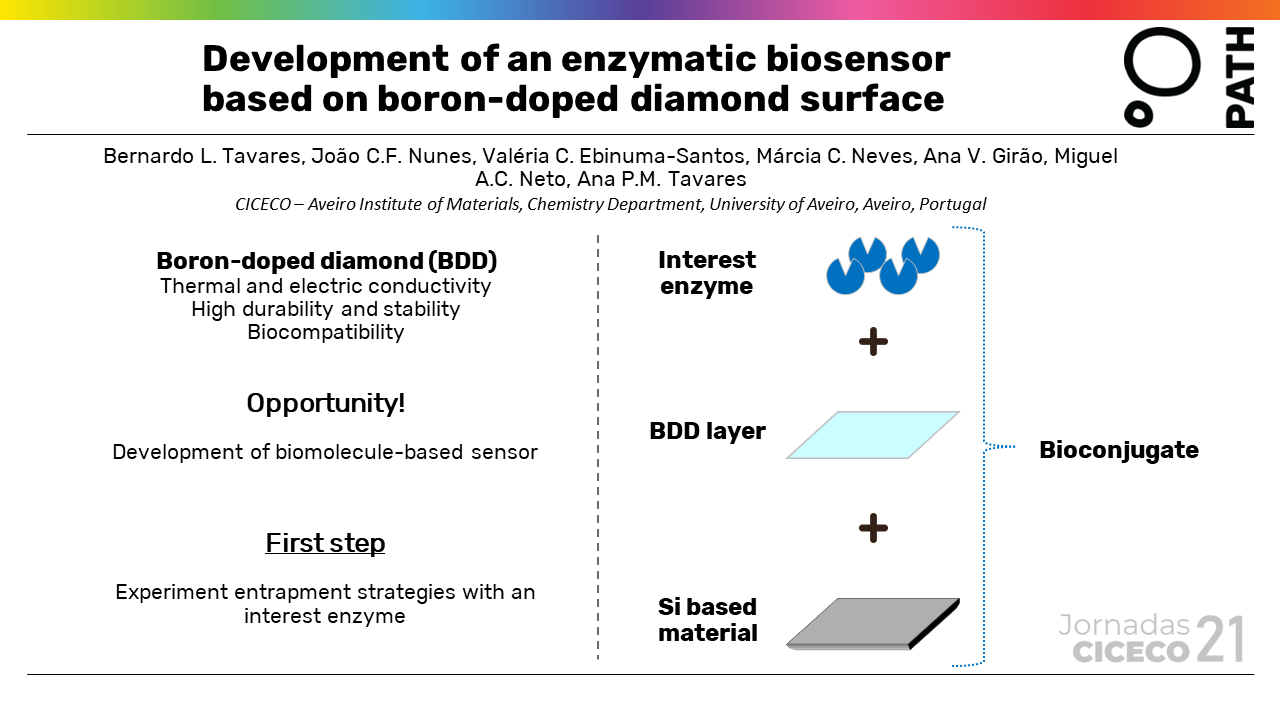 Nanotechnology research studies have increased rapidly in the last decade. With the development of new materials and techniques, synthetic diamonds with doped surfaces permitted the development of a variety of durable and precise thermistors. This study consisted of taking advantage of this material and associate it with an interest enzyme in the attempt of developing a biosensor by adsorption immobilization in a polycrystalline surface. Parameters such as immobilization yield, enzymatic activity, and material regeneration were studied together with surface characterization for quality and structure impact on the process. Results show that non-functionalized materials act the same as the functionalized ones, considering that morphologic structures were similar and the polycrystalline diamond composition wasn't significantly contaminated by secondary carbon structures such as graphite. An FTIR-ATR spectrum allowed to confirm the adsorption of the enzyme to the surface.
This work was developed within the scope of the project CICECO—Aveiro Institute of Materials, UIDB/50011/2020 & UIDP/50011/2020, financed by national funds through the Portuguese Foundation for Science and Technology/MCTES. Ana P. M. Tavares acknowledges the FCT and thanks the FCT for the research contract CEECIND/2020/01867 and POCI-01-0145-FEDER-031268-funded by FEDER, through COMPETE2020—Programa Operacional Competitividade e Internacionalização (POCI), and by national funds (OE), through FCT/MCTES, and by FAPESP (2018/06908-8).
Twitter Poster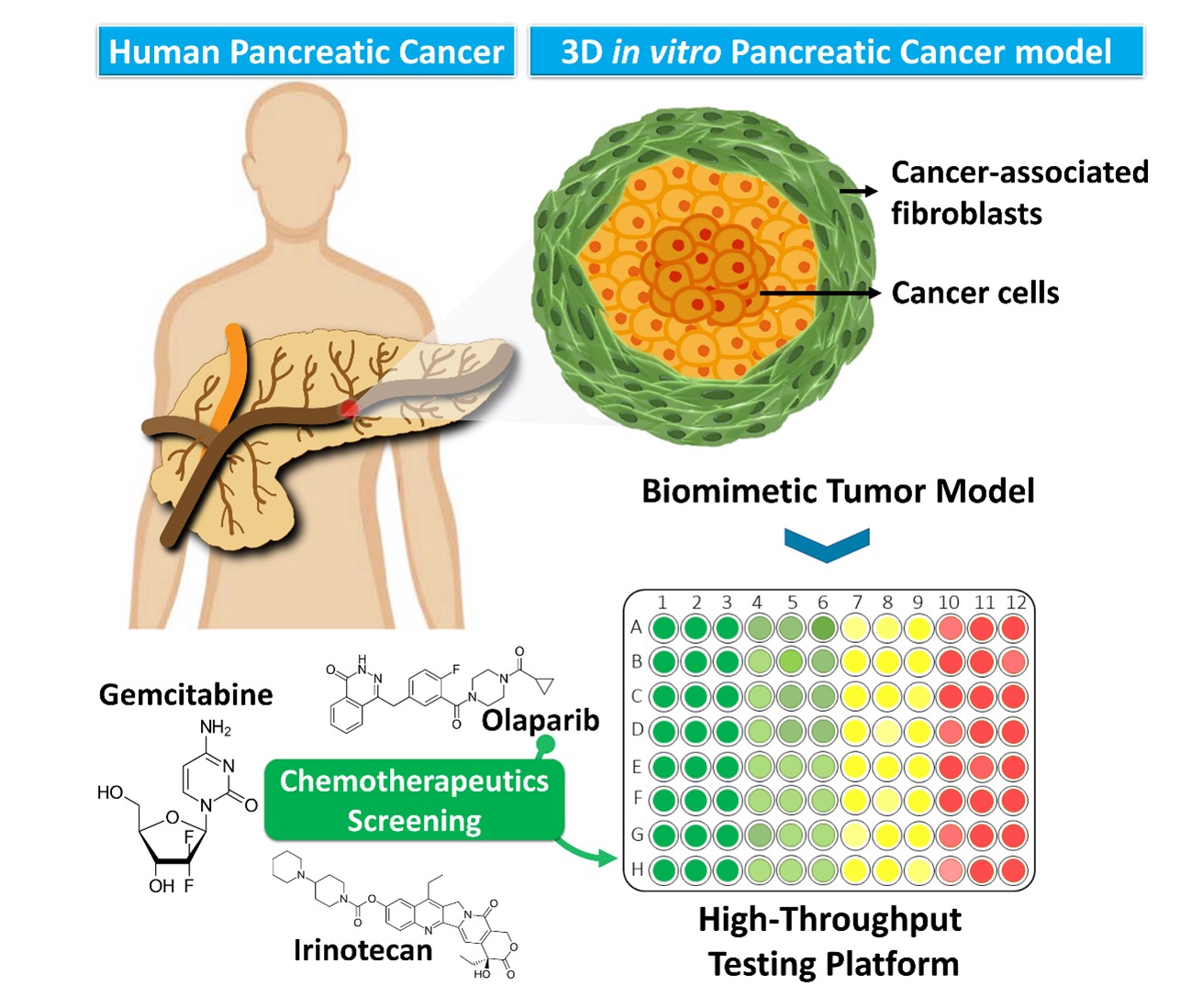 Pancreatic ductal adenocarcinoma (PDAC) is a highly deadly and complex neoplasia with a very low 5-year patient survival. The poor prognosis of this malignancy is related with its unique bioarchitecture in which an abundant juxta-tumoral fibrotic stroma shields cancer cells mass hampering anti-cancer therapeutics delivery.(1) A growing evidence has suggested that cancer associated fibroblasts (CAFs), generally localized in periductal/periacinar regions close to the tumor mass, are master players in orchestrating such active desmoplastic tumor microenvironment.(2) To date, few 3D in vitro tumor models have been able to fully recapitulate such PDAC tumor features, resulting in poorly predictive preclinical drug screening data of PDAC candidate therapies. Aiming to recapitulate key disease hallmarks, in this work we bioengineered truly organotypic and physiomimetic 3D microtumor models that recapitulate PDAC unique cytoarchitecture, as well as biomolecular and desmoplastic characteristics. The capacity of such 3D stratified microenvironment spheroid models (STAMS) to emulate various tumor hallmarks including the native spatial stratification of cancer-stromal cells, de novo ECM deposition and secretion of key molecular biomarkers and drug resistance were evaluated.
This work was developed within the scope of the project CICECO-Aveiro Institute of Materials, UIDB/50011/2020 &UIDP/50011/2020, financed by national funds through the Portuguese Foundation for Science andTechnology/MCTES. This work was also supported by the Programa Operacional Competitividade eInternacionalização (POCI), in the component FEDER, and by national funds (OE) through FCT/MCTES, in thescope of the projects PANGEIA (PTDC/BTM-SAL/30503/2017). The authors acknowledge the financial support bythe Portuguese Foundation for Science and Technology (FCT) through a Doctoral Grant (DFA/BD/7692/2020, M.V.M.) and through a Junior Researcher contract (CEEC/1048/2019, V.M.G.).
Twitter Poster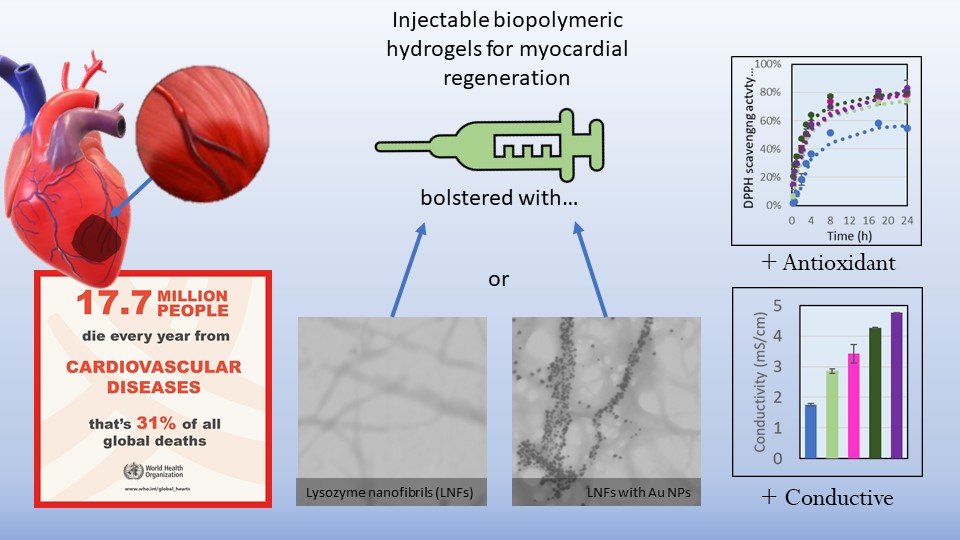 Cardiovascular diseases are the main cause of death in the modern world, raising urgent challenges to find efficient strategies to treat the damage caused by myocardium infarction. Currently, the only existing treatment is the heart transplantation.Combination of cells with biopolymeric scaffolds, with the therapeutically intent of regenerating damaged myocardial tissue, by inducing stem cell growth and differentiation, while the scaffold is slowly bioabsorbed is one promising strategy. Previous studies showed promising results, but still a long way ahead to reach more effective solutions.In the present study, it was investigated the use of protein nanofibrils (or protein nanofibrils-Au NPs) as functional reinforcing additives on hyaluronic acid-gelatin injectable hydrogels. So far, the reinforced hydrogels are injectable and showed improved antioxidant activity and electrical conductivity (when using LNFs-AU NPs). Further characterizations of these hydrogels are being planned and performed.
This work was developed within the scope of the project CICECO-Aveiro Institute of Materials, UIDB/50011/2020 & UIDP/50011/2020, financed by national funds through the Foundation for Science and Technology/MCTES. The Portuguese Foundation for Science and Technology (FCT) is also acknowledged for the doctoral grant to TC (SFRH/BD/130458/2017).
Twitter Poster The valorisation of wastes is becoming part of the vision and mission of companies once it presents both environmental and economic benefits. In this context, this work aimed to develop ceramic wall tiles with bio calcium carbonate from eggshells wastes. Several pastes were prepared with 0, 25, 50, 75 and 100 wt.% substitution of limestone, the natural raw material used nowadays, by eggshell waste. Through the characterization of specimens, total substitution of limestone by this bio calcium carbonate source leads to an increase, of at least 15%, in the flexural strength. Further, no significant differences were observed in the other properties, namely, shrinkage, water absorption, density, thermal expansion coefficient and color, and all values are within industrial limits. Therefore, this work proved that limestone can be totally substituted by the bio calcium carbonate from eggshell wastes. This new solution creates value for eggshell waste, uses bio calcium carbonate replacing natural raw materials, namely limestone; reduces up to 90% of eggshell waste in landfills and develop more sustainable products. Moreover, the reintroduction of the eggshell waste, generated by egg processing industries, into the value chain of the ceramic sector contributes not only to the circular economy but also to achieve a real industrial symbiosis.
The authors gratefully acknowledge the project LIFE19 ENV/ES/000121 financed by the LIFE Programme 2014-2020 of the European Union for the Environment and Climate Action. This work was developed within the scope of the project CICECO-Aveiro Institute of Materials, UIDB/50011/2020 & UIDP/50011/2020, financed by national funds through the Portuguese Foundation for Science and Technology/MCTES.
Twitter Poster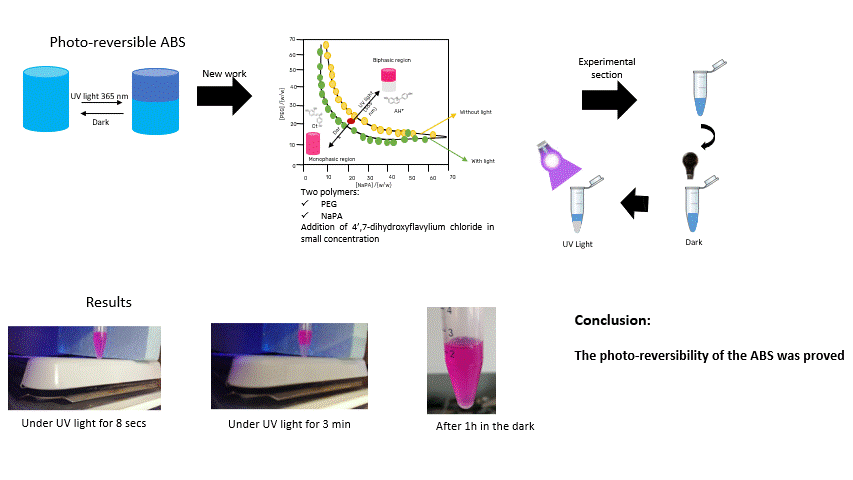 Separation and purification of value-added (bio)compounds is one of the most expensive step, with 60-70% of the total cost of a process. Currently, aqueous biphasic systems (ABS) have been gaining prominence as alternative platforms. They are mostly composed of water, avoiding the use of volatile organic solvents and, consequently, being more environmentally benign and biocompatible.Recently, reversible ABS have been proposed, i. e., ABS that can change from a single-phase to a two-phase (and vice-versa) through the application of a stimuli such as temperature, pH, gas-flushing and more recently light. This type of ABS allows the integration of process steps, reducing the costs and increasing the process performance. The possibility of using different stimuli allows to expand the applications of these systems, promoting the creation of a platform that integrate different stages. However, light has been little studied so far and flavylium derivatives can be interesting molecules for the development of photo-reversible ABS, essentially due to their photochromic character. In particular, 4’,7-dihydroxyflavylium chloride is one of the most studied and characterized, with a photochromic effect at slightly acidic pH.Thus, the objective of this work is the development of a photo-reversible ABS, using polyethylene glycol (PEG), sodium polyacrylate (NaPA), with the addition of the flavylium salt as stimulus agent. Monophase-biphase changes were obtained through the irradiation of the system with UV-light at 365 nm, promoting the interconversion of flavylium species.
The authors are grateful for financial support from FEDER through Programa Operacional Fatores de Competitividade –COMPETE and national funds through FCT – Fundacão para a Ciência e Tecnologia - IF/01634/2015 & SFRH/BD/94901/2013 within CICECO project – UIDB/50011/2020 & UIDP/50011/2020.
Twitter Poster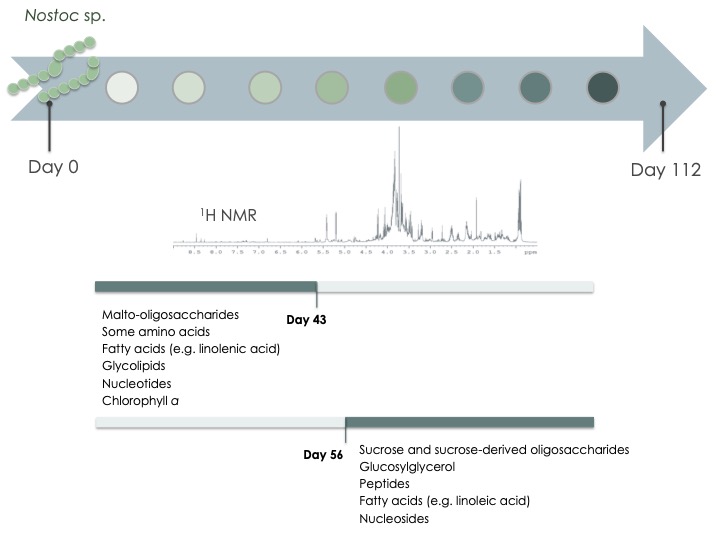 Cyanobacteria are often considered a factory of added-value compounds. However, knowledge about the array of interesting compounds that could be extracted from these prokaryotic organisms is still very limited. Nuclear Magnetic Resonance (NMR) spectroscopy is a widely used technique for metabolic profiling that allows an overview of the main metabolites present in complex biological matrices. In this work, high resolution 1H NMR was applied to the freshwater cyanobacterium Nostoc sp., and used to screen the production of metabolites demanded by several biotechnological applications. The growth and metabolic profile of Nostoc sp. were monitored during 112 days. Not only this species showed an incredible longevity, being able to grow for more than one hundred days without any medium supplementation, as it proved to be a source of valuable compounds. During the period of study, several interesting metabolites were detected, such as several sugars and oligosaccharides, lipids (e.g., glycolipids, ω-3 and ω-6 fatty acids), amino acids, including mycosporin-like, peptides, and pigments (e.g., chlorophyll a and carotenoids). Owing to the long-term monitoring implemented in this study, the production of these compounds could be associated to specific moments of the growth of Nostoc sp., providing new insights into the most appropriate harvesting time points for the biotechnological exploitation of specific molecules.
Thanks are due to FCT/MCTES for the financial support to CESAM (UIDP/50017/2020 + UIDB/50017/2020) and CICECO (UIDB/50011/2020 & UIDP/50011/2020), through national funds. The study was supported by the project REFINECYANO, funded by FCT (PTDC/BTA-BTA/30914/2017). I.P.E. Macário and T. Veloso are recipients of individual research grants by FCT financed by the FCT/MEC and co-financed by FEDER program (SFRH/BD/123850/2016 and SFRH/BD/147346/2019, respectively). The NMR spectrometer is part of the National NMR Network (PTNMR), partially supported by Infrastructure Project Nº 022161 (co-financed by FEDER through COMPETE 2020, POCI and PORL and FCT through PIDDAC).
Twitter Poster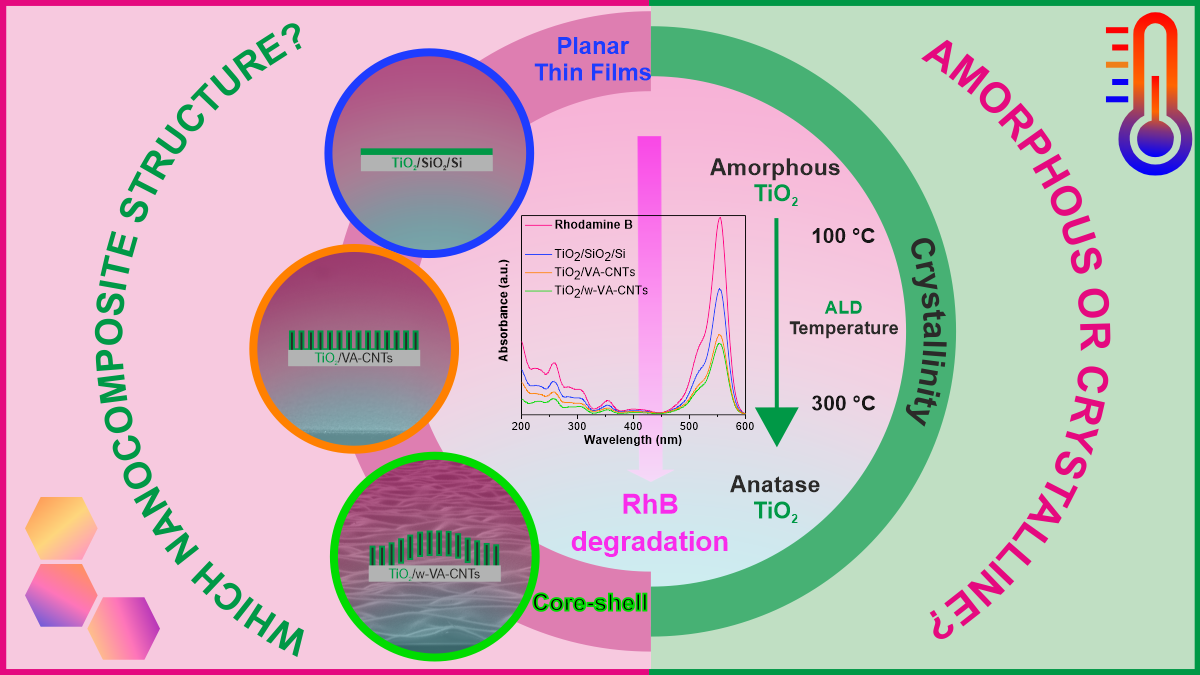 Titanium dioxide (TiO2) is one of the metal oxides that stands out as photocatalyst material mainly due to its high oxidizing power, low relative cost, photostability, non-toxicity and insolubility under most conditions. These characteristics make TiO2 a very attractive material for environmental applications, especially in solar driven degradation of organic pollutants in wastewater treatment. An enormous effort has been to improve the photocatalytic properties of this remarkable material. In this way nanostructured TiO2 combined with the great specific surface support achieved by vertically aligned carbon nanotubes (VA-CNTs) arrays appears to be a suitable solution to promote the enhancement in the photocatalytic activity of TiO2.Herein, we present a controlled deposition of TiO2, via atomic layer deposition (ALD) on high surface area supports, such as wave-like patterned carbon nanotube (w-VA-CNTs) arrays. TiO2/w-VA-CNTs nanocomposites were prepared varying the loading amount of TiO2, by applying different number of ALD cycles onto the surface of the nanotubes, as well as the deposition temperature towards the optimal photocatalytic performance, which can be defined by the TiO2 thickness and crystalline structure. The photocatalytic performance of these nanocomposite materials was tested in the degradation of rhodamine B (RhB), a harmful dye present in food and textile wastewaters. The photodegradation experiments under ultraviolet light on RhB revealed that the nanocomposite comprised of anatase crystalline TiO2 grown at 200 °C (11.2 nm thickness) presented the highest degradation efficiency, around 55% with an illumination time of 240 min.
This work was developed within the scope of the project CICECO-Aveiro Institute of Materials, UIDB/50011/2020 & UIDP/50011/2020, financed by national funds through the FCT/MEC. This work was financially supported by: Base-UIDB/50020/2020 and Programmatic-UIDP/50020/2020 Funding of LSRE-LCM, funded by national funds through FCT/MCTES (PIDDAC). I.E.O. acknowledges FCT for the research grant 2020.06213.BD.
Twitter Poster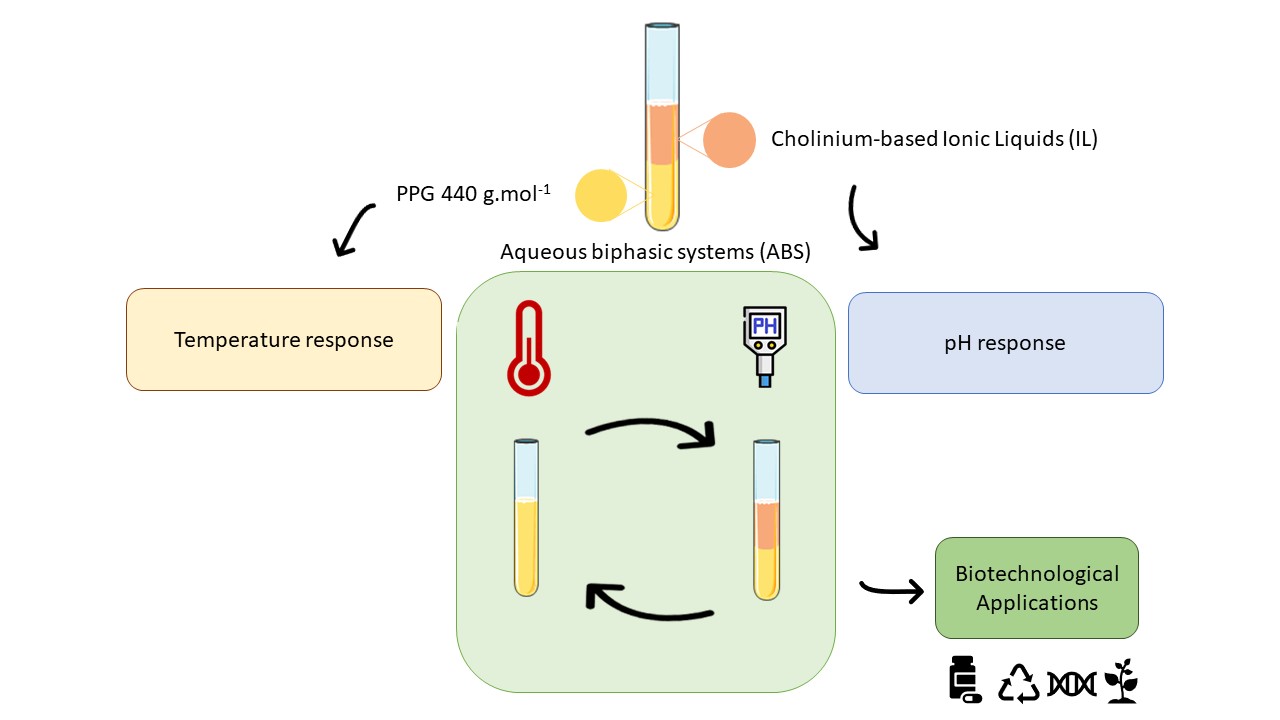 Aqueous biphasic systems (ABS) are an alternative liquid-liquid extraction technique over the conventional ones that employ volatile organic solvents. ABS are mainly composed of water and a combination of two non-volatile compounds, usually two polymers, a polymer and a salt or two salts. Within these phase-forming compounds, ionic liquids (ILs) have several advantages, namely the ability to tailor the ABS extraction performance and selectivity. In this work, the goal is to develop IL-based ABS simultaneously responsive to pH and temperature to design integrated production-separation platforms. ABS formed by ILs and polypropylene glycol with a molecular weight of 400 g.mol-1 (PPG 400) were investigated. Cholinium-based ILs comprising anions derived from carboxylic acids have been studied to allow the anion speciation and have a response to pH, while the response of temperature was achieved with PPG 400. The respective ternary liquid-liquid phase diagrams were determined at three temperatures (25°, 35° and 45° C) and in a pH range from 3 to 7. Based on the attained results, it is demonstrated that the developed ABS are responsive to both pH and temperature, being thus double-reversible liquid-liquid systems. This ABS double-reversible behavior by the application of two stimuli allows the development of customized and integrated production-separation processes in numerous applications.
This work was developed within the scope of the project CICECO-Aveiro Institute of Materials, UIDB/50011/2020 & UIDP/50011/2020 financed by national funds through the Portuguese Foundation for Science and Technology/MCTES. A.F.C.S. Rufino and E.V. Capela acknowledge FCT for the PhD grants SFRH/BD/138997/2018 and SFRH/BD/126202/2016, respectively.
Twitter Poster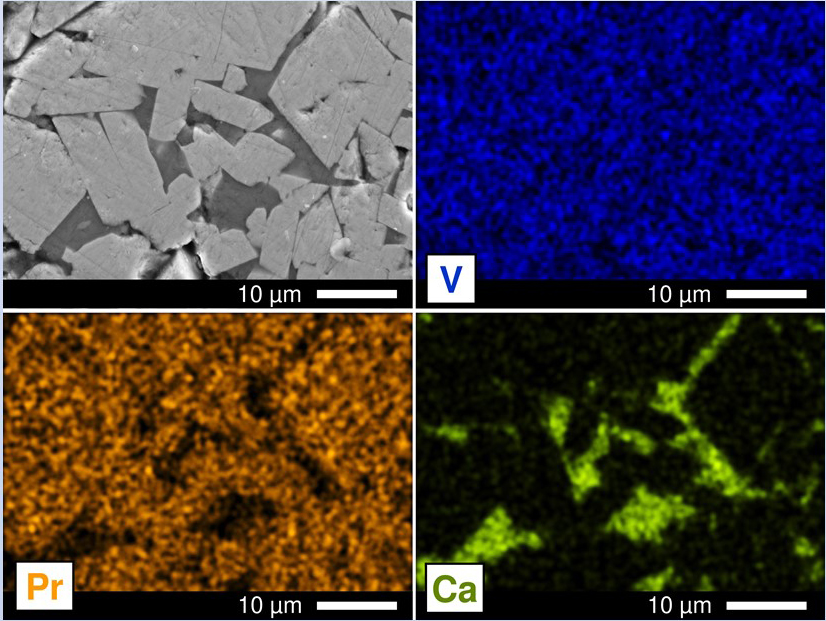 LnVO4 orthovanadates attract attention as prospective materials for electrochemical applications, in particular, as redox-reversible electrode components for solid oxide fuel cells (SOFC) [1,2]. One important advantage of LnVO4-derived components of SOFC anodes is their good resistance to carbon deposition and sulphur-containing impurities which is critical for hydrocarbon-fueled SOFCs. The present work was focused on the impact of the acceptor-type substitution by calcium on the electrical transport properties of zircon-type orthovanadate PrVO4 under oxidizing conditions. Undoped PrVO4 and calcium-substituted Pr1-xCaxVO4-δ (x = 0.02-0.20) were prepared by conventional solid state route and sintered at 1300ºC for 5h in air. The prepared materials were characterized by X-ray and neutron diffraction, SEM/EDS, thermal analysis, and measurements of electrical properties in controlled atmospheres. XRD demonstrated the formation of phase-pure solid solutions with tetragonal zircon-type structure for up to 5 at.% of calcium in Pr sublattice, while SEM/EDS suggest a lower solubility due to the presence of Ca-V-O phase impurities. Pr(Ca)VO4 ceramics showed semiconducting behavior under oxidizing conditions at 400-900ºC. Within the solubility range, doping with calcium increases the total conductivity. The ionic and electronic contributions at 700-900ºC were assessed by the modified e.m.f. technique. The electronic conductivity is p-type and decreases with decreasing p(O2). At lower temperatures, the total conductivity was found to be higher in wet atmospheres compared to dry conditions, thus implying a significant contribution of protonic transport at temperature below 550ºC. The redox behavior of PrVO4-based ceramics on isothermal cycling between air and 10%H2-N2 was studied by impedance spectroscopy, thermogravimetry and XRD.
This work was developed within the scope of the projects 2020.04654.BD, CARBOSTEAM (POCI-01-0145-FEDER-032295), and CICECO - Aveiro Institute of Materials (UIDB/50011/2020 & UIDP/50011/2020) financed by national funds through the FCT/MEC and by FEDER through COMPETE2020-POCI and PT2020 Partnership Agreement.
Twitter Poster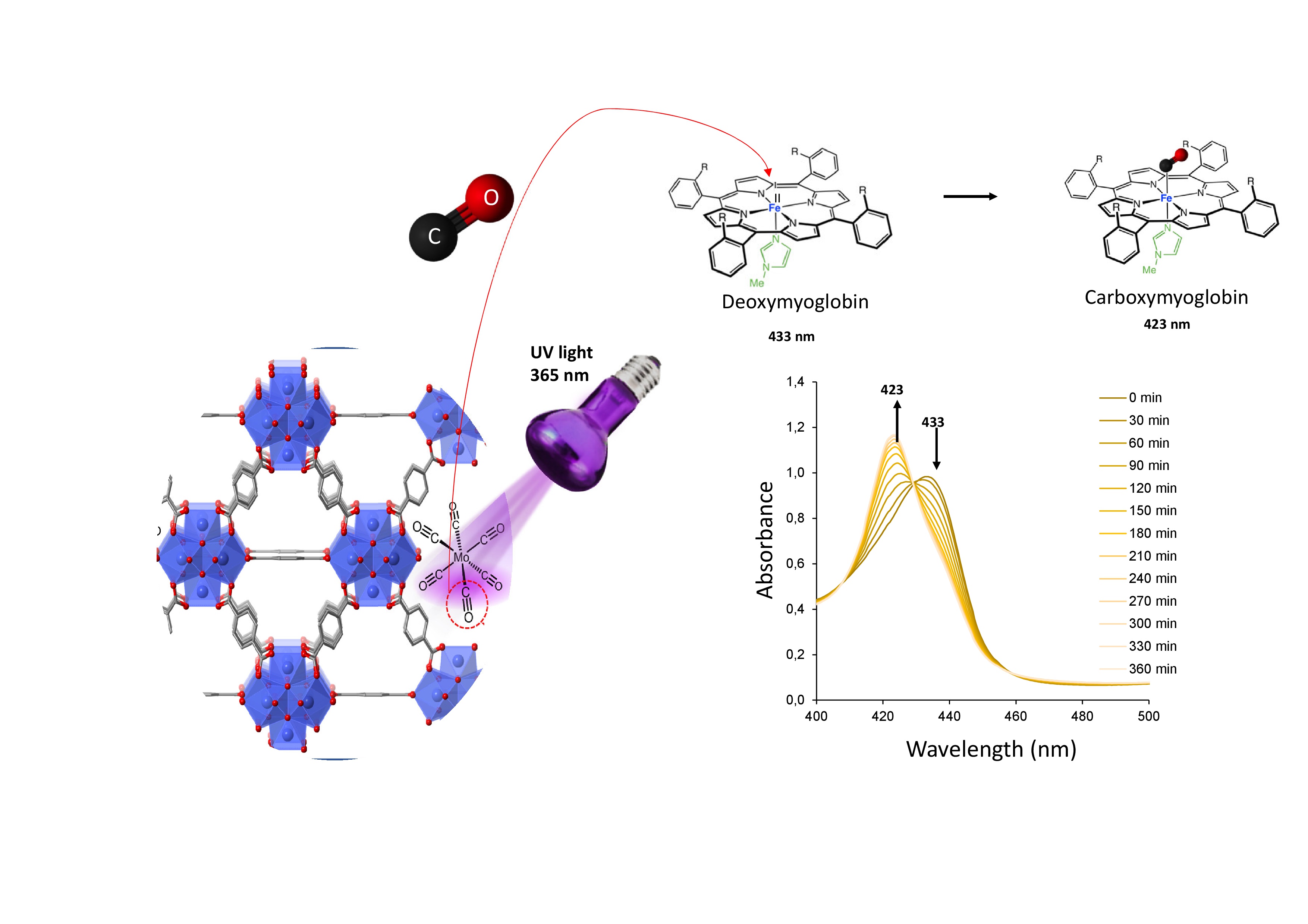 The inclusion of molybdenum hexacarbonyl in a hafnium-based metal-organic framework (MOF) with the UiO-66 architecture afforded carbon monoxide-releasing materials (CORMAs). The supported materials, which contained 6.0–6.6 wt% Mo, were characterized by powder X-ray diffraction (PXRD) and SEM coupled with energy dispersive X-ray spectroscopy, showing no alterations in their crystallinity nor morphology. The N2 physisorption isotherms revealed a 20% reduction in the micropore volume after encapsulation of Mo(CO)6. The presence of encapsulated Mo(CO)6 complexes was supported by FT-IR and 13C{1H} cross-polarization magic-angle spinning NMR spectroscopies. The suitability of these materials to behave as CORMAs was investigated under simulated physiological conditions (37 °C, pH 7.4 buffer). Carbon monoxide (CO) release was quantified by the standard myoglobin (Mb) assay. While stable in the dark, the supported material Mo(6.0)/UiO-66(Hf) released a maximum amount of 0.26 mmol CO per gram upon irradiation with UV light (365 nm). Leaching tests showed minor losses of molybdenum (<1%). The strong capacity of the support to trap Mo(CO)6 and decarbonylation fragments was attributed to the high chemical stability of the MOF, as confirmed by PXRD and FT-IR spectroscopy.
We acknowledge funding provided within the project CICECO-Aveiro Institute of Materials, UIDB/50011/2020 & UIDP/50011/2020, the CENTRO 2020 Regional Operational Programme (project references CENTRO-01-0145-FEDER-028031 and PTDC/QUI-QOR/28031/2017), and COMPETE 2020 Operational Thematic Program for Competitivenessand Internationalization (Project POCI-01-0145-FEDER-030075), financed by national funds through the FCT (Fundação para a Ciência e a Tecnologia)/MEC (Ministério da Educação e Ciência) and when appropriate co-financed by the European Union through the European Regional Development Fund under the Portugal 2020 PartnershipAgreement.
Twitter Poster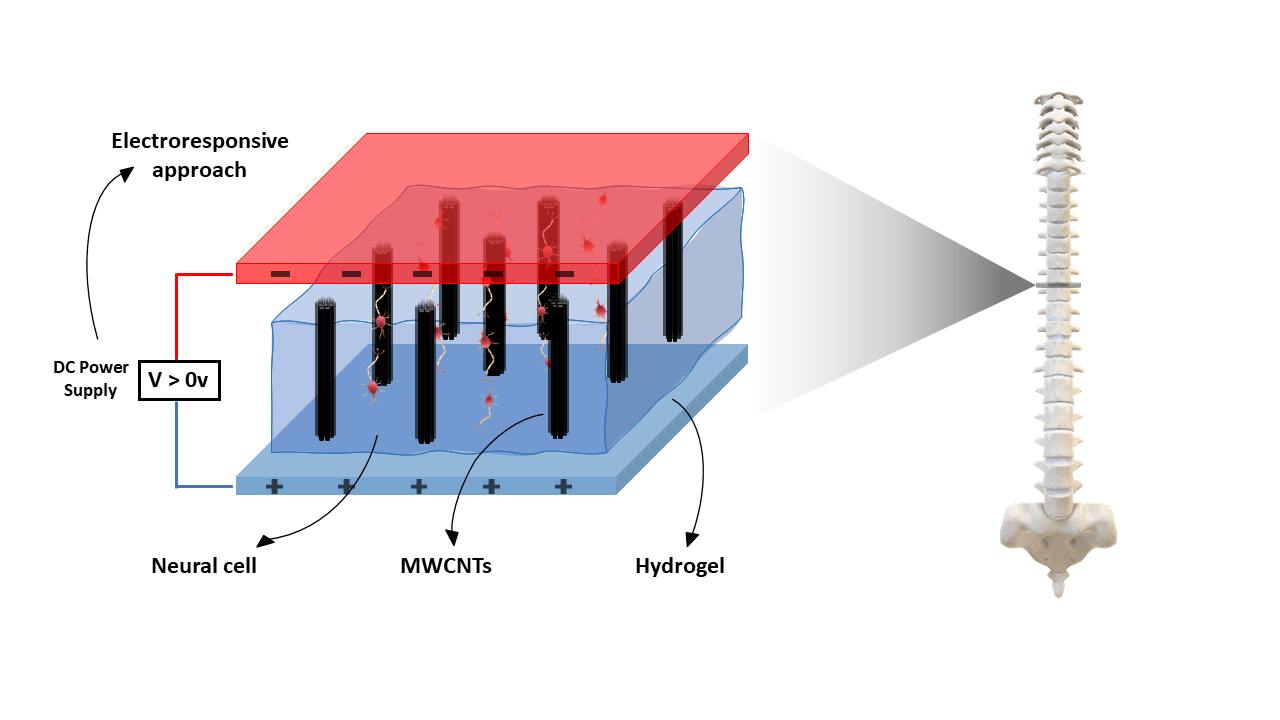 The development of three dimensional (3D) arrays of vertically aligned carbon nanotubes (VA-CNTs) with controllable lengths and physicochemical properties remains a topic that generates interest from a broad range of applications across different research fields. In cell culture and tissue engineering applications, the VA-CNTs microstructures can mimic the 3D environment of native tissues and stimulating cell growth. The most common method to fabricating VA-CNTs, so-called “forests”, is by means of thermal chemical vapor deposition (T-CVD) using a continuous or patterned metallic catalyst films deposited by physical vapor deposition (PVD) process. This approach enables vertical self-organization of CNTs on a silicon (Si) substrate, and this mechanically favorable configuration facilitates growth of VA-CNTs whose length can reach up to several micrometers. In this work, we presented a deposition-growth-densification process to produce high density and micropatterned VA-CNT forests. This process employed Al2O3 and Fe as the multilayer catalyst, conventional T-CVD to grow VA-CNTs forests and the liquid-induced densification process to increase their density. During the densification process, cellular pattern or “flower-like” pattern was formed in VA-CNT forest by strong capillary force during solvent evaporation and Van der Waals interaction between the nanotubes. These microstructures with asymmetric topography are particularly interesting as electro-responsive material for the cell growth enhancement, owing to the outstanding electrical properties of the nanotubes.
This work was developed within the scope of the project CICECO-Aveiro Institute of Materials, UIDB/50011/2020 & UIDP/50011/2020, financed by national funds through the FCT/MEC.
Twitter Poster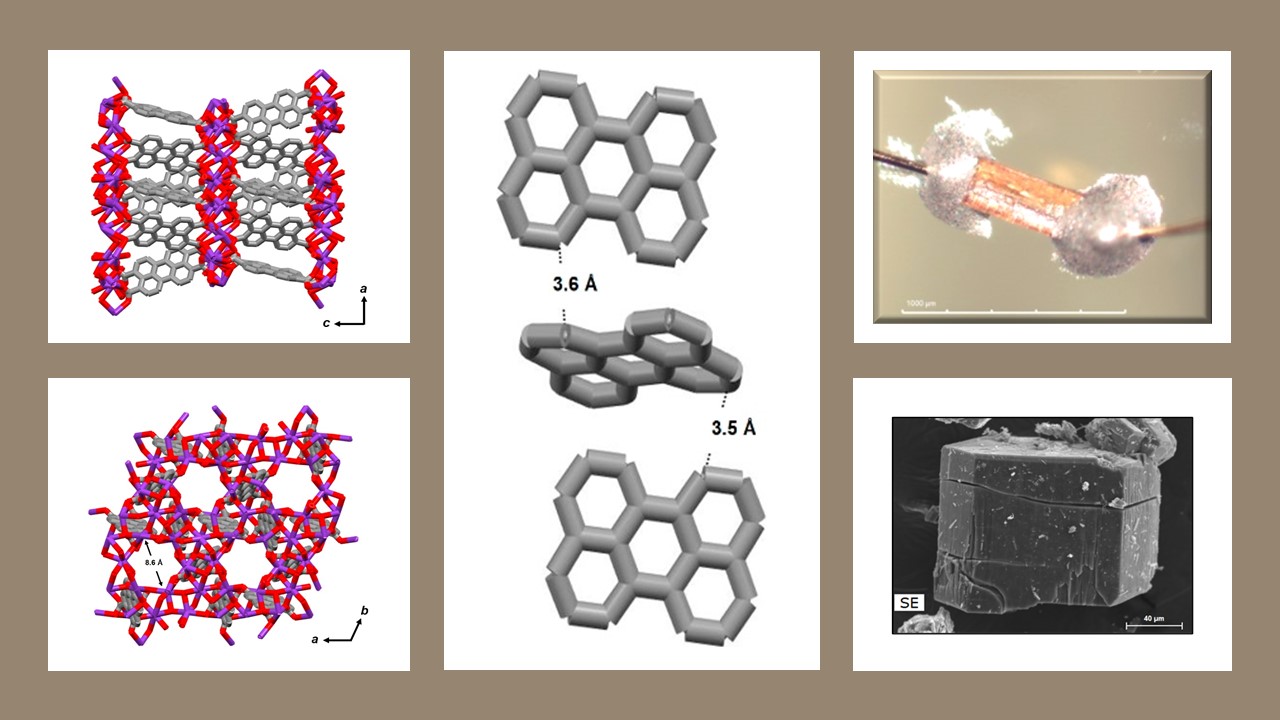 Metal-Organic Frameworks (MOFs) have emerged in the past two decades as promising crystalline porous materials for gas storage and separation, catalysis, sensing, and many other applications. Besides their inherent porosity, MOFs may also incorporate tunable electronic properties (electrical, optical or magnetic) which strongly depend on the selected building blocks, becoming very attractive for their implementation as integral components in electronic devices. In particular, electroactive organic ligands have received much interest due to their tunable electronic properties by molecular design, easy functionalization and possibility to modulate the MOFs electrical conductivity by chemical doping. For example, tunable electrical properties of MOFs based on tetrathiafulvalene, pyrene, or anthracene ligands have been recently reported, while electrically conductive perylene-based MOFs remain almost unexplored. Herein, we report a detailed study on the electrical properties of a perylene-based MOF exhibiting enhanced conductivity upon iodine doping. In addition, the photoconductive properties of the (non-doped and iodine-doped) perylene-based MOF have been studied.
Thank CICECO-Aveiro Institute of Materials for the project and thank you FCT for financial my project.I also thank Prof. João Rocha and Prof. António Rodríguez-Diéguez.
Twitter Poster Water, the king of solventsThe king is very available to his people, he does not create toxic environments, is cheap on your expenses, is not flammable with kingdom problems, and is suitable for the environment. However, the king does not like so much the presence of the hydrophobic neighbours is his kingdom. So, how to help water? In this scene, appears the friends called Hydrotropes! Hydrotropes have an amphiphilic structure that can increase the solubility of hydrophobic solutes in water. In other words, hydrotropes can change the mood of our king, and he can live in harmony with the hydrophobic neighbors, also doing some interactions with them.But, how are these interactions? Is it magic? Maybe a witch has helped the king... Over the years, some theories were proposed to explain these interactions, such as the self-aggregation of hydrotropes, the disruption of water structure, and the stoichiometric argument. Recently, the cooperativity model was proposed by Shimizu and Matubayasi. [1] Our group also proposed a molecular mechanism that we affectionately call the “apolarity factor”. We are also trying to describe how the surface volume of the hydrotrope can mediate these interactions. In a final step, we are interested in how these hydrotropes can act in real applications.Our team and our king have been unraveled many mysteries in the world of hydrotropy. We hope to see you on more adventures like that. The end.
This work was developed within the scope of the project CICECO-Aveiro Institute of Materials, UIDB/50011/2020 & UIDP/50011/2020, financed by national funds through the Portuguese Foundation for Science and Technology/MCTES. The authors are grateful for the financial support of the Portuguese Foundation for Science and Technology (FCT) for the doctoral grant SFRH/BD/138439/2018 of Bruna P. Soares. The authors are also grateful to Brazilian founding agencies for the financial support and fellowship. Specifically, CNPq (National Council of Technological and Scientific Development, Brazil), Project 404347/2016-9, CAPES (Coordination for the Improvement of Higher-Level Personnel, Brazil), projects CAPES/PROEX-1624/2018 and CAPES/PRINT88887.310560/2018-00. The authors wish to thank LAMEB (Laboratório Multiusuário de Estudos em Biologia), from Biological Sciences Center (CCB) of the Federal University of Santa Catarina (UFSC). The authors are grateful for the pulps of juçara fruits (Euterpe Edulis Martius) that were produced and kindly supplied by the company Duas Rodas, located in the city of Jaraguá do Sul (SC) – Brazil.
Twitter Poster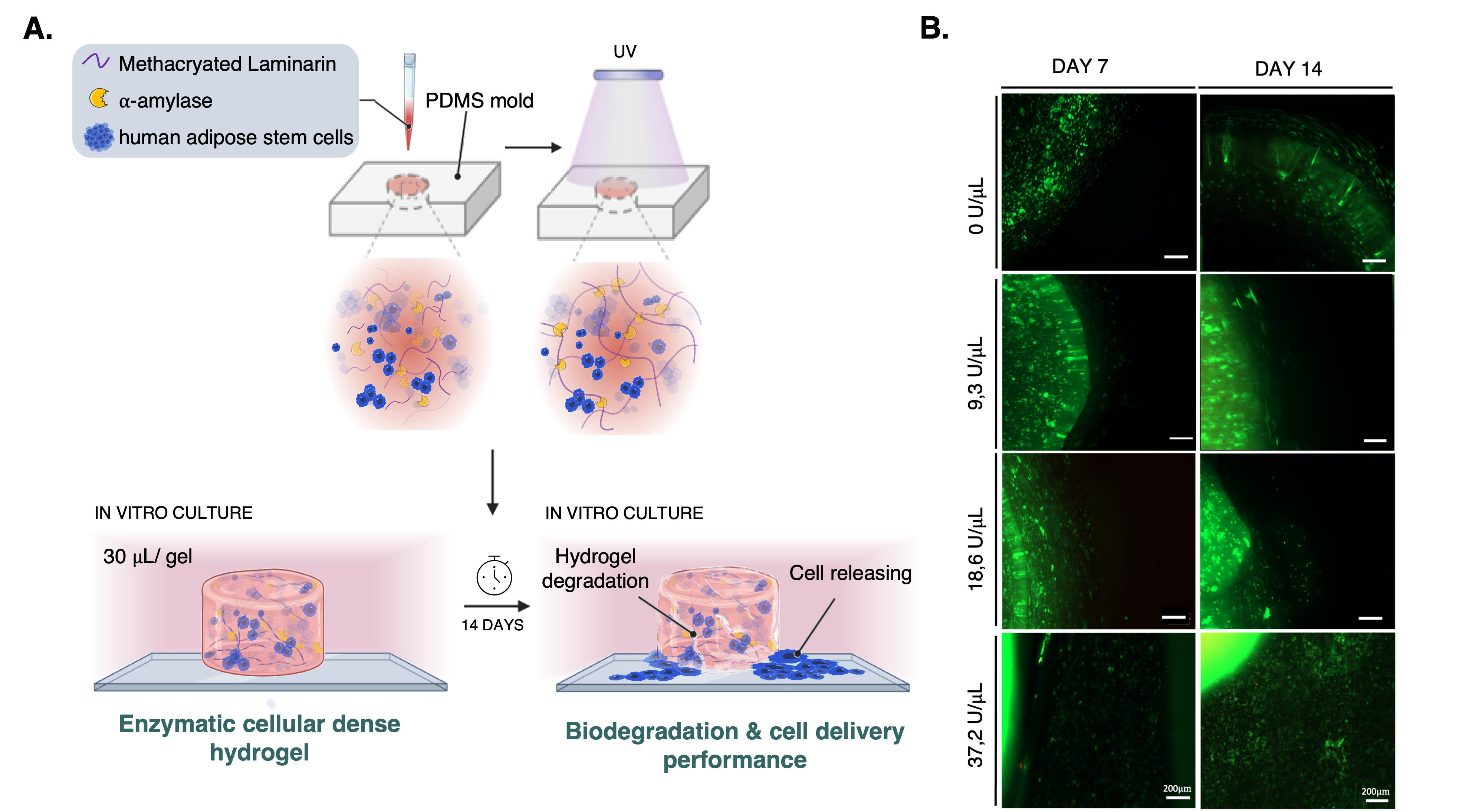 Enzymatically degradable hydrogel systems can be a powerful tool for the development of simple and robust cell laden constructs to promote the controlled outward cell migration into native tissues and foster the regeneration process. Laminarin is a new type of bioactive polysaccharide isolated from brown seaweeds that has been established as a promising biomaterial precursor due to its immune modulation, antitumor and antimicrobial properties. To this end, we fabricated enzymatic-empowered degradable laminarin hydrogels by encapsulating human adipose stem cells with adequate α-amylase concentrations. In a validation of this proof-of-concept, we have demonstrated that the increasing of α-amylase concentration in laminarin hydrogels increased its porosity, decreasing equivalently the swelling and the mechanical properties. In consequence, these properties have enabled the migration of cells from the hydrogel comparing with the control group with no encapsulated enzyme. Attempting to develop a safer, more convenient, and more applicable system in the clinical field, ongoing work includes the transition of this system to an injectable microgel system. We envision that the size of the obtained microgels around 115um not only will fulfill the oxygen diffusion limits in situ (which is between 100-200um), being therefore ideal for use in a delivery method, but also the injectable microgels will allow the repeated administration to foster the regeneration process in a minimally invasive manner
We acknowledge the FCT project “PROMENADE”-PTDC/BTM-MAT/29830/2017, the doctoral grant SFRH/BD/146740/2019 and the project CICECO-Aveiro Institute of Materials, POCI-01-0145-FEDER-007679 (UID /CTM /50011/2013).
Twitter Poster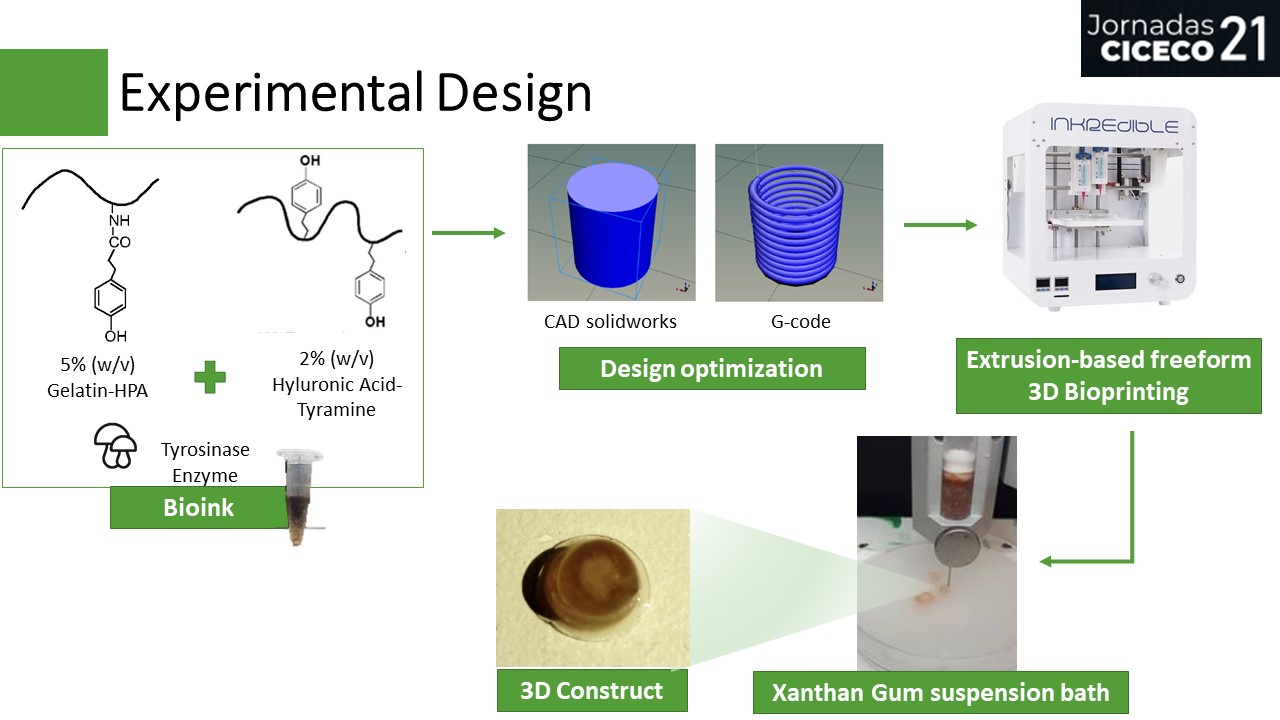 Recently, 3D-bioprinting technique emerged as valuable tool to produce high-content 3D in vitro models assuming complex 3D structures. In this technique, cells are commonly embedded in relevant hydrogels to form a bioink and then printed according to the desired and pre-established arrangement following a computer assisted design software.In order to improve the printability of hydrogel-based bioinks, researchers commonly modulate their rheological properties and crosslinking densities aiming to obtain more robust inks, which could considering the unique compromise between cell viability, proliferation and differentiation. To face this issue, an emerging strategy is the use of supporting baths to assist extrusion-based 3D-printing processes, assuring the shape fidelity maintenance of the printed constructs and the desired spatial control.In this work, we exploit freeform 3D-bioprinting techniques to obtain highly complex, and cell laden, hollow tubular constructs crosslinked via a fully enzymatic approach. Complex freeform tubular models were obtained by direct 3D-bioprinting of an ECM-mimetic ink comprising hydroxyphenyl propionic acid-modified gelatin (Gelatin-HPA) and Hyaluronan-tyrosine at different concentrations, in a xanthan gum supporting bath containing the crosslinking tyrosinase enzyme. This work paves the way toward fabricating 3D-bioprinted constructs that are independent from synthetic photo-crosslinkers, constituting a more sustainable, yet effective approach to generate such complext structures laden with living cells.
This research was funded by project CICECO-Aveiro Institute of Materials, UIDB/50011/2020 & UIDP/50011/2020, financed by national funds through the Portuguese Foundation for Science and Technology/MCTES. This work was also supported by the Programa Operacional Competitividade e Internacionalização (POCI), in the component FEDER, and by national funds (OE) through FCT/MCTES, in the scope of the projects PANGEIA (PTDC/BTM-SAL/30503/2017). The authors acknowledge the financial support by the Portuguese Foundation for Science and Technology (FCT) through a Doctoral Grant (DFA/BD/7692/2020, Maria V. Monteiro) and trough a Junior Researcher contract (CEEC/1048/2019, Vítor M. Gaspar).
Twitter Poster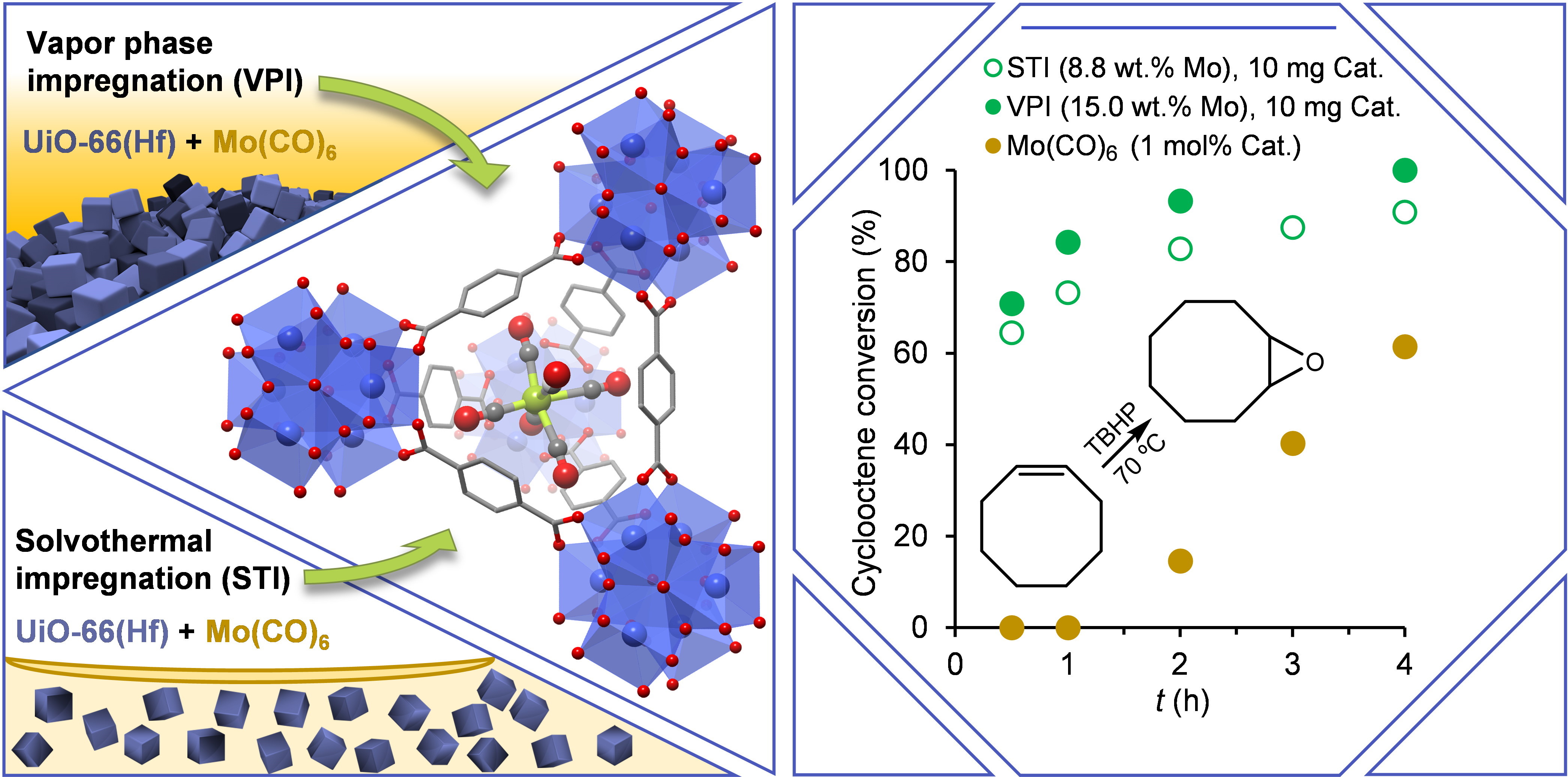 Metal-organic frameworks (MOFs) are three-dimensionally structured porous crystalline materials built from the interconnection of metal ion or polymetallic clusters and multitopic organic linkers. Recently, hafnium-based MOFs have been attracting growing interest, particularly HfIV analogues of UiO-66(Zr). Hf-based MOFs have higher Brønsted acidity than their isostructural Zr-based counterparts due to the higher oxophilic character of the hafnium(IV) center (stronger M‒O bonds). For these reasons, when comparing isostructural Hf/Zr-MOFs, it has been suggested that Hf-based materials may display higher chemical and thermal stability, and perform better as chemical sensors, heterogeneous acid catalysts or as sorbents for gas storage and separation.In this work, UiO-66 (zirconium and hafnium) MOFs were prepared by an attractive fast synthesis method (ca. 30 min) and Mo(CO)6 was encapsulated in the resultant nanocrystalline supports by solvothermal and vapor phase impregnation methods (STI and VPI, respectively), resulting in Mo loadings of 2.0-8.8 wt.% (STI) or 15 wt.% (VPI). The confinement and catalytic behavior of Mo(CO)6 species inside the supports was investigated by means of multitechnique characterization (powder X-ray diffraction, SEM-EDS, N2 adsorption, FT-IR and 13C{1H} CP MAS NMR) and catalytic olefin epoxidation. The characterization results collectively confirmed immobilization within the pore spaces of the hosts, which maintained their bulk crystallinity and crystal morphologies. The Mo(CO)6 loaded MOFs are active and reusable pre-catalysts for cis-cyclooctene epoxidation, exhibiting excellent epoxide selectivity and tert-butyl hydroperoxide efficiency.
We acknowledge funding provided within the project CICECO - Aveiro Institute of Materials, UIDB/50011/2020 & UIDP/50011/2020, the CENTRO 2020 Regional Operational Programme (project references CENTRO-01-0145-FEDER-028031 and PTDC/QUIQOR/28031/2017), and COMPETE 2020 Operational Thematic Program for Competitiveness and Internationalization (Project POCI-01-0145-FEDER-030075), financed by national funds through the FCT (Fundação para a Ciência e a Tecnologia)/MEC (Ministério da Educação e Ciência) and when appropriate co-financed by the European Union through the European Regional Development Fund under the Portugal 2020 Partnership Agreement.
Twitter Poster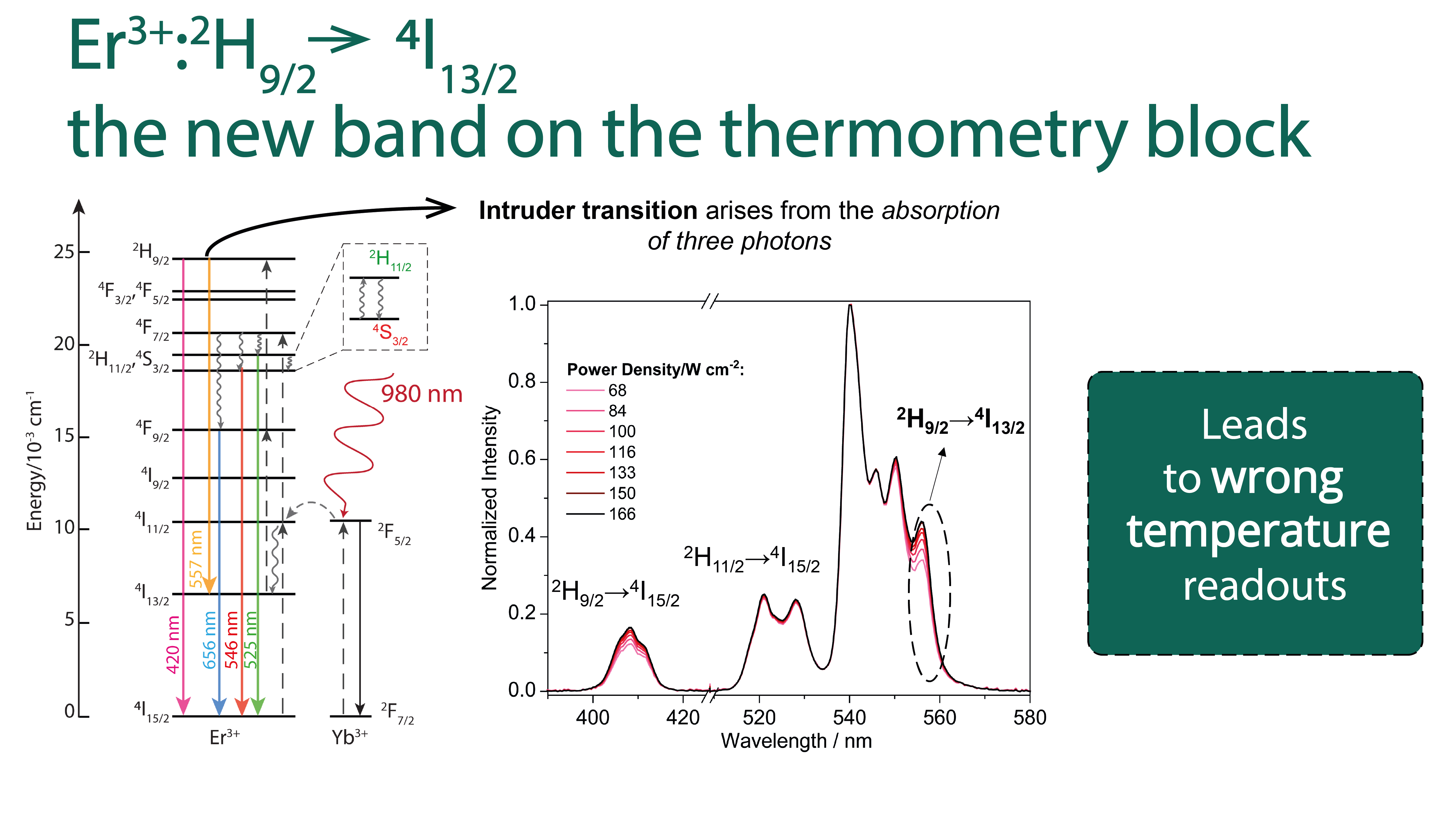 The use of the of the 2H11/2→4I15/2 and 4S3/2→4I15/2 Er3+ transitions in luminescent ratiometric thermometers have been widely reported for several years. However, very recently, several works have drawn attention to the presence of the 2H9/2→4I13/2 Er3+ transition within 4S3/2→4I15/2 emission range, then can induce distorted temperature readouts. In this work, we’ll further study its implications and how we can mitigate them.
CICECO-Aveiro Institute of Materials, UIDB/50011/2020 & UIDP/50011/2020 Fundação da Ciência e Tecnologia for the grant: SFRH/BD/139710/2018Phantom-GVetroneInstitut National de la Recherche Scientifique Centre Énergie, Matériaux et Télécommunications Université du Québec
Twitter Poster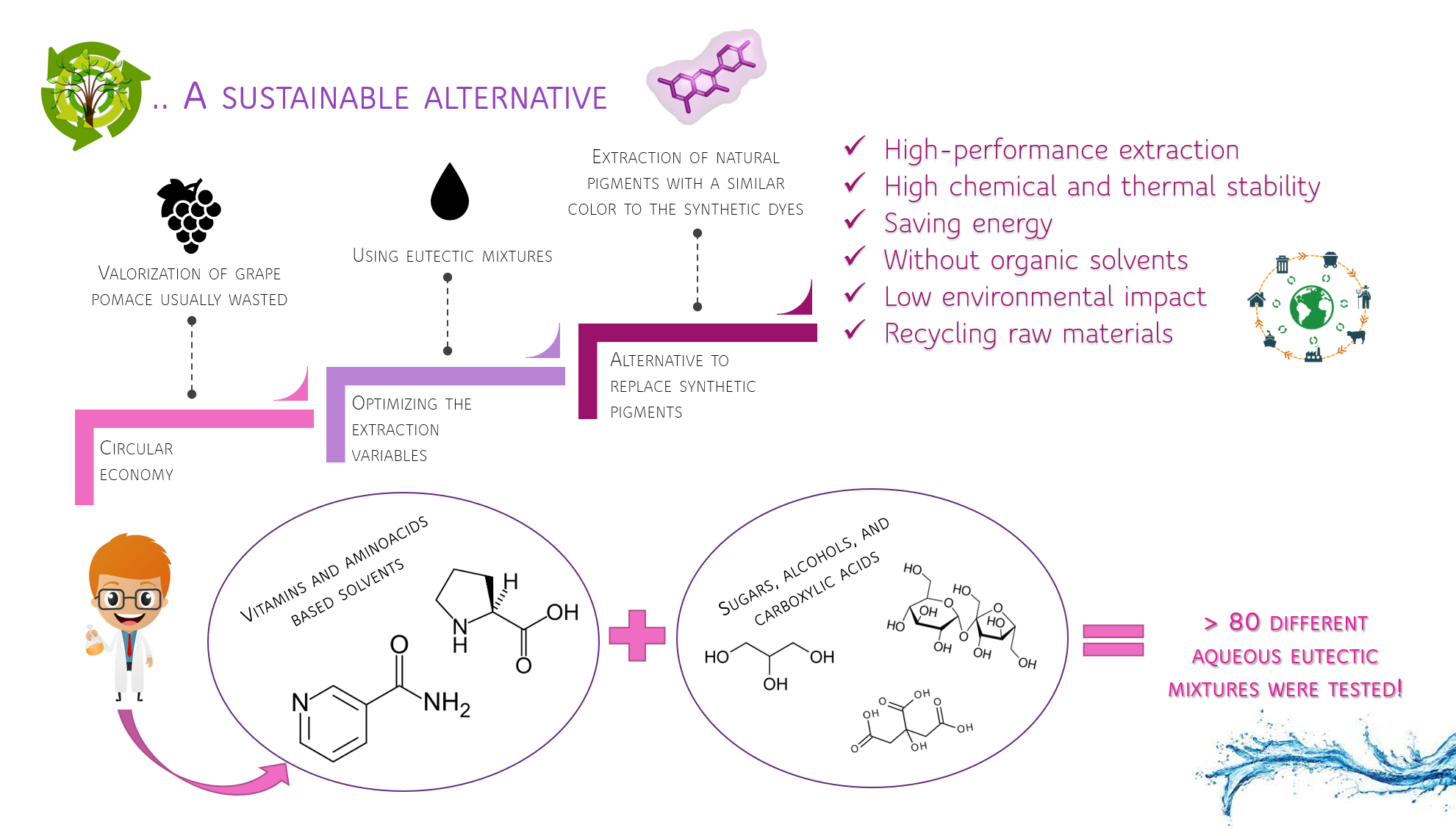 Grape pomace is a byproduct of wine and juice production and represents a valuable source of natural compounds, mainly pigments. However, according to FAO, 20-30% of grape production is wasted, representing approximately 19.75 million tons, leading to several environmental impacts. Anthocyanins, hydrophilic bluish-purple pigments, make up a large portion of this wasted biomass, and have an important economic value. Usually, purple pigments are synthesized by highly energy-dependent photocatalytic reactions using several organic solvents, normally associated to a high E-factor. In this sense, this work aimed to explore alternative solvents, namely, eutectic mixtures, to sustainably recover anthocyanins from grape pomace. Here, we used eutectic mixtures based on vitamins and amino acids as hydrogen bond acceptors (HBA), combined with alcohols, sugars, and carboxylic acids as hydrogen bond donors (HBD). The extraction was optimized using a factorial planning, which pointed out the process conditions to the optimum extraction of the colorants, which represents the recovery of 18.25 mganthocyanins.g-1grape pomace. The result obtained represents a 3-fold better yield compared to the same process mediated by traditional solvents like water and ethanol. Then, the colorants were separated from the eutectic mixture by a solid-phase extraction, which allows, not only the purification of the purple colorants but also the recovery of the solvent to be recycled in new cycles of extraction.
Fundação de Amparo à Pesquisa do Estado de São Paulo (FAPESP: 2020/08421-9; 2018/14582-5); This work was developed within the scope of the project CICECO Aveiro Institute of Materials, UIDB/50011/2020 & DP/50011/2020, financed by national funds through the Portuguese Foundation for Science and Technology/MCTES. Thanks are also due to the University of Aveiro and FCT/MCT for the financial support of LAQV-REQUIMTE (UIDB/50006/2020).
Twitter Poster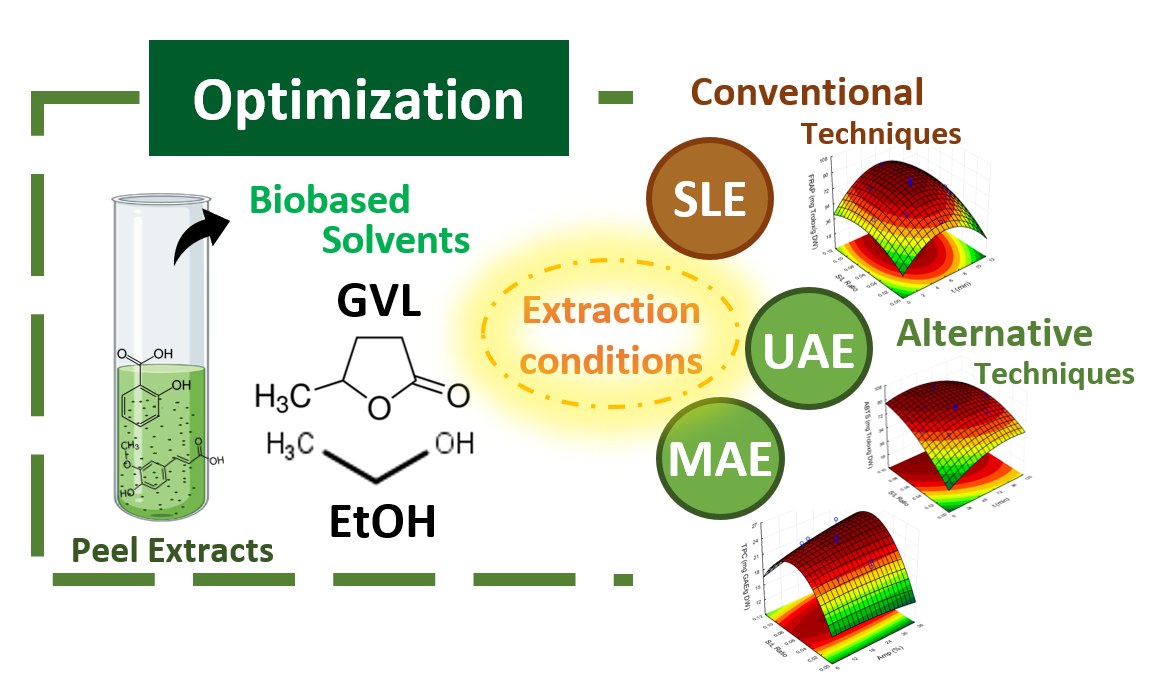 Kiwi waste is a potential source of bioactive compounds, such as phenolic compounds, which, in turn, exhibit many biological activities with potential health benefits. To replace volatile organic solvents, commonly applied for their extraction from biomass, a study combining biobased solvents and alternative techniques for the extraction of phenolic compounds from Kiwi peels, is hereby presented. Mixtures of biobased solvents with ethanol and/or water led to extracts with higher content of phenolic compounds and higher antioxidant activity than conventional solvents, with gamma-valerolactone (GVL) mixtures being the most efficient. GVL solution composition was optimized, and the mixture composed of 70 wt % GVL + 30 wt % ethanol was identified as the solvent with the best performance. A response surface methodology was used to optimize the extraction conditions of conventional solid-liquid extraction (SLE), ultrasound-assisted extraction (UAE) and microwave-assisted extraction (MAE). From the three extraction techniques, MAE was the most efficient, as it yielded an extract with the highest content of phenolic compounds (Total phenolic content, TPC: 29.7 mg gallic acid equivalent/g dry weight) and highest antioxidant activity (Ferric Reducing Antioxidant Power, FRAP: 87.2 mg Trolox/g dry weight; [2,2’-azinobis-(3-ethylbenzothiazoline-6-sulfonate)], ABTS: 131.1 mg Trolox/g dry weight), with the shortest extraction time (6.0 min). The results obtained prove that the biobased solvents are superior solvents for the extraction of phenolic compounds from Kiwi peels and combined with alternative extraction techniques can lead to the development of more sustainable and efficient extraction processes.
This work was developed within the scope of the project CICECO - Aveiro Institute of Materials, UIDB/50011/2020 & UIDP/50011/2020, financed by national funds through the FCT/MCTES. This work is funded by national funds through FCT – Fundação para a Ciência e a Tecnologia, I.P., under the Scientific Employment Stimulus - Individual Call - CEECIND/00831/2017.
Twitter Poster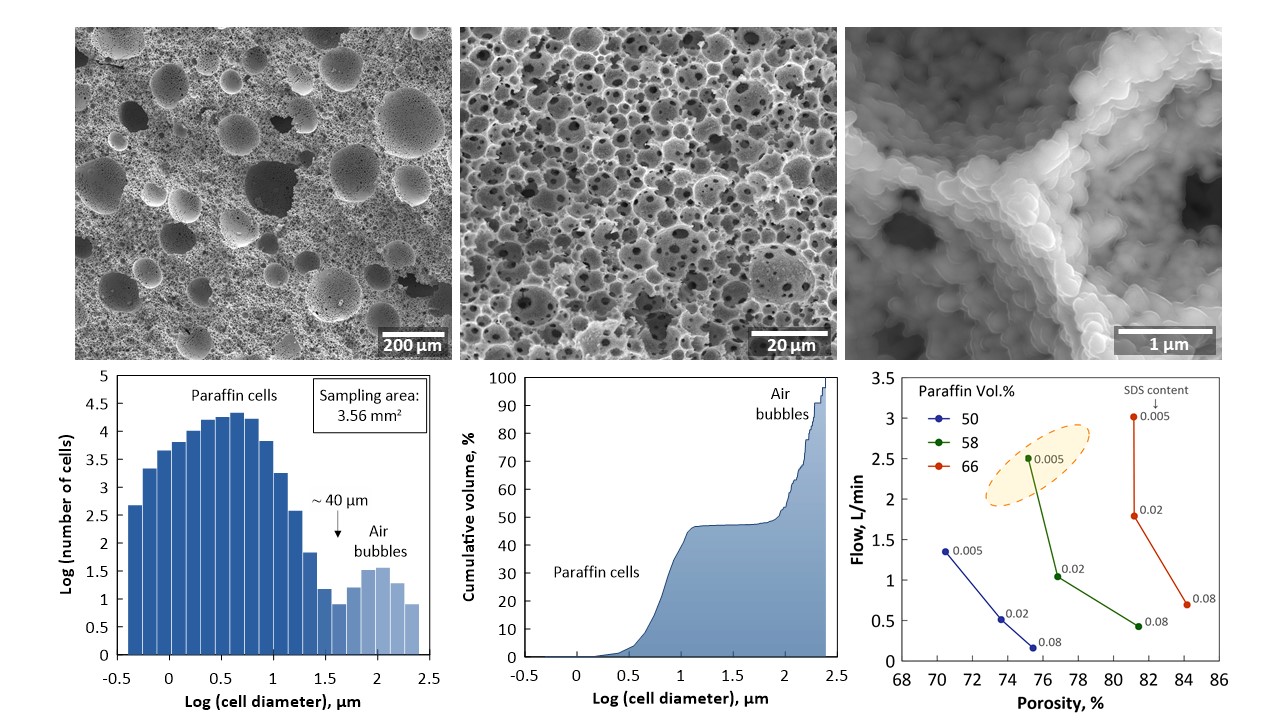 Manufacturing of solid oxide cells for NOx decomposition in exhaust gases requires good chemical compatibility of electrolyte with Ba-containing electrocatalysts, such as La2-xBaxNiO4 ceramics. BaZr0.85Y0.15O3 electrolyte have good compatibility with Ba-containing compositions and sufficient level of oxygen ionic conductivity. Using of solid oxide cell in the flux of exhaust gases requires manufacturing of highly porous cell components to reduce back pressure and to overcome gas diffusion limitations. Decreasing in level of electrochemical performance for porous materials should not be problem as concentration of NOx is in a level of hundreds-thousands ppm and most important criteria of efficiency is selectivity to nitrogen oxides. Current work is focused on manufacturing of porous BaZr0.85Y0.15O3 ceramics with using paraffin micelles as pore former. Taguchi planning were applied to find optimum composition of suspension/emulsion, what helps to reduce number of routine experiments. Found correlation between content of each emulsion component (paraffin, surfactant, and binder) on porosity, gas permeation, microstructure, and pore size distribution. Manufactured porous BaZr0.85Y0.15O3 ceramics have open porosity (practically 100%) with preserving of sufficient level of mechanical strength after sintering at 1500°C. Morphology was studied by GrainSizeTools/ImageJ software. Average cell size and distribution can be adjusted by emulsion composition in a wide range: from a few of microns to dozens. Total porosity varies in a range 70-75%, with level of intergranular porosity around 20%. Surfactant content (Sodium Dodecyl Sulfate) have highest effect on pore size distribution and paraffin content on total level of porosity. The nature of the distributions is close to lognormal by frequency. In case of excessive surfactant/binder content distribution can be bimodal due to foaming or competition of breakup and coalescence during stirring. It was found that BaZr0.85Y0.15O3 ceramics slowly reacts with water in suspension with formation of BaCO3 and pH increases up to 13. However, this does not affect the emulsification process, decomposition is reversible and sintered porous ceramic is single phase.
This work was developed within the scope of the project SFRH/BD/138773/2018 and the project CICECO - Aveiro Institute of Materials (UIDB/50011/2020 & UIDP/50011/2020) financed by national funds through the FCT/MEC and when appropriate co-financed by FEDER under the PT2020 Partnership Agreement.
Twitter Poster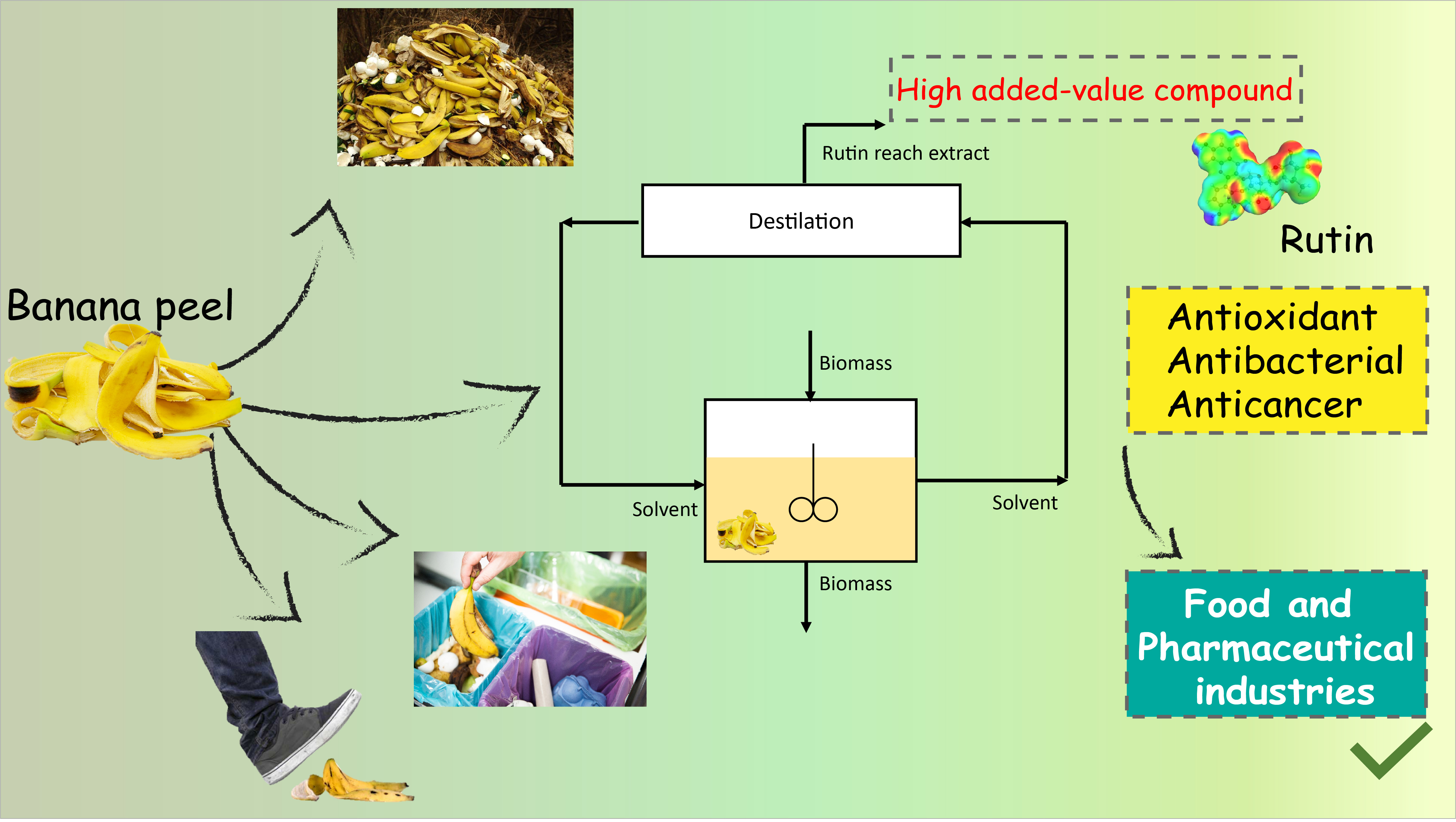 Banana peels are a food waste with no commercial value, rich in value-added compounds with relevant biological activities such as rutin. In this work, organic acids and their aqueous solutions were applied as alternative solvents to extract this value-added compound from banana peels. First, COSMO-RS, a quantum chemistry-based thermodynamic model, was applied in this work to screen the best organic acids for the extraction of rutin present in banana peels. Solid-liquid extractions were then performed with these solvents to identify the best one and its composition. The rutin content was maximized using ripe banana peels and an aqueous mixture of acetic acid of 65 wt.%, resulting in 200 mg of rutin / 100g dw of biomass. After, a response surface methodology was carried out to optimize extraction conditions (extraction time, solid−liquid (biomass−solvent) ratio and temperature), leading to a maximum extraction yield 239 mg of rutin /100 g dw of biomass at 25 °C, 80 minutes of extraction and a solid-liquid ratio of 0.06. In addition, the capability to recover and reuse the extraction solvent were also verified, contributing to the development of a sustainable process. The results obtained show the potential of an aqueous mixture of organic acids to substitute the conventional organic solvents in the extraction of biocompounds from natural sources, thus contributing to the development of more efficient and sustainable extraction processes
CICECO – Aveiro Insitute of Materials, CAPES (Coordenação de Aperfeiçoamento de Pessoal de Nível Superior) and Banco Santander S.A. (Brazil)
Twitter Poster Three-dimensional (3D) bioprinting is promoting a great advance in many fields, including tissue engineering and regenerative medicine, the creation of innovative drug testing models, and diseases research.This technique consists on the deposition of bioinks (biomaterials and cells) in a previously defined special pattern and following a layer-by-layer approach. Nowadays, there are many polymeric materials (synthetic and natural) that can be used for the development of bioinks, in particular hydrogels. However, it has been noticed an increasing interest in biopolymers, such as chitosan, gelatin, and alginate. Yet, most biopolymeric hydrogel based bioinks lack for long-term mechanical properties. One strategy used to overcome this limitation is the development of nanocomposite hydrogels using biobased reinforcing agents, such as cellulose nanofibers (bacterial cellulose (BC) and nanofibrillated cellulose (NFC)). Thus, the paramount goal of this work is the formulation of novel fibrous nanostructured hydrogels with high bioprintability, mechanical performance and stability, as well as cell density and viability, for 3D bioprinting applications. Here, we combined NFC with gellan gum in four different mass proportions, namely 90:10, 80:20, 70:30 and 60:40. The obtained hydrogels were characterized in terms of rheology and printability capacity. The obtained results showed that all inks had a shear-thinning behaviour and were able to recover after stress removal. Printability tests confirmed the capacity of these inks to be printed by extrusion 3D printing technology. These biopolymeric formulations are, therefore, very promising for the development of novel hydrogel based bioinks.
This work was developed within the scope of the projects CICECO-Aveiro Institute of Materials, UIDB/50011/2020 & UIDP/50011/202 and, CESAM, UIDP/50017/2020 & UIDB/50017/2020 and supported by the project I&D NANOBIOINKS – Engineering bio-based nanofibers for the development of high-performance nanostructured bioinks 3-D bioprinting, CENTRO-01-0145-FEDER-031289-funded by the Operational Program of the Center Region, in its FEDER/FNR component, and by national funds (OE), through FCT/MCTES. Nicole Lameirinhas acknowledges the PhD grant SFRH/BD/140229/2018.
Twitter Poster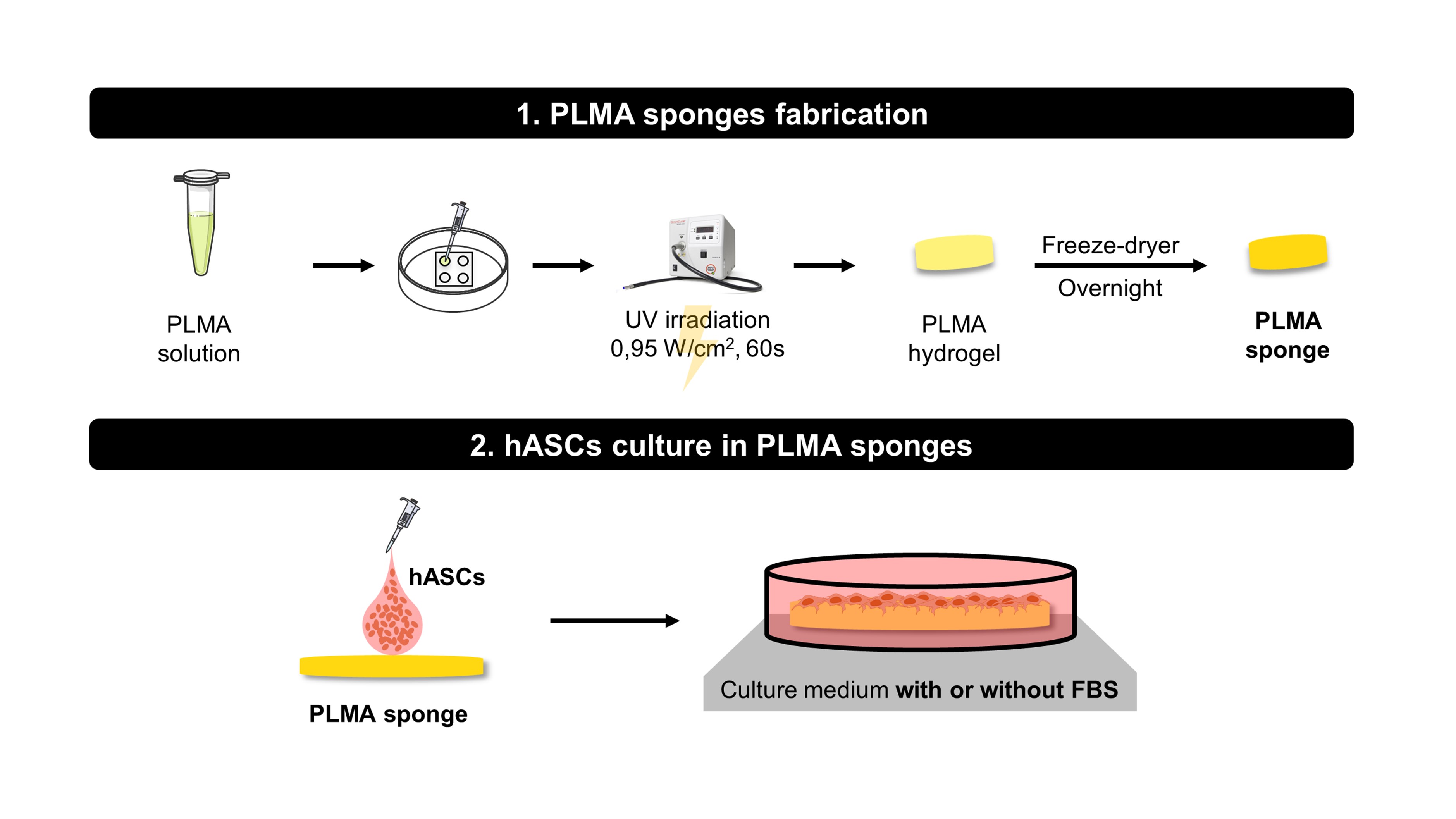 Human platelet lysates (PL) play a well-known role in cell function and tissue repair. We recently reported a bioactive PL-derivative precursor (PLMA) that can be cured upon light exposure to form hydrogels with tuneable mechanical properties able to support human-derived cell culture. Animal-derived serum is widely used as supplement in cell culture, nevertheless, its use, raises many safety, scientific, and ethical concerns. Following a humanized and completely xeno-free strategy, herein we purpose a novel biomaterial based on PLMA – PLMA sponges – to be used as platforms for 3D cell culture. In this work, human stem cells were cultured on top of PLMA sponges for 14 days with both medium with and without FBS. Results showed that PLMA sponges are a promising platform for cell culture, offering the possibility to culture cells avoiding the use of animal-derived supplements, suited for clinical and translational research.
The authors would like to acknowledge funding support from Fundação da Ciência e Tecnologia through the project BEAT (PTDC/BTMMAT/30869/2017), the doctoral grant SFRH/BD/144520/2019, the individual contract CEECIND/02713/2017 and CICECO – Aveiro Institute of Materials, UIDB/50011/2020 & UIDP/50011/2020. The authors also acknowledge IMICROS – Unidade de imagem, microestrutura e microanálise at Centro de Materiais da Universidade do Porto for CryoSEM analysis.
Twitter Poster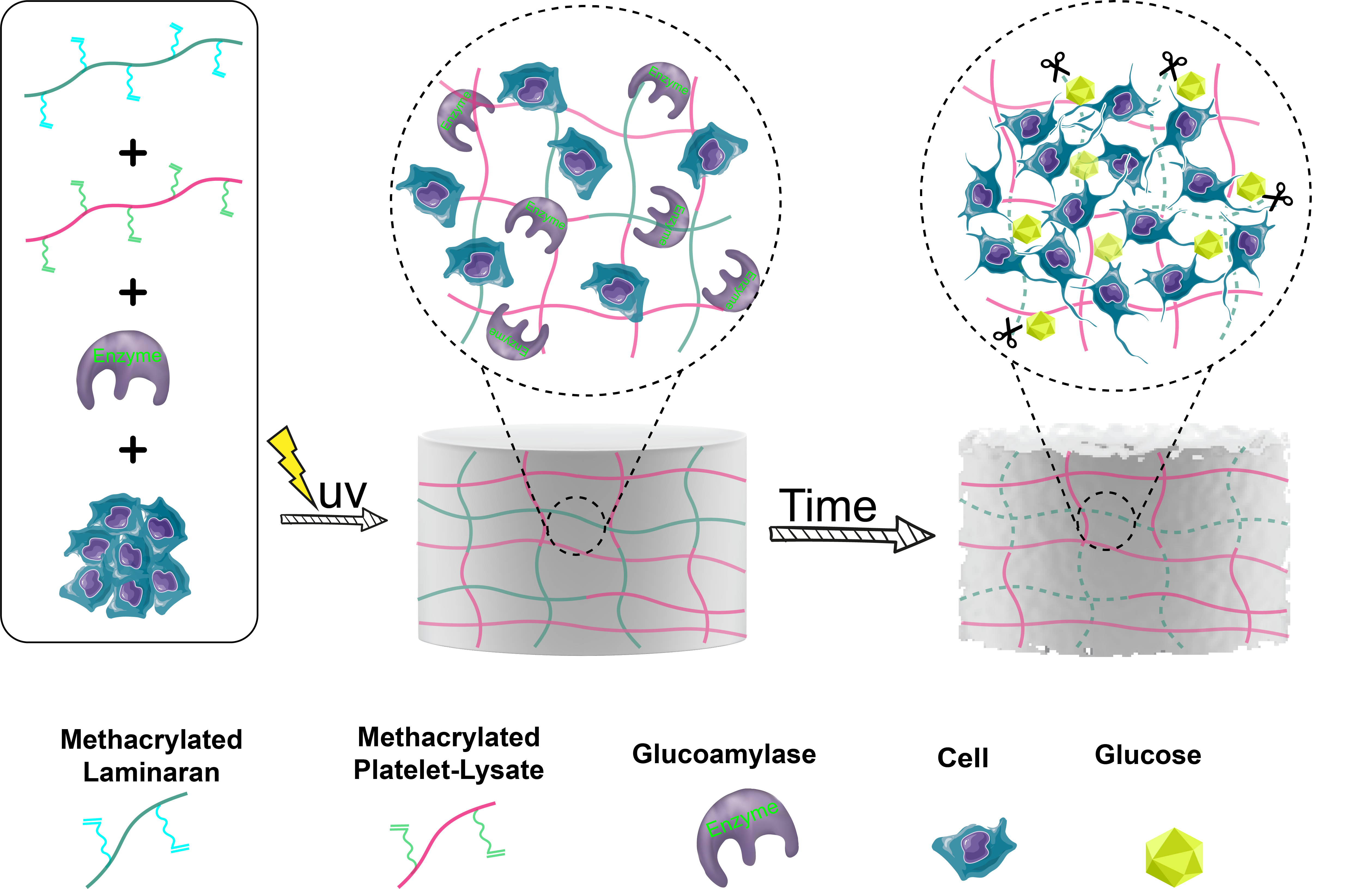 Hydrogels possess the capability of holding a large amount of water in a three-dimensional (3D) network and mimicking many features of the native extracellular matrix (ECM) which makes them attractive materials for biomedical applications[1]. Laminaran-based hydrogels are interesting due to their tuneable mechanical properties and high cytocompatibility[2]. Recently, photo-crosslinkable platelet lysates (PL)-based hydrogels have exhibited to support distinct human-derived cell cultures owing to their high content of bioactive molecules, such as cytokines and growth factors[3]. Aiming at taking advantage of all features of both PL and laminaran hydrogels, here we combine UV responsive laminaran-methacrylate and PL-methacrylate derivatives plus an adequate enzyme to fabricate a multicomponent hybrid hydrogel (GLMPL) (Fig1.a). This hydrogel is newly designed as a scaffold material for the sustained delivery of glucose produced via enzymatic degradation of laminaran and granting cell adhesin by the presence of PL. Such innovation is expected to circumvent the limitations of the current hydrogels strategies that lack on nutrients diffusion and adhere motifs, boosting the application of hydrogels in diverse biotechnological contexts.
This work was developed within the scope of the project CICECO-Aveiro Institute of Materials, UIDB/50011/2020 & UIDP/50011/2020. Mehrzad Zargarzadeh acknowledges the doctoral grant SFRH/BD/143883/2019 and Catarina A. Custódio acknowledges the individual contract CEECIND/02713/2017.
Twitter Poster Ideally, effective separation and recycling of homogeneous Mo(VI) olefin epoxidation catalysts would be achieved through the employment of catalytically active complexes that behave as reaction-induced self-separating (RISS) solids. In the proposed scenario, the Mo(VI)-catalyst species, being soluble in the presence of a large excess of the peroxide oxidant at the beginning and middle stages of the catalytic process, would precipitate from the reaction solution at the end of the catalytic cycle (when the concentration of peroxides is low), with significant advantages - easy catalyst/product separation and catalyst recycling. Despite the high importance of the problem, there is still no clear understanding of how the truly unique properties of the catalysts can be predicted.Our interest in this area focuses on the study of molybdenum(VI)-oxide coordination polymers modified by N-heterocyclic ligands, like 1,2,4-triazoles (tr), in catalytic oxidation reactions, and the development of RISS catalysts. In this work, coordination polymers [Mo2O6(Htrgly)]·H2O (1) and [MoO3(trleuH)]·0.5H2O (2), where trglyH=2-(4H-1,2,4-triazol-4-yl)acetic acid and trleuH = (dl)-4-methyl-2-(4H-1,2,4-triazol-4-yl)pentanoic acid, were prepared and structurally characterized. The complexes were explored for liquid phase catalytic epoxidation of cis-cyclooctene, using H2O2 as oxidant. The 1D hybrids showed good catalytic activity, and 2 behaved as a RISS catalyst. This suggests that the RISS behavior of the Mo(VI)-oxide hybrids can be rationally preprogrammed using the organic ligands, like trleuH, which combine two hydrophilic donor functions (tr- and - COOH) with a hydrophobic hydrocarbon tail, such as isobutyl in the case of hybrid 2.
This work was supported by the National Research Foundation of Ukraine (Project no. 2020.02/0071). The Portuguese (PT) group acknowledge funding provided within the project CICECO-Aveiro Institute of Materials, UIDB/50011/2020 & UIDP/50011/2020, and COMPETE 2020 Operational Thematic Program for Competitiveness and Internationalization (Project POCI-01-0145-FEDER- 030075), financed by national funds through the FCT (Fundação para a Ciência e a Tecnologia)/MEC (Ministério da Educação e Ciência) and when appropriate co-financed by the Euro ean Union through the European Regional Development Fund under the Portugal 2020 Partnership Agreement.
Twitter Poster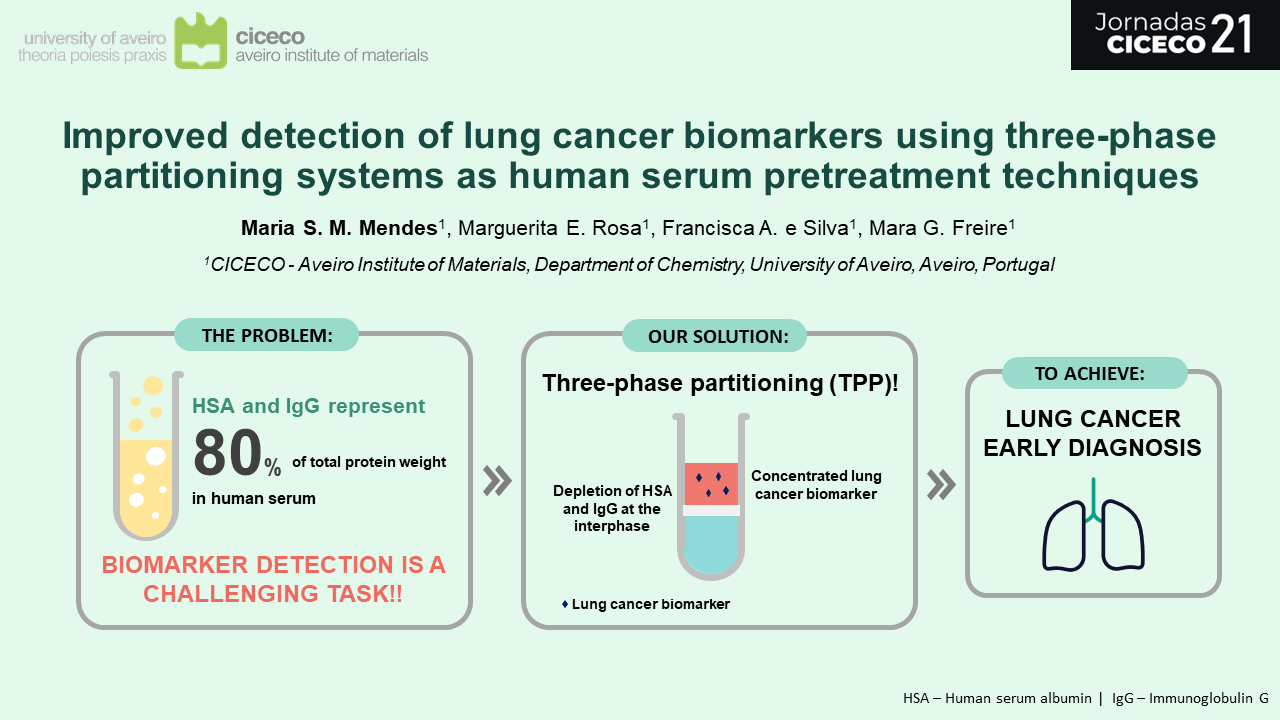 The highest rate of cancer mortality globally is attributed to lung cancer, mainly because most patients are diagnosed at late stages. To tackle this issue, the search for early detection tools is on high demand. Many lung cancer biomarkers are nowadays reported, showing promise in early cancer detection. One example is the protein pentraxin-3, which is found in serum and can be used for lung cancer diagnosis. Given the complexity and high concentration of human serum albumin (HSA) and immunoglobulin G (IgG) of human serum, the detection of biomarkers such as PTX3 represents a challenging task. To achieve the goal of an early and more accurate diagnosis of lung cancer, a sample pretreatment step allowing the depletion of the most abundant proteins and the concentration of biomarkers of interest is crucial. Here, three-phase partitioning (TPP) based on aqueous biphasic systems (ABS) are proposed as an alternative to conventional pretreatment techniques. Using TPP-ABS formed by homopolymers or copolymers and a citrate buffered salt, depletion efficiencies above 80% for both HSA and IgG were obtained. The TPP bearing polyethylene (PEG) with 1000 g.mol-1 was able to completely extract PTX-3 to the polymer-rich phase and completely deplete IgG and HSA, while granting a more accurate quantification of PTX-3 by ELISA.
This work was developed within the scope of the project CICECO-Aveiro Institute of Materials, UIDB/50011/2020 & UIDP/50011/2020, financed by national funds through the FCT/MCTES and the project PTDC/EMD-TLM/3253/2020, financed by national funds (OE), through FCT/MCTES. F.A.S. acknowledges FCT for the researcher contract CEECIND/03076/2018.
Twitter Poster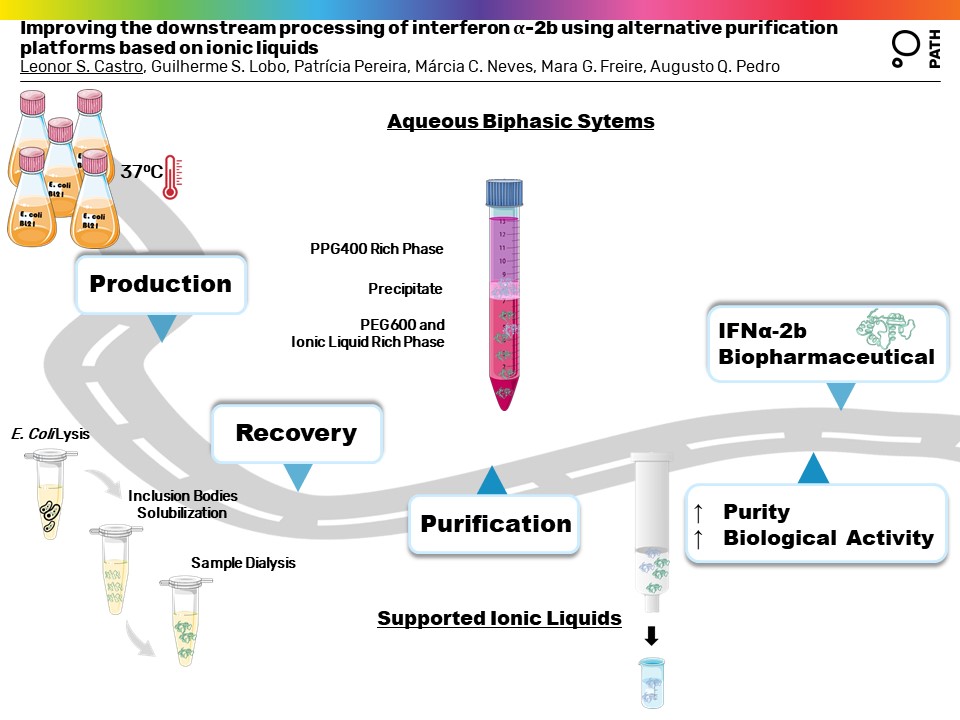 Improvements on human life expectancy and the lack of effective therapies has led to an increment of chronic diseases, being the application of biopharmaceuticals an efficient strategy to mitigate this scenario. Among the current available biopharmaceuticals, the role of interferon α-2b (IFNα-2b) should be highlighted, as it has been marketed over 30 years with a considerable impact on the global therapeutic proteins market (Castro et al, Vaccines, 2021). IFN manufacturing requires the use of the recombinant DNA technology, involving two main stages, the upstream and downstream stages. The first includes recombinant protein production in a suitable host microorganism, such as Escherichia coli (Castro et al, Sep. Purif. Technol., 2020), while the second comprises protein recovery, isolation, purification and polishing. Due to the high demands of the pharmaceutical industry for products with high purity and biological activity, the downstream stage is responsible for the majority of the production costs of biopharmaceuticals (50–90%), often including time-consuming and multi-step processes. Therefore, there is an immediate need to develop more efficient, cost-effective, and sustainable protein purification methodologies. In this work, two ionic-liquid-(IL)-based strategies were investigated for the purification of IFNα-2b recombinantly produced from E. coli fermentation broth, namely as adjuvants in aqueous biphasic systems or as chromatographic ligands immobilized in solid materials. Overall, the obtained results demonstrate that by tailoring IL’s chemical structures, improved protein purification processes are obtained and that the secondary structure of proteins is preserved.
The authors acknowledge the funding by FEDER through COMPETE 2020 – Programa Operacional Competitividade e Internacionalização (POCI), and by national funds (OE), through FCT/MCTES from the project “IL2BioPro” – PTDC/BII-BBF/30840/2017. This work was developed within the scope of the project CICECO – Aveiro Institute of Materials, UIDB/50011/2020 & UIDP/50011/2020, and CEMMPRE project UID/EMS/00285/2020, financed by national funds through FCT/MCTES and when appropriate co-financed by FEDER under the PT2020 Partnership Agreement. Márcia C. Neves acknowledges the research contract CEECIND/00383/2017, and Leonor S. Castro acknowledges FCT for her Ph.D. grant 2020/05090/BD.
Twitter Poster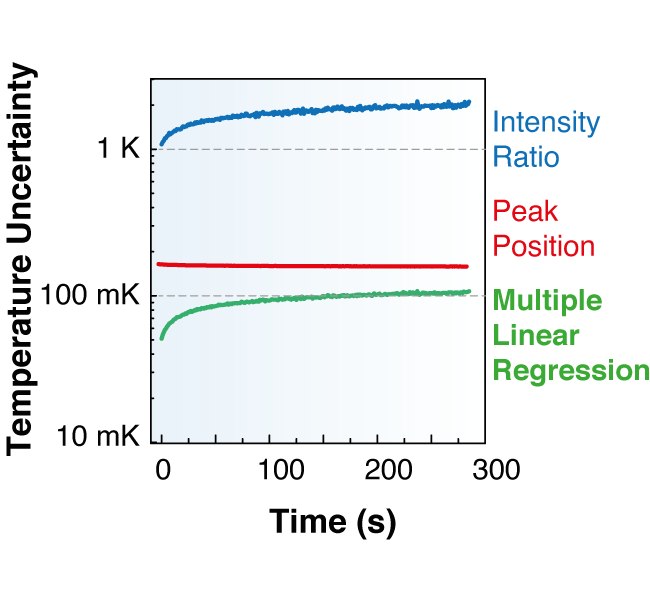 Luminescence thermometry has substantially progressed in the last decade. It is rapidly approaching the performance of concurrent technologies, usually assessed through the simultaneous improvement of both relative thermal sensitivity, Sr, and temperature uncertainty, dT. Up to now, the state-of-the-art values at ambient conditions do not exceed Sr = 12.5 %/K and dT = 0.1 K, respectively, unsatisfactory for highly demanding fields, such as biomedicine, that requires lower thermal uncertainties. This has motivated the development of new materials with an improved thermometric response, many of them responding to the temperature through distinct photophysical properties. This work demonstrates how the performance of multiparametric thermal luminescent sensors can be further improved by simply applying new analysis routes. The synergy between multiparametric readouts and linear regression procedures makes possible a 10-fold improvement in Sr and dT, reaching a world record of 50 %/K and 0.05 K, respectively. This is achieved without requiring the development of new materials or further upgrading of the detection system as illustrated in vivo experiments by using Ag2S nanoparticles. These results open a new era in biomedicine thanks to the development of new diagnosis tools based on the detection of super-small temperature fluctuations in living specimens.
This work was developed within the scope of the projects CICECO-Aveiro Institute of Materials (UIDB/50011/2020 and UIDP/50011/2020) and Shape of Water (PTDC/NAN-PRO/3881/2020) financed by Portuguese funds through the FCT/MEC and when appropriate co-financed by FEDER under the PT2020 Partnership Agreement. This project has received funding from the European Union’s Horizon 2020 research and innovation programme under the Marie Sklodowska-Curie Grant Agreement No. 823941. The support of the European Union’s Horizon 2020 FET Openprogram under Grant Agreement No. 801305 (NanoTBTech) is also acknowledged. F.E.M. acknowledges the financial support from the Brazilian agency FAPESP (Process No. 15/50382-2).
Twitter Poster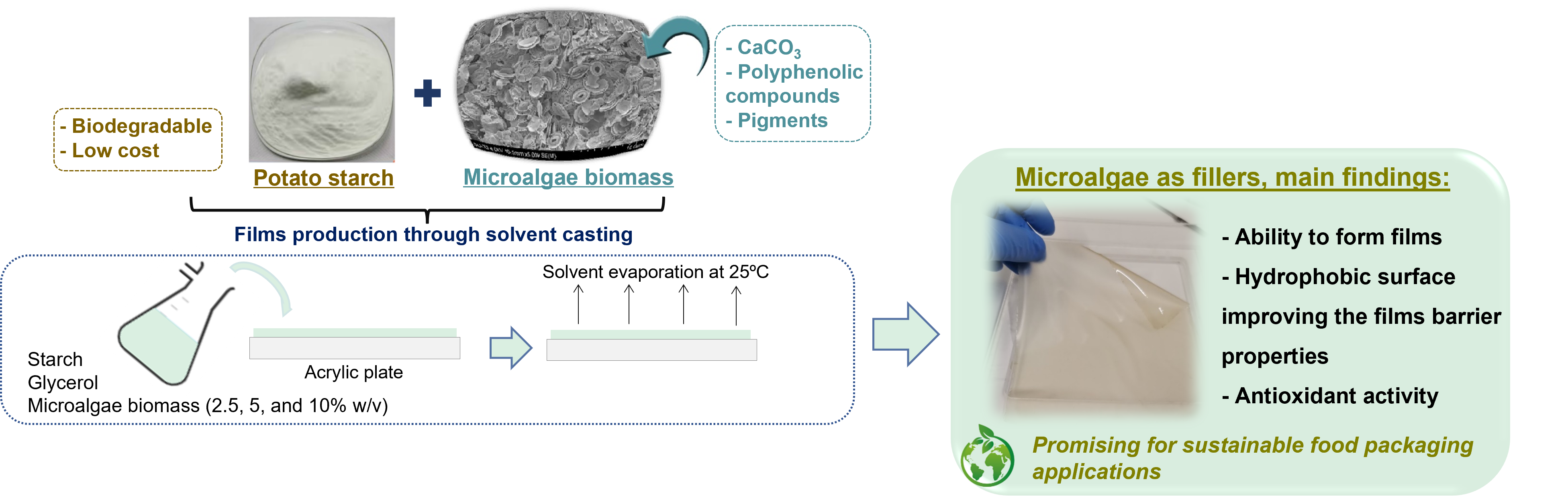 Emiliania huxleyi and Chrysotila pseudoroscoffensis are two coccolithophore species of microalgae that are composed by 30-60 % of calcium carbonate in the form of platelets and contains bioactive compounds that can be explored to produce sustainable packaging. In this work, these microalgae were incorporated as fillers in starch-based films, aiming to develop biodegradable and bioactive materials for food packaging applications. For comparison, commercial calcium carbonate, the most used filler in the plastic industry, was incorporated. The films were obtained by the solvent casting method, after dispersing different proportions of the microalgae biomass (2.5, 5, and 10% w/v) in the starch matrix. The effect of its incorporation was assessed, namely on the mechanical performance, the wetting properties on the films surface, and the antioxidant activity. The integration of both calcium carbonate and microalgal biomass turned the films significantly less rigid, suggesting a possible interference with the starch matrix crystallization. In the other hand, the results showed that the incorporation of microalgae hydrophobic compounds as lipids provided a hydrophobic nature indicating that the presence of microalgae can be useful to improve the films barrier properties. Furthermore, the films with these natural fillers exhibited antioxidant activity, especially the films with 10% w/v. The bioactive constituents of microalgae namely polyphenolic compounds and pigments such as carotenoid conferred antioxidant properties to the films. This property was not observed for the films with calcium carbonate. This work shows that these microalgae with bioactive compounds can be incorporated into starch-based films, revealing to be promising for sustainable food packaging applications.
The authors acknowledge to FCT/MEC for the financial support of the project“Coccolitho4BioMat” (POCI-01-0145-FEDER-031032) and Research Units CICECO(UIDB/50011/2020 & UIDP/50011/2020), QOPNA (UID/QUI/00062/2019), and LAQVREQUIMTE (UIDB/50006/2020), through national funds, and the co-funding by the FEDER, within the PT2020 Partnership Agreement and Compete 2020. JG and PF thank FCT for the grants 2020. 06654.BD and IF/00300/2015, respectively. This work was also funded by national funds (OE), through FCT – Fundação para a Ciência e a Tecnologia, I.P., in the scope of the framework contract foreseen in the numbers 4, 5 and 6 of the article 23, of the Decree-Law 57/2016, of August 29, changed by Law 57/2017, of July 19.
Twitter Poster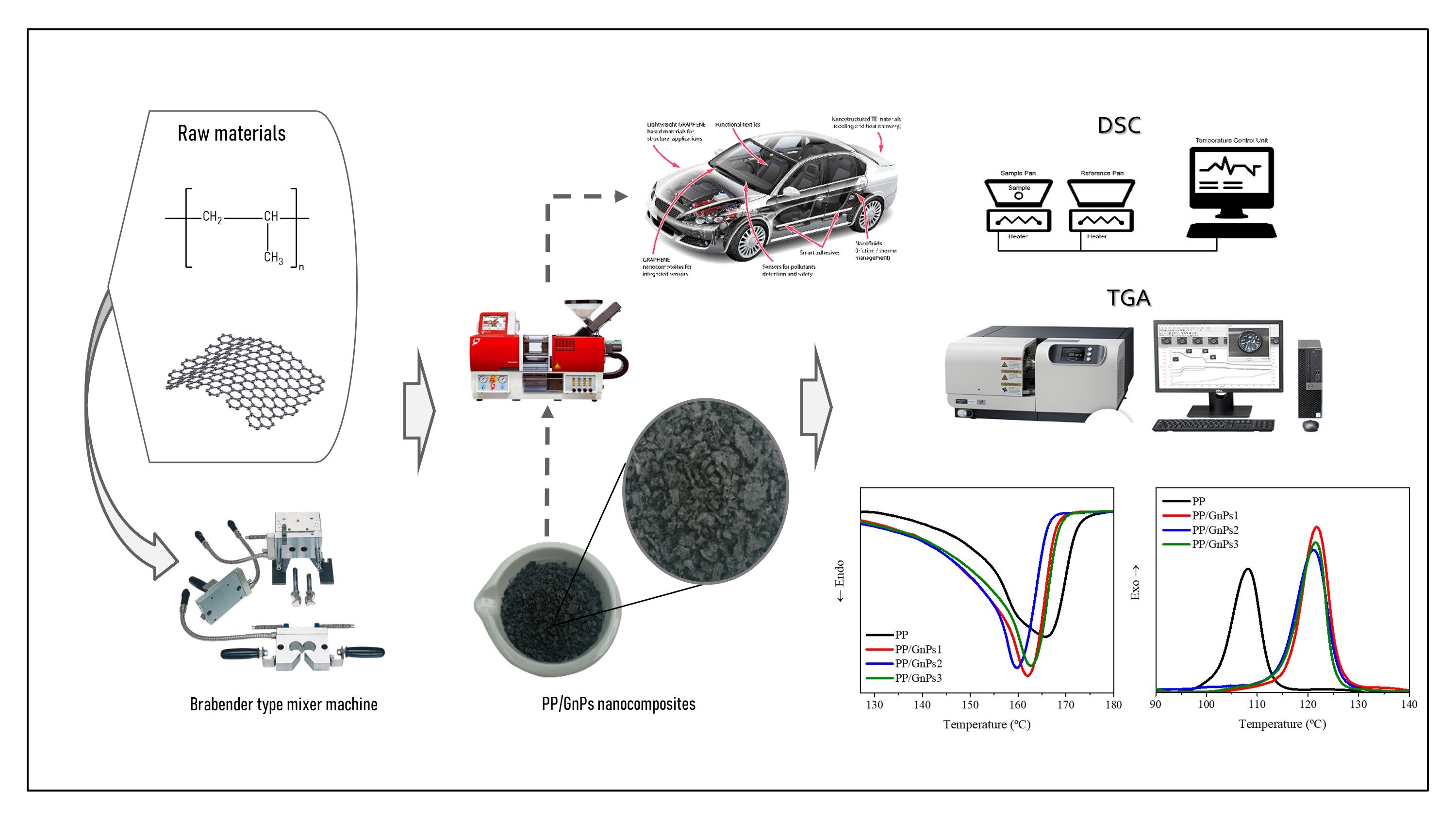 Graphene-based materials (GBM) have become an attractive candidate as a structural reinforcement for polymer nanocomposites due to their unique mechanical properties. The graphene nanoplatelets (GnPs), a GBM which combine large-scale production and low costs, have shown promise for the development of advanced materials with remarkable properties. In this study, we report the thermal properties of poly(propylene) (PP)–based nanocomposites reinforced with GnPs of different origins. PP/GnPs nanocomposites were compounded by melt mixing technique, using a Brabender type internal mixer. The melt and crystallization properties of nanocomposites were explored by differential scanning calorimetry (DSC). The thermal stability was investigated by thermogravimetric analysis (TGA). Overall, the results suggested GnPs presence can promote a decrease of nanocomposites melt temperature (Tm) compared to neat PP. The crystallization behaviour of nanocomposites indicated that GnPs can act as a nucleating agent, promoting PP crystallization. The TGA thermograms of the nanocomposites suggested a better interaction between PP and GnPs with the smallest average nanoplatelet size, highest specific surface area, and most functional groups in its structure.
This work was supported by COMPETE 2020 – Programa Operacional Competividade e Internacionalização within NANO-SIM 3D project (POCI-01-0247-FEDER-039842). This work was also developed within the scope of the project CICECO-Aveiro Institute of Materials, UIDB/50011/2020 & UIDP/50011/2020, financed by national funds through the Portuguese Foundation for Science and Technology/MCTES.
Twitter Poster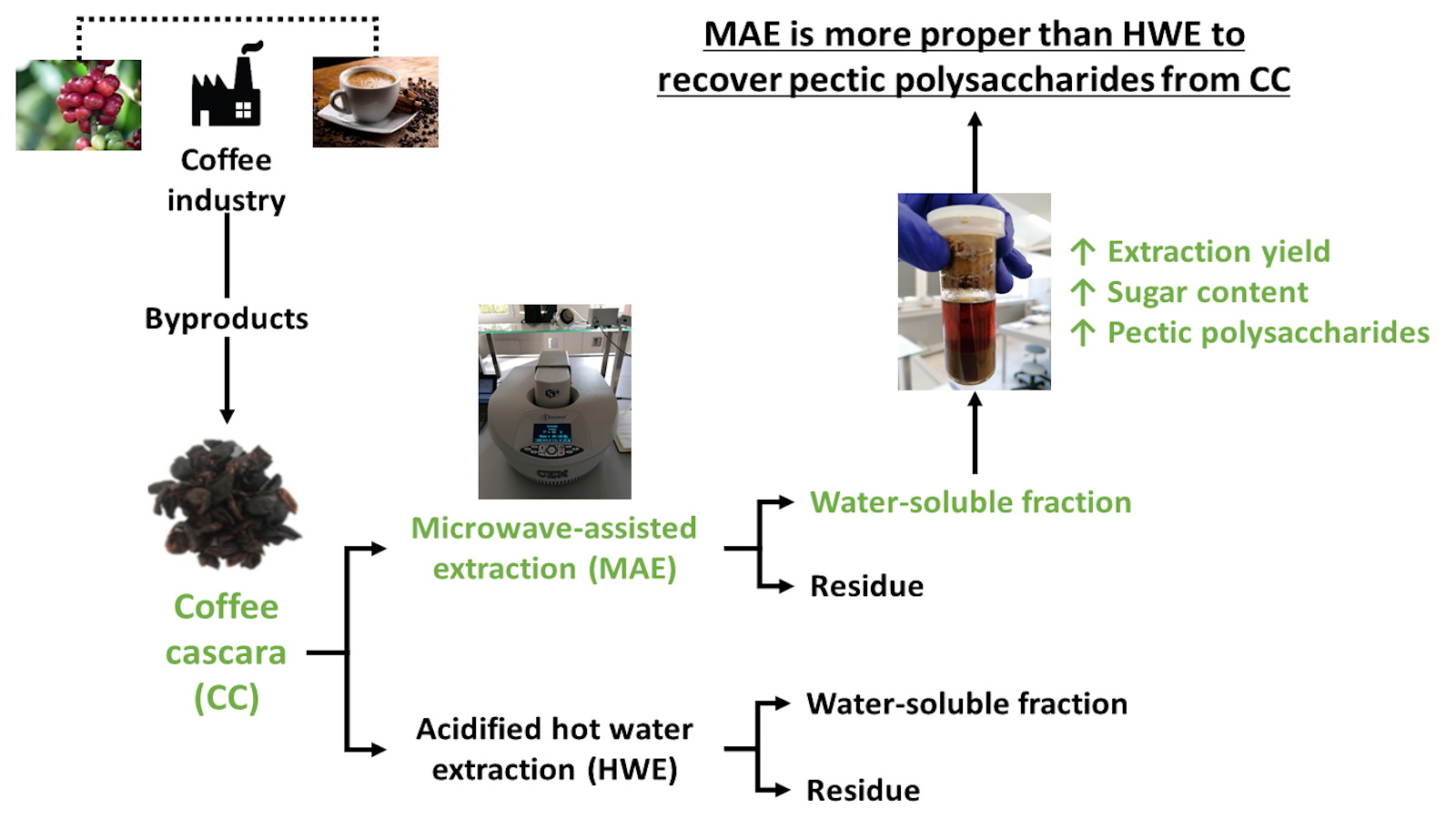 Coffee industry byproducts are worldwide generated and often discarded, wasting valuable biomolecules as polysaccharides, lipids, and phenolics. Coffee cascara (CC) corresponds to a mixture of the coffee cherry outer skin and pulp layer, separated by depulping in water during the wet processing method of coffee cherries [1]. The recovery of polysaccharides from CC has been performed by exhaustive sequential extractions and/or by using acid or alkali solutions with increasing concentrations. Microwave-Assisted Extraction (MAE) has been considered a feasible and green extraction methodology to recover polysaccharides and/or oligosaccharides from coffee byproducts, using only pressurized water or dilute alkali solutions, and originating cleaner products with higher yields and minor wastes when compared with the use of alkali reagents [2]. In this work, the influence of MAE on the extraction efficiency and chemical composition of polysaccharides from CC was explored. As control, a conventional hot-water extraction methodology was used. MAE increased in 7% and 24% the extraction yield and sugar content of the water-soluble fractions obtained from CC, respectively. Moreover, these fractions revealed to have a composition rich in pectic polysaccharides, suggesting that MAE can be used as a green methodology to valorise CC.1. Oliveira, G.; Passos, C.P.; Ferreira, P.; Coimbra, M.A.; Gonçalves, I. Coffee By-Products and Their Suitability for Developing Active Food Packaging Materials. Foods 2021, 10, 683, doi:10.3390/foods10030683.2. Passos, C.P.; Coimbra, M.A. Microwave Superheated Water Extraction of Polysaccharides from Spent Coffee Grounds. Carbohydr. Polym. 2013, 94, 626–633, doi:10.1016/J.CARBPOL.2013.01.088.
FCT is thanked for the Investigator FCT program (PF, IF/00300/2015), for the Individual Call to Scientific Employment Stimulus (IG, CEECIND/00430/2017, and CP, CEECIND/01873/2017), and for the Post-doc (SFRH/BPD/117213/2016) and PhD (GO, SFRH/BD/143191/2019) grants. The authors also thank Professor María Dolores del Castillo from the Institute of Food Science Research (Madrid, Spain) for providing coffee cascara. This work received financial support from PT national funds (FCT/MCTES, Fundação para a Ciência e Tecnologia and Ministério da Ciência, Tecnologia e Ensino Superior) through the projects LAQV-REQUIMTE (UIDB/50006/2020), and CICECO-Aveiro Institute of Materials (FCT Ref. UIDB/50011/2020 & UIDP/50011/2020). GO also thanks the Polish National Agency for Academic Exchange for the attribution of a PROM Programme - International scholarship exchange of doctoral students and academic staff, accomplished in the Jan Dlugosz University, Czestochowa, Poland.
Twitter Poster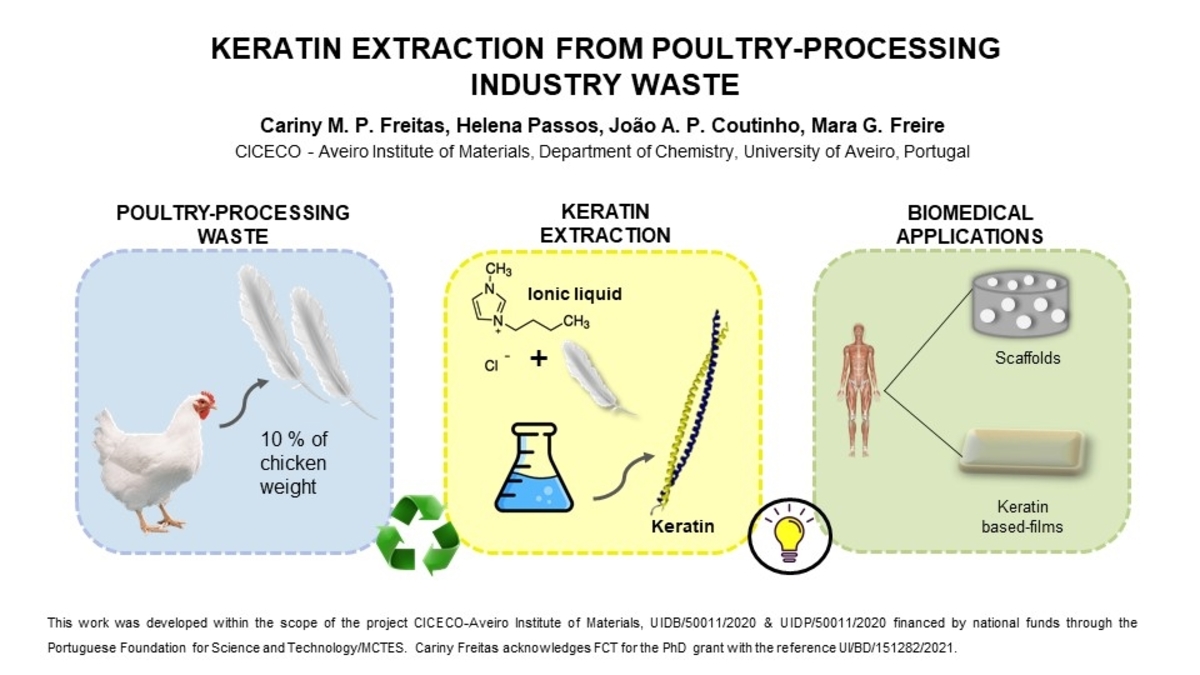 The poultry-processing industry produces high amounts of feathers as wastes, which are disposed in landfills or incinerated. Feathers represent about 10 % of the total mass of an adult chicken, highlighting the necessity of developing sustainable (low-cost and efficient) processes for feathers’ valorization. The feathers are rich in keratin, a relevant protein in the preparation of high value products with several applications in the biomedical field and food packaging. In this work is proposed the use of ionic liquids (ILs) for the efficient extraction of keratin from chicken feathers. The preliminary results obtained using an imidazolium-based ionic liquid are highly promising. In the future, tailored and low-cost bio-based ILs will be synthesized, characterized and investigated as alternative solvents in the extraction of keratin.
This work was developed within the scope of the project CICECO-Aveiro Institute of Materials, UIDB/50011/2020 & UIDP/50011/2020, financed by national funds through the Portuguese Foundation for Science and Technology/MCTES. This work is funded by national funds through FCT, I.P., under the Scientific Employment Stimulus - Individual Call - CEECIND/00831/2017. Cariny Freitas acknowledges FCT for the PhD grant with the reference UI/BD/151282/2021.
Twitter Poster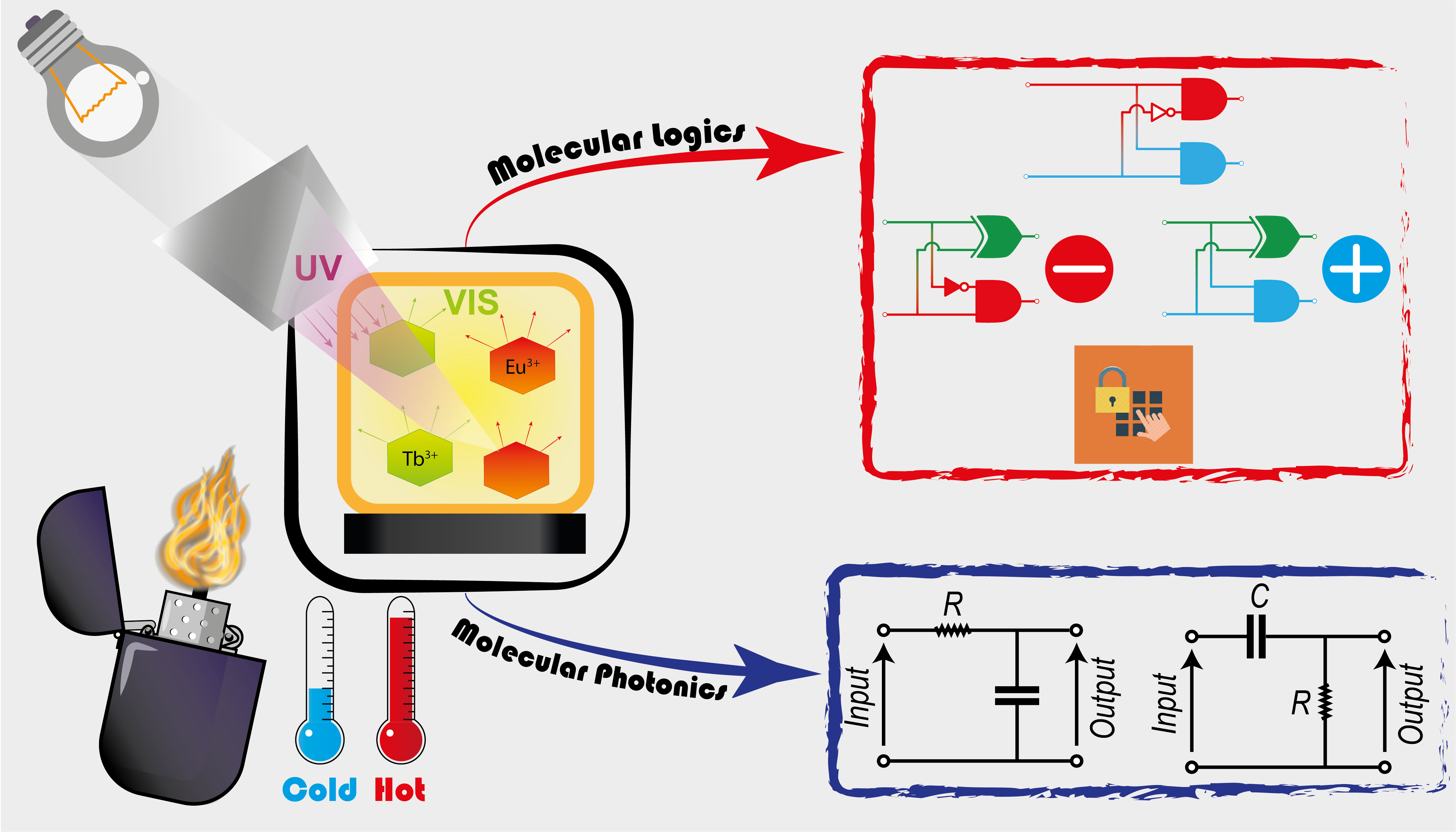 The great advances in molecular logic reported in the last decade prove the potential of luminescent molecules for logical operations, a paradigm-changing concerning silicon-based electronics. Trivalent lanthanide (Ln3+) ions well-known for their characteristic narrow line emissions, long-lived excited states, and photostability under illumination, may improve the Molecular Logics and Molecular Photonics state-of-the-arts. Here, the use of monolithic silicon-based structures incorporating Ln3+ complexes performing logical functions is reported. Logic gates (AND, INH, and DEMUX), sequential logic (KEYPAD LOCK), and arithmetic operations (HALF ADDER and HALF SUBTRACTOR) exhibiting a switching ratio >60% are demonstrated for the first time using nonwet conditions. On the other hand, Ln3+ bearer organic-inorganic hybrid material mimicking electrical circuit elements actuated by exclusively physical stimuli and pulsed excitation is shown.
M.A.H.R. and C.D.S.B. contributed equally to this work. This work was developed within the scope of the project CICECO-Aveiro Institute of Materials (UIDB/50011/2020 and UIDP/50011/2020), financed by national funds through the Portuguese Foundation for Science and Technology/MCTES. This work was financially supported by the project NanoHeatControl (POCI-01-0145-FEDER-031469), funded by FEDER, through POCI, and by Portuguese funds (OE), through FCT/MCTES, and by the Spanish Ministry of Science Innovation and Universities (Grant No. PGC2018_095795_B_I00) and the Diputación General de Aragón (Grant No. E11/17R). C.D.S.B. and M.A.H.R. thanks SusPhotoSolutions (CENTRO- 01-0145-FEDER-000005) for grants. The authors acknowledge the use of Servicio General de Apoyo a la Investigación-SAI, Universidad de Zaragoza..
Twitter Poster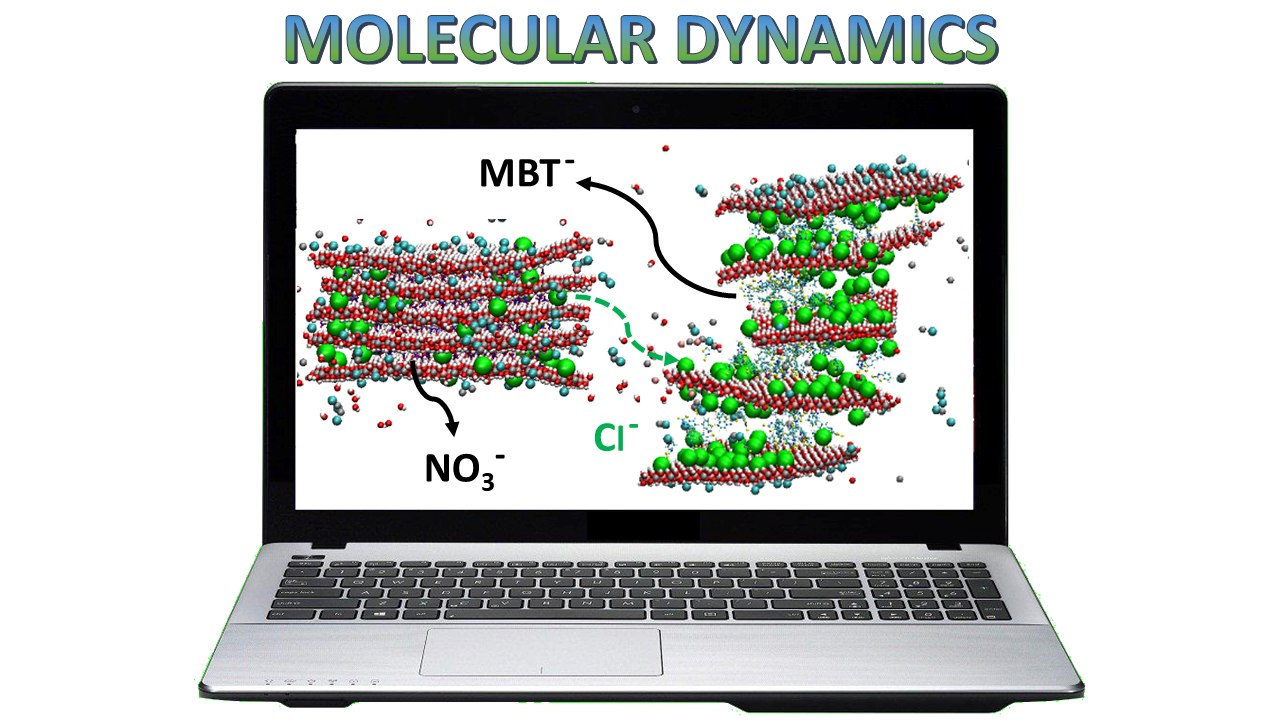 Corrosion inhibitors are playing an important role for protective technologies on a large number of applications. The University of Aveiro has a large experience in smart materials for corrosion protection, particularly layered double hydroxide (LDH) nanocontainers. Moreover, the LDH-NO3 and LDH-MBT are two smart materials that have a good corrosion protection properties. The mechanism of protection are complex and could be divide in material coverage, release of corrosion inhibitor and/or caption of Chloride ions. This work study the interchange of LDH-NO3 and LDH-MBT in a solution of Chloride ions in a cluster model. The simulations are performed with GROMACS, a Molecular Dynamics package, and the ionic interchange is observed in both cases, with similar results experimental release studies. The Mechanism of ion-exchange start with the release of inhibitor and equilibrated the LDH layers with the insertion of Chloride ions of media.
This work was developed in the scope of projects CICECO – Aveiro Institute of Materials, refs. UIDB/50011/2020 and UIDP/50011/2020, financed by national funds through the Fundação para a Ciência e a Tecnologia (FCT/MEC) and co-financed by FEDER under the PT2020 Partnership Agreement, and in the framework of projects DataCor (refs. PTDC/QUI-QFI/30256/2017 and POCI-01-0145-FEDER-030256) and SELMA (ref. P2020-PTDC/QEQ-QFI/4719/2014), financed by Promover a Produção Científica e Desenvolvimento Tecnológico e a Constituição de Redes Temáticas and FEDER funds through COMPETE 2020.
Twitter Poster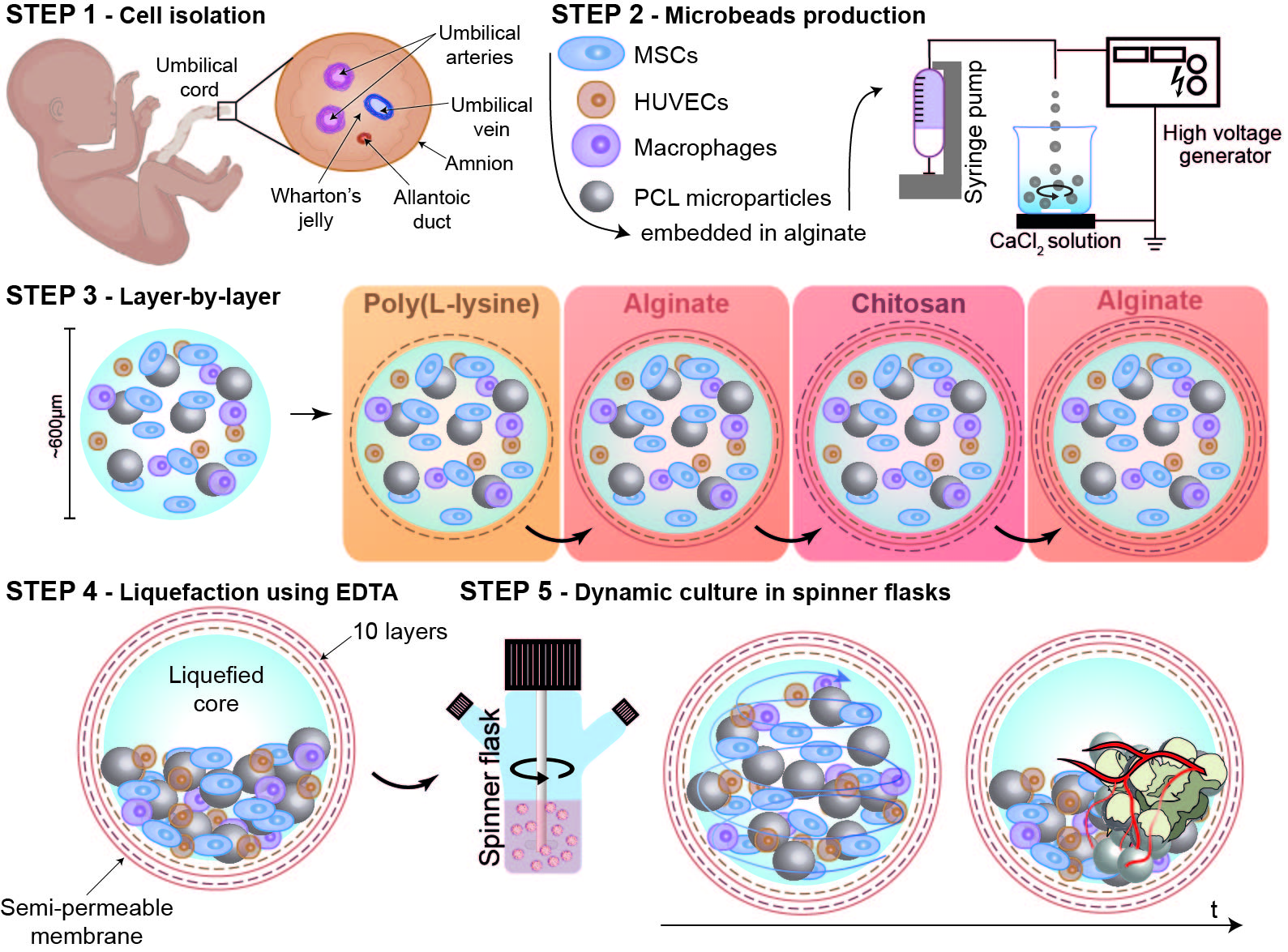 A plethora of bioinspired cell-laden hydrogels are being explored as building blocks that, once assembled, can create highly hierarchical structures that recapitulate the heterogeneity of living tissues. Yet, the resulting 3D bioengineered systems still present various limitations, mainly related to the limited diffusion of essential molecules for cell survival, which dictates the failure of most strategies upon implantation. Furthermore, traditional tissue engineering strategies for bone regeneration commonly neglect the immune system's role in regulating bone dynamics. Consequently, inconsistencies between the in vitro and in vivo studies are frequently reported. Here, liquefied microcapsules are proposed to maximize the hierarchical complexity of bioengineered systems while simultaneously fully addressing the exchange efficiency of biomolecules. The microcapsules are composed of (1) a permselective multilayered membrane, (2) surface functionalized poly(ε-caprolactone) microparticles providing cell adhesion sites, and (3) macrophages, mesenchymal stromal cells (MSCs), and human umbilical vein endothelial cells (HUVECs) isolated from the umbilical cord tissue and blood, which is usually discarded as biological waste after a birth. The main goal is to promote a well-orchestrated cell-to-cell interaction enabling the evaluation of the bioperformance of macrophages towards bone tissue repair. The confined biomolecular interactions inside the microcapsules are expected to recreate the bone repair process within a controlled and self-regulated microengineered niche. Accordingly, we intend to use the proposed system as hybrid devices implantable by minimally invasive procedures for bone tissue engineering applications.
Sara Nadine acknowledges FCT for the doctoral grant (SFRH/BD/130194/2017). This work was developed within the scope of the project “CIRCUS” (PTDC/BTM-MAT/31064/2017), the European Research Council for project “ATLAS” (ERC-2014-AdG-669858), and the project CICECO-Aveiro Institute of Materials (UIDB/50011/2020 & UIDP/50011/2020).
Twitter Poster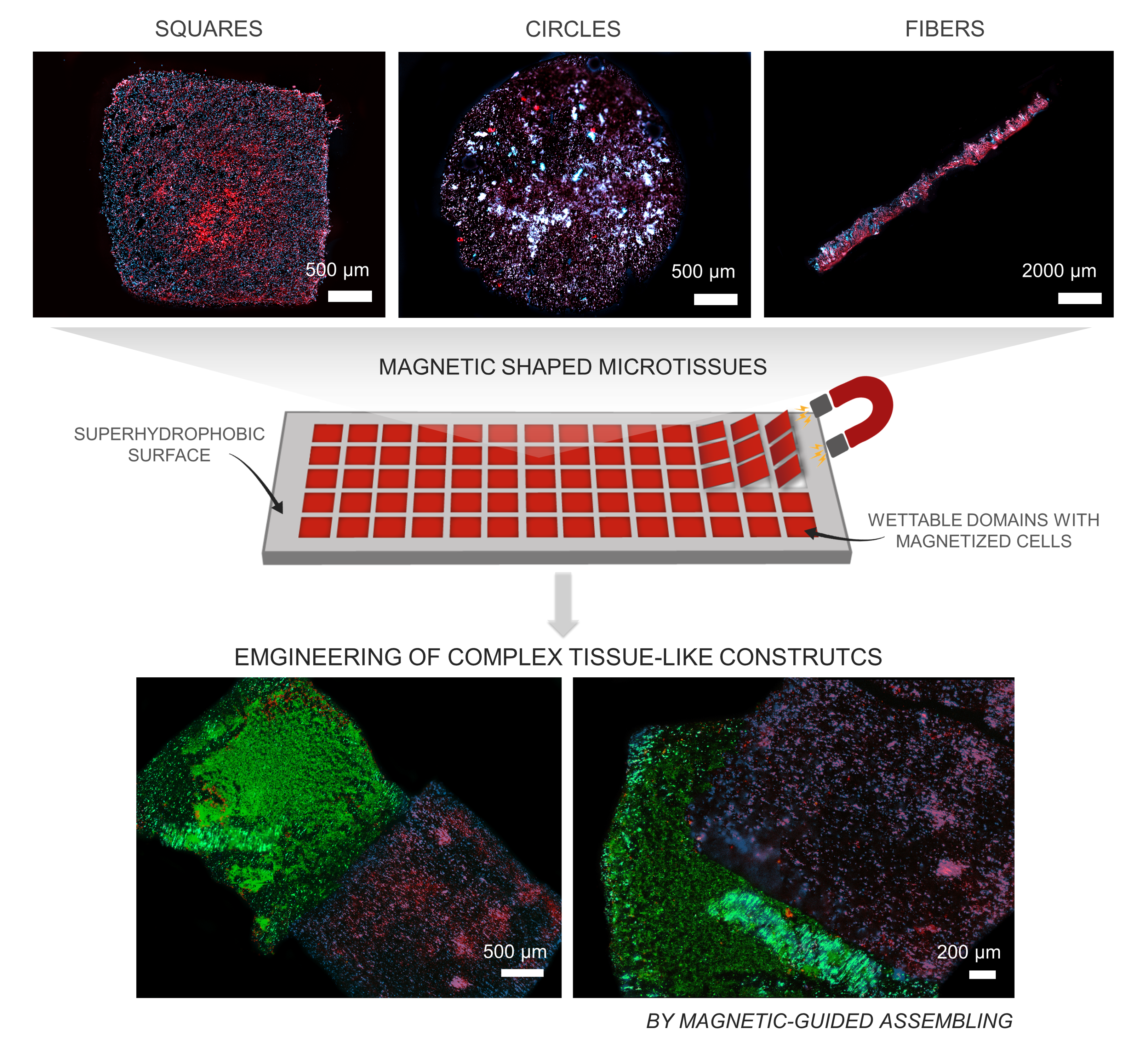 A long-sought goal in tissue engineering is the development of tissues able to recapitulate the complex architecture of the native counterpart. Microtissues, by resembling the functional units of living structures, can be used to recreate tissues’ architecture. Howbeit, microfabrication methodologies fail to reproduce cell-based tissues with uniform shape. At the macroscale, complex tissues have been produced by magnetic-tissue engineering using solely magnetized cells as building materials. The enhanced extracellular matrix deposition guaranties the conservation of tissues’ architecture, leading to a successful cellular engraftment. Following the same rational, but by combining a versatile microfabrication-platform with magnetic-tissue engineering, the ability to generate micro-tissues with complex architecture is herein demonstrated for the first time. Small tissue units with circle, square and fiber-like shapes were designed with high fidelity, acting as building blocks for engineering complex tissues. Notably, freestanding microtissues maintained their geometry after 7 days pos-culturing, overcoming the challenges of microfabrication. Lastly, the ability of microtissues in invading distinct tissue models while releasing trophic factors was substantiated in methacryloyl laminarin and platelet lysates hydrogels. By simply using cells as building units and such microfabrication-platform, we envisage the fabrication of complex multiscale and multifunctional tissues with clinical relevance, including for therapies or disease models.
We acknowledge the project CICECO-Aveiro Institute of Materials, UIDB/50011/2020 & UIDP/50011/2020, financed by national funds through the FCT/MEC and when appropriate co-financed by FEDER under the PT2020 Partnership Agreement and PROMENADE (Ref. PTDC/BTM-MAT/29830/2017). This work was also supported by the project ATLAS (ref.ERC-2014-ADG-669858). The authors also acknowledge financial support by FCT through a Ph.D. grant (SFRH/BD/141523/2018, Lúcia F. Santos) and through individual contracts (CEECIND/00366/2020, Sónia G. Patrício), (CEECIND/2020.04344, A. Sofia. Silva).
Twitter Poster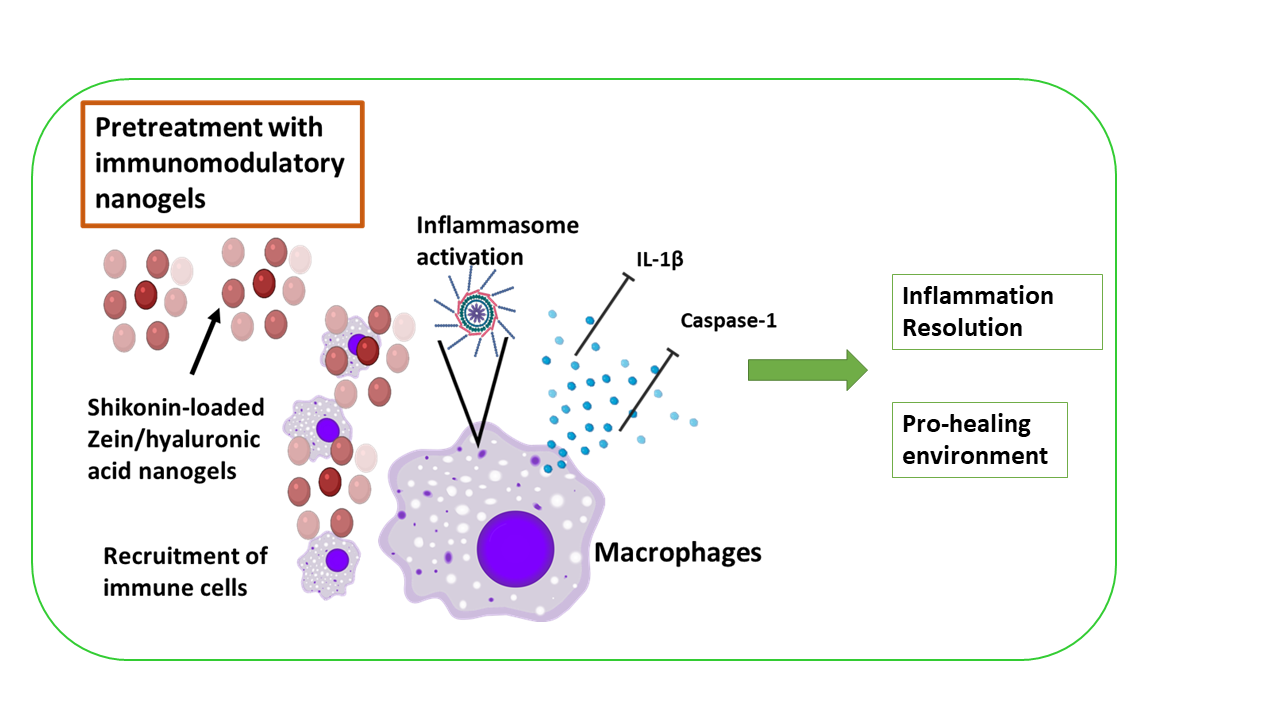 Host immune response to medical devices and implantable biomaterials is key to their functional integration. Macrophages are essential in the regulation of the inflammasome and, thus, in the overall innate response, leading either to inflammation resolution or persistence. The development of biomaterials to modulate the inflammasome is a promising strategy towards the promotion of implant integration. In this work, we have developed macrophage-targeted biopolymeric-based nanocarriers for the controlled release of immunomodulatory metabolic drugs. Shikonin, a natural naphthoquinone with anti-inflammatory properties, was encapsulated into zein-hyaluronic acid nanogels. These nanocarriers were efficiently taken up by macrophages, showing low toxicity. The ability to modulate the cells inflammasome was also demonstrated through assessment of caspase-1 activity and IL-1β production. Macrophage phenotype characterization showed that shikonin-loaded nanogels lead to an inflammation resolution phase promoting tissue regeneration. NMR exometabolomics was employed to assess the metabolites and metabolic pathways affected by inflammasome activation and its NP-mediated attenuation. Metabolic gene expression profiling also revealed glycolytic activity modulation by the nanogels, such as decrease in lactate secretion, as well as Glut-1 and hexokinase 2 gene expression. These results showed great potential of the nanogels immunomodulatory properties. Looking forward, we aim to develop a novel class of versatile inflammasome-modulating biomaterials to mitigate implant-related inflammation.
CICECO-Aveiro Institute of Materials, University of Aveiro, UIDB/50011/2020 & UIDP/50011/2020. Fundação para a Ciência e Tecnologia, SFRH/BD/139539/2018. Compass research Group, universidade de Aveiro. NMR Metabolomics Lab, Universidade de Aveiro.
Twitter Poster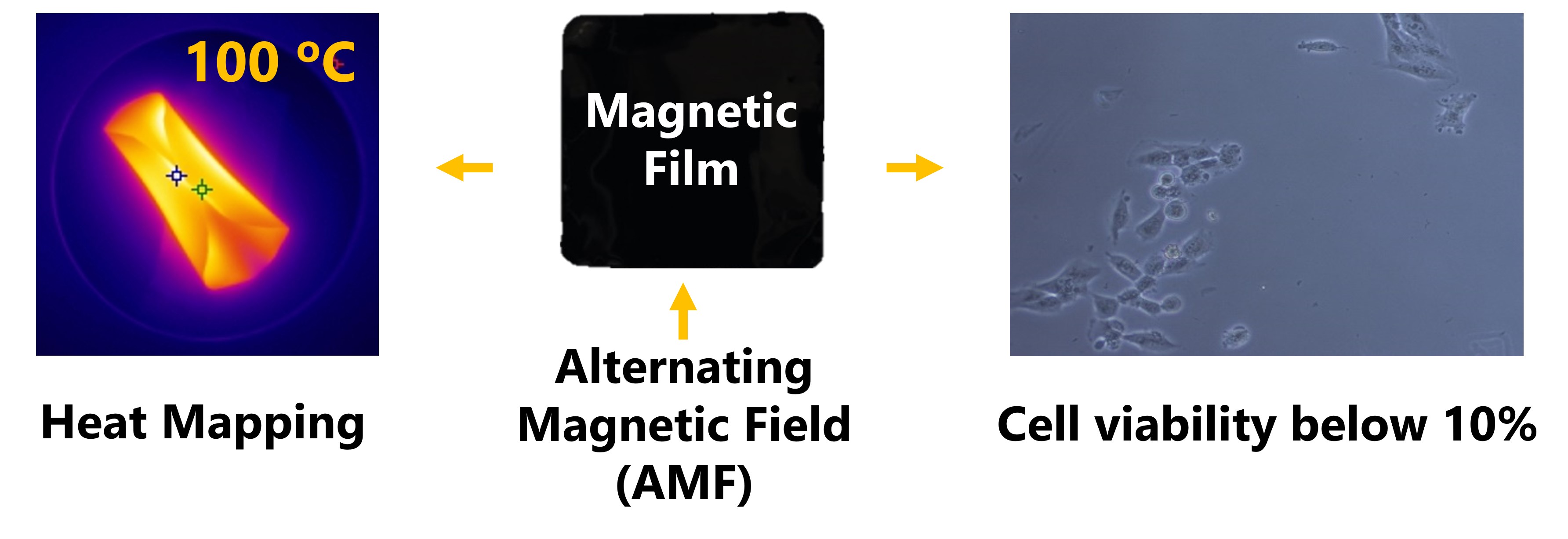 Magnetic hyperthermia is a minimally invasive cancer therapy that relies on the heat generated by magnetic nanoparticles (MNP) under alternating magnetic field (AMF). The temperature increases generated above physiological values to 41–45°C, can trigger cancer cell death mechanisms. Currently, clinical magnetic hyperthermia treatment consists of intravenous injection of MNPs, typically iron oxide-based formulations. However, MNP aggregation and difficulties related to their restriction to the tumor area reduce treatment success.1 The stabilization and immobilization of MNP in a biocompatible film and the direct application of the film at the tumor area are strategies that may help overcome these issues.2Herein, chitosan-based films containing magnetite nanoparticles were produced by solvent casting. The effect of magnetite concentration, amount of glycerol used as plasticizer, and the films thickness was studied. The spatiotemporal heat dissipation of films was characterized with an in situ AMF setup. The film with the best heating performance was applied for magnetic hyperthermia treatment of MNT-1 human melanoma cells. The film containing 2.25 w/v% magnetite, 0.75 w/v% glycerol and a thickness of approximately 78 µm heated up to 100 ºC under AMF. This film showed no intrinsic toxicity to MNT-1 cells, whereas the magnetic hyperthermia treatment of 42 ºC for 10 minutes, led to decrease of cell viability to below 10% 48 h after the treatment. The magnetic chitosan-based films are promising platforms for the local treatment of skin cancer.1H. Etemadi, et al., Adv. Ther. 2020, 3, 2000061.2A. Barra, et al., J. Mater. Chem. B 2020, 8, 1256.
This work was developed within the scope of the projects CICECO – Aveiro Institute of Materials UIDB/50011/2020 & UIDP/50011/2020 and M-ERA-NET2/0021/2016 – BIOFOODPACK – Biocomposite Packaging for Active Preservation of Food. MMC and LPF acknowledge financial support of FCT through projects UID/MULTI/04046/2019 (BioISI) and PTDC/NAN MAT/28785/2017. Funding to the projects UIDB/50017/2020 & UIDP/50017/2020 by FCT and PTDC/BTM-MAT/31794/2017 by FEDER, COMPETE2020—POCI and by national funds (OE) through FCT/MCTES are acknowledged. AB, HO and PF are thankful to FCT for grant SFRH/BD/148856/2019, CEECIND/04050/2017 and IF/00300/2015, respectively. CN is grateful to Portuguese national funds (OE) through FCT IP in the scope of the framework contract foreseen in the numbers 4, 5, and 6 of the article 23 of the Decree-Law 57/2016 of August 29 changed by Law 57/2017 of July 19. JKW, DW and DB acknowledge support from Science Foundation Ireland (16/IA/4584). Part of the work in this article is based on the mobility exchange program of COST Action CA18132 (European Cooperation in Science and Technology).
Twitter Poster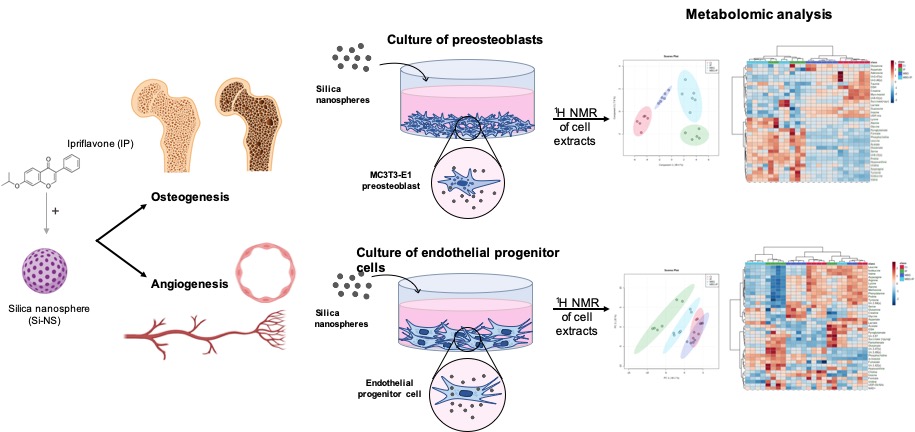 The use of mesoporous nanospheres as drug vectors in bone tissue engineering allows greater control over the drug release kinetics and the optimization of their dose, making it possible to broaden the therapeutic window and drastically reduce the side effects produced with their oral administration. The biomaterials used must be biocompatible, generating the appropriate response in the tissue in which they are introduced.To evaluate the effect and potential application of the mesoporous nanospheres loaded with ipriflavone, the biomaterial and the antiresorptive drug chosen for this study, it is necessary to demonstrate their biocompatibility through the analysis of multiple parameters to know the state of the cells that incorporate it. These cellular parameters to be evaluated include the possible metabolic alterations that may arise once the biomaterial has been incorporated and that could cause side effects or lead to a greater problem.In this context, the two key processes related to the application of these nanospheres as a possible treatment for osteoporosis are osteogenesis and angiogenesis, carried out mainly by osteoblasts and endothelial cells, respectively. For this reason, the progenitor cells of both cell types (pre-osteoblasts and endothelial progenitor cells of peripheral blood) have been selected to analyze the effect of intracellular incorporation of nanospheres (loaded and unloaded with ipriflavone) in the generation of metabolites during their in vitro differentiation.
I want to especially thank Professor Iola Duarte for her acceptance into her research group, for allowing me to carry out these experiments, and for teaching me everything I know about metabolomics and NMR.Of course, thank my PhD directors and the Universidad Complutense de Madrid (UCM) for the fellowship that allows me to train as a predoctoral student.
Twitter Poster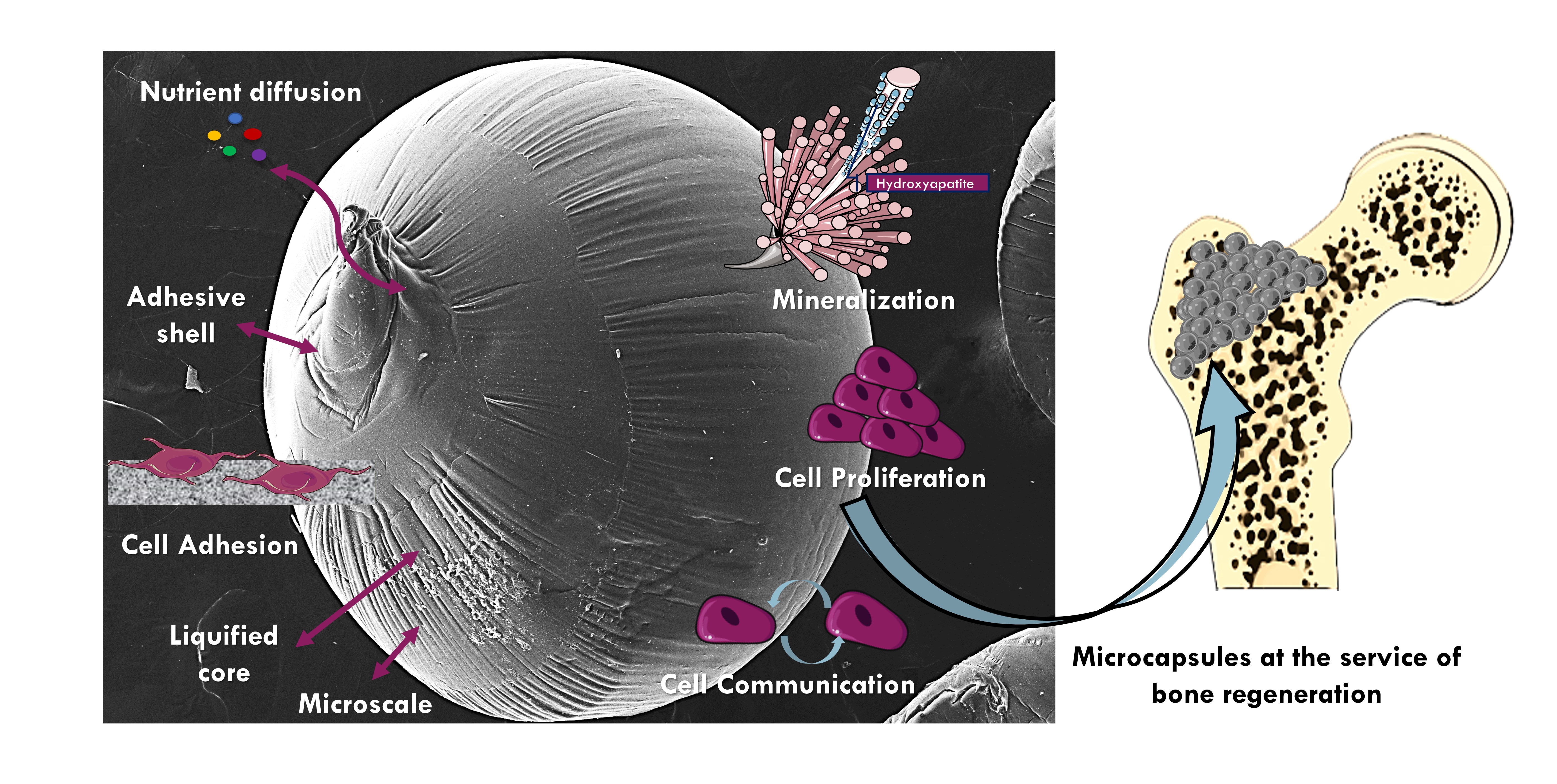 Impaired bone regeneration is the principal challenge of clinical practice. Currently, tissue engineering and regenerative medicine have been developing strategies to reduce difficulties associated to the standard treatments that translate into painful and costly treatments. However, bioengineering has not yet found a system that that is easily reproducible and biological efficient. This work aims to develop a more economical and effective microplatform for bone regenerative medicine. Inspired by the adhesive properties of mussels in wet environment, we encapsulate human mesenchymal stem cells (hMSC) in liquefied protein-based microcapsules (mCap), by electrospray using synthetic adhesive proteins with catechol-like moieties. According with our results, these biodegradable microplatforms have adhesive and mineralization properties that provided the desired environment for cell growth and proliferation, while it also allows the formation of resistant 3D structures that adhere to the tissues. These innovative protein-based systems are a promising bioengineering platform with high biocompatibility and adhesion potential in wet environments, that allow the organization of cells and the development of mineralized microtissues.
This work was supported by the European Research Council grant agreement ERC-2014-ADG-669858 forthe project "ATLAS".
Twitter Poster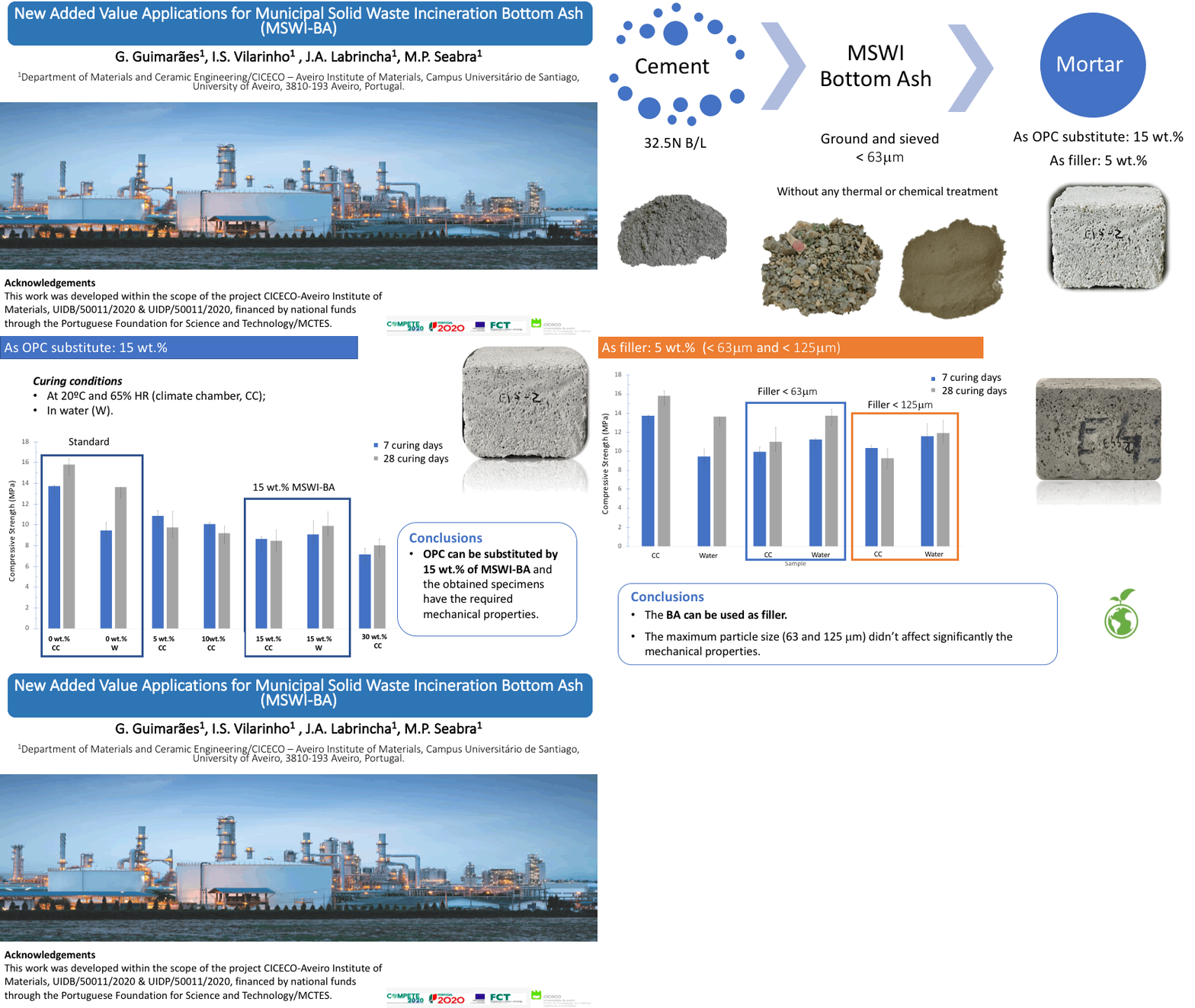 The incineration of Municipal Solid Waste (MSW) is becoming of interest due to the energy recovery and to the decrease of the MSW volume by 80%. However, this process produces fly (FA) and bottom (BA) ashes that are landfilled with several environmental issues associated. Therefore, this work aims to valorize the bottom ashes (MSWI-BA) as a partial substitute of Ordinary Portland Cement (OPC) in mortars. Firstly, the chemical composition of MSWI-BA was evaluated. They are mainly composed of SiO2, CaO and Al2O3, the core components of OPC. Due to its heterogeneity, MSWI-BA were pre-treated (ground and sieved) before its use. Two approaches were studied: OPC substitution (0, 15 and 30 wt.%) and as a filler (5 wt.%) with different maximum particle sizes (63 µm and 125 µm). The obtained results showed that the substitution of 15 wt.% OPC by MSWI-BA induces a decrease in the water absorption and compressive strength and an increase in the specimens’ thermal conductivity. However, for interior walls, this substitution is viable once the compressive strength is higher than 6 MPa. In the samples in which MSWI-BA was used filler no significant differences in the properties were observed. Hence, this work proved that OPC can be substituted by 15 wt.% of MSWI-BA and/or MSWI-BA can be used as a filler, both approaches with environmental and economical benefits.
This work was developed within the scope of the project CICECO-Aveiro Institute of Materials, UIDB/50011/2020 & UIDP/50011/2020, financed by national funds through the Portuguese Foundation for Science and Technology/MCTES.
Twitter Poster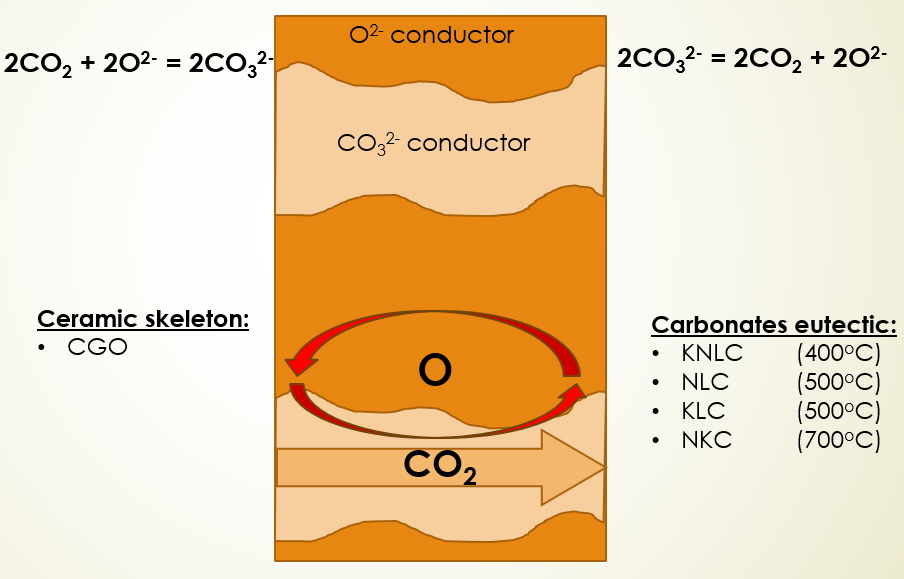 The power plants are one of the heaviest, in case of CO2 and other greenhouse gases emission, object. Nowadays there are three main approach for CO2 capturing, such as post-combustion, pre-combustion and oxy-fuel combustion. All these technologies require separation of gases in a different stage of energy production process. Thus, gas separation is an extremely important and fast developing scientific and industrial area aiming at removal of gas pollutant emissions.The main aim of the current work is improvement of the CO2 capturing composite membranes which consist of a porous oxide matrix and molten alkaline carbonates because it is a new and prospective material for CO2 separation membranes. Improving oxygen ion conductivity of the skeleton will results in direct improvement of the performance. Thus, noble ceramics such as bismuth oxide-based with outstanding conductivity are in scope of interest. Composites used in this work (distinct ceramic skeletons with molten salt impregnation) were studied by X-ray diffraction and impedance spectroscopy. The assessment of the chemical stability of distinct ceramic oxide-ion conductors in contact with carbonate mixtures complemented this study.
This work was funded by projects CO2ZERO (POCI-01-0145- FEDER-016654 - PTDC/CTM -CER/6732/2014), MOCO3 - (M-ERA.NET2 2016 - MOCO3-0009/2016), and CICECO-Aveiro Institute of Materials, UIDB/50011/2020 & UIDP/50011/2020, financed by national funds through FCT (Fundaç~ao para a Ciência e a Tecnologia)/MCTES, and when applicable co-financed by FEDER under the COMPETE 2020 Program. MS acknowledges the support of the FCT–2020.00625.CEECIND grant.
Twitter Poster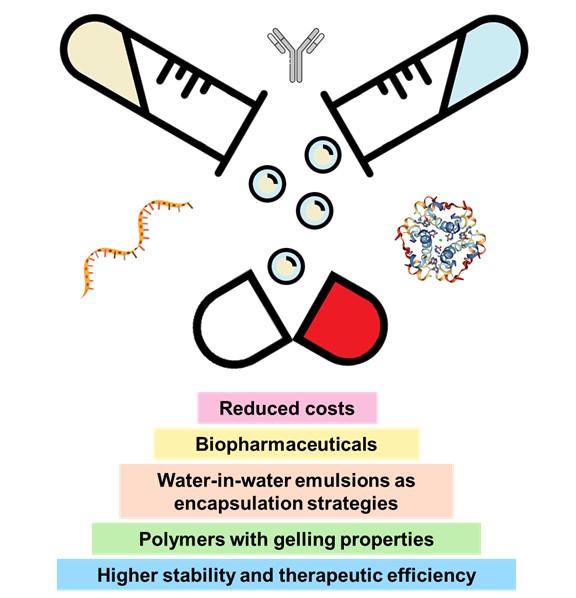 In the past two decades, the pharmaceutical industry has faced significant challenges to accomplish the requirements of an aging society, including in their research activities biopharmaceuticals and by acquiring biotechnology start-ups. Biopharmaceuticals are biological products, which have the potential to treat a wide range of diseases. Their largest fraction corresponds to proteins, and as such easily lose their stability during storage, transportation and administration. Accordingly, protein stabilization through the development of novel and efficient stabilizers and/or novel encapsulation methods is mandatory.Aqueous biphasic systems (ABS) containing phase-forming components with gelling abilities are presented here to prevent the denaturation of therapeutic proteins. After ensuring protein stability in conventional ABS, gellable ABS produced by cost-efficient biopolymers were studied. A drop-wise method for the encapsulation of a model protein in a gelatin-based ABS has been developed, after which an emulsification module was used to optimize particle size and homogeneity, and encapsulation efficiency.
This work was developed within the scope of the project CICECO-Aveiro Institute of Materials, UIDB/50011/2020 & UIDP/50011/2020, financed by national funds through the Portuguese Foundation for Science and Technology/MCTES. Bojan Kopilovic acknowledges FCT for the PhD grant SFRH/BD/06481/2020.
Twitter Poster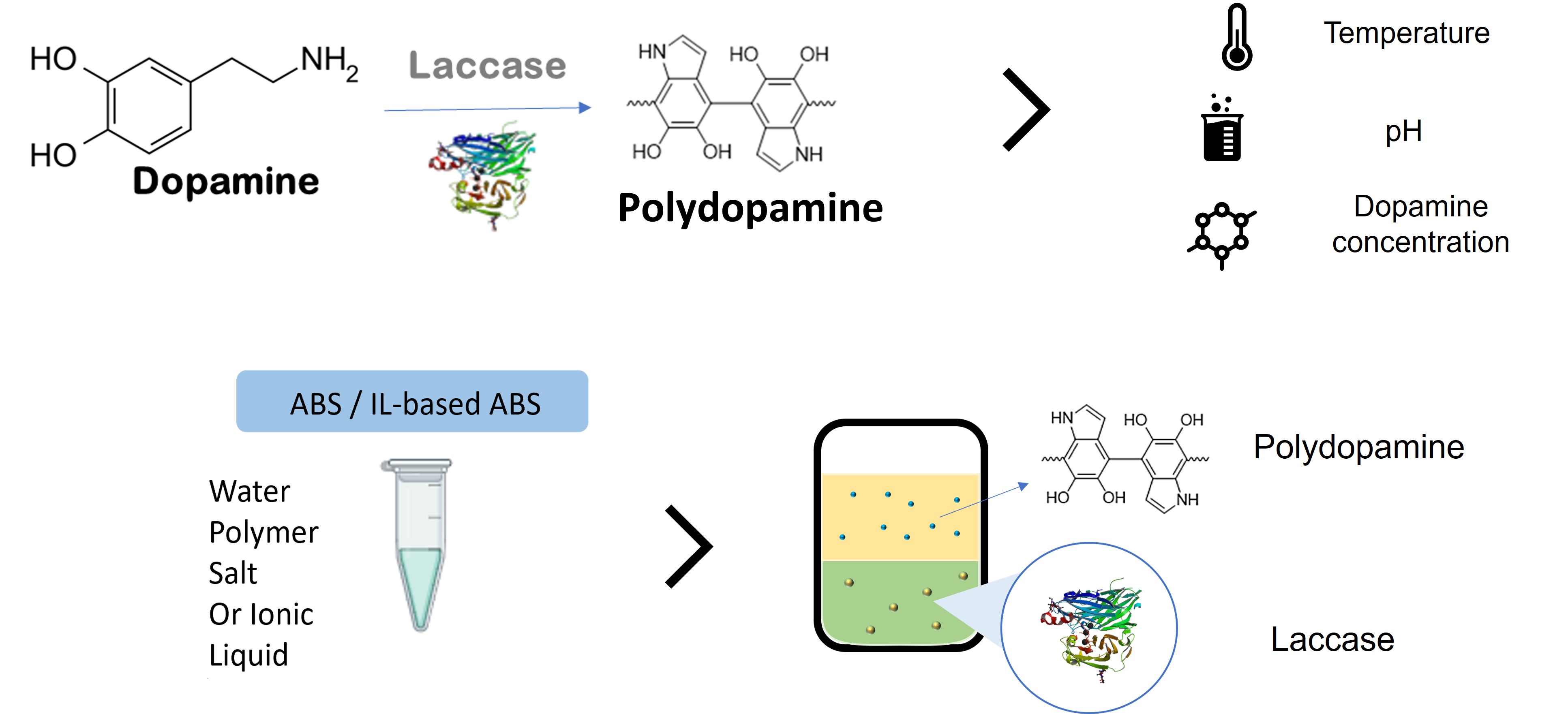 Biocatalysis contributes to a more eco-friendly and sustainable industrial chemistry. Therefore, its wide use in industrial and biotechnological processes has increasingly become more evident. One promising application is the enzymatic polymerization of various compounds. Laccase, a multicopper oxidase with high catalytic efficiency and low substrate specificity, has attracted worldwide attention due to its ability to degrade both phenolic and non-phenolic compounds and its involvement in the synthesis of polymers. Being accepted as an environmentally friendly biocatalyst, laccase is widely employed in most sectors of biotechnology.Polydopamine (PDA), an added-value biopolymer that results from dopamine polymerization, has been used for many applications, being highlighted in the modification and functionalization of surfaces and the field of biomedicine. In contrast to the conventional method of dopamine polymerization, which is a time-consuming process and produces PDA films with poor stability, in the presence of laccase the process becomes faster, very efficient and meets the ideals of green chemistry. However, applying a biocatalyst that could be reused and without the loss of its biological properties is an ever-increasing demand for its industrial applications. Thereby, aqueous biphasic systems (ABS), which are mainly composed of water, appear as a promising alternative in this field since they provide a mild and biocompatible environment for proteins.In this study, it was carried out the polymerization of dopamine by using laccase as the biocatalyst. Several parameters including the ideal temperature, medium pH and different initial dopamine concentrations on the polymerization rate have been investigated and optimized.
This work was developed within the scope of the project CICECO-Aveiro Institute of Materials, UIDB/50011/2020 & UIDP/50011/2020, financed by national funds through the FCT/MEC and when appropriate co-financed by FEDER under the PT2020 Partnership Agreement. This work was also financially supported by and POCI-01-0145-FEDER-031268-funded by FEDER, through COMPETE2020—Programa Operacional Competitividade e Internacionalização (POCI), and by national funds (OE), through FCT/MCTES. Ana P. M. Tavares acknowledges FCT for the research contract CEECIND/2020/01867. Flávia Magalhães acknowledges the SPQ/FCT PhD grant (SFRH/BD/150669/2020).
Twitter Poster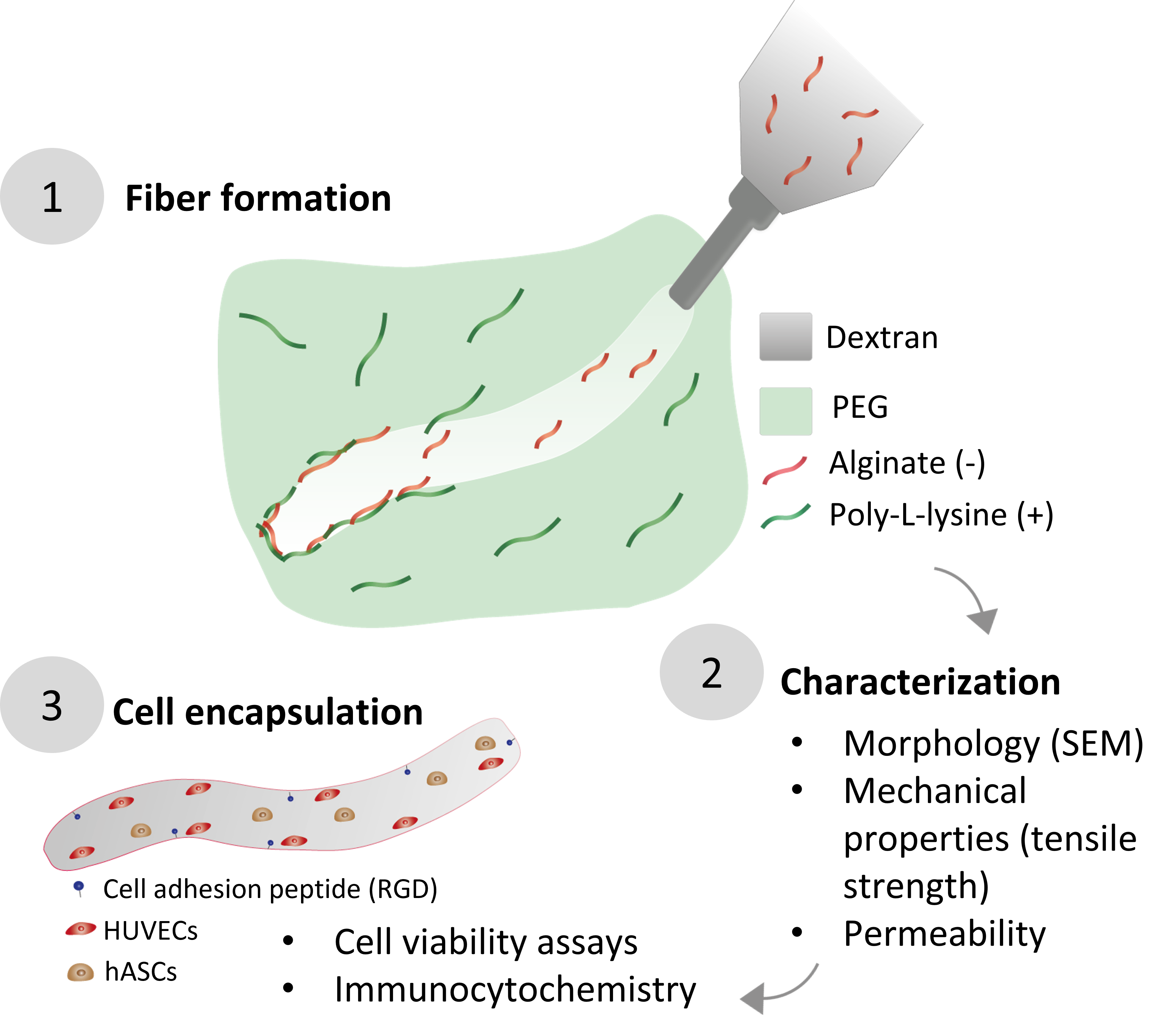 Tissue engineering strategies based on cell encapsulation in biomaterials have been reporting to improve efficacy of regenerative therapies. Tubular materials capable of supporting cell functionality and recapitulating native tissues such as blood vessels have been purposed as alternative approaches to classical spherical-shaped cell encapsulation materials. Several biofabrication techniques have been explored for the generation of tubular materials; however, they often require specialized equipment, and/or rely on time-consuming and multistep procedures.Herein, a poly(ethylene glycol) (PEG)/dextran-based aqueous two phase-system (ATPS) was used to support the direct and rapid generation of fibers with hollow features in a single step. The addition of oppositely charged polyelectrolytes in each phase, enabled their complexation at the ATPS interface, forming a stabilizing membrane. The morphology and mechanical properties of the structures were characterized, as well as the membrane permeability to fluorescent molecules with different molecular weights. Human adipose-derived stem cells (hASCs) and umbilical vein endothelial cells (HUVECs) were successfully encapsulated in optimized formulations, also modified with cell adhesive groups. Tubular perfusable materials with tunable mechanical properties and increased permeability were able to be produced. Moreover, encapsulated cells remain viable up to 7 days, with vascular endothelial cells surviving for 14 days of cell culture. This work brings new perspectives in the field of regenerative medicine presenting an easy to implement approach for the rapid generation of cytocompatible materials able to support the growth of relevant human cells with regenerative properties.
This work was supported by the Programa Operacional Competitividade e Internacionalização, in the component FEDER, and by national funds (OE) through FCT/MCTES, in the scope of the projects “TranSphera” (PTDC/BTMORG/30770/2017). Financial support was received from ERC for project ATLAS (ERC-2014-ADG669858).
Twitter Poster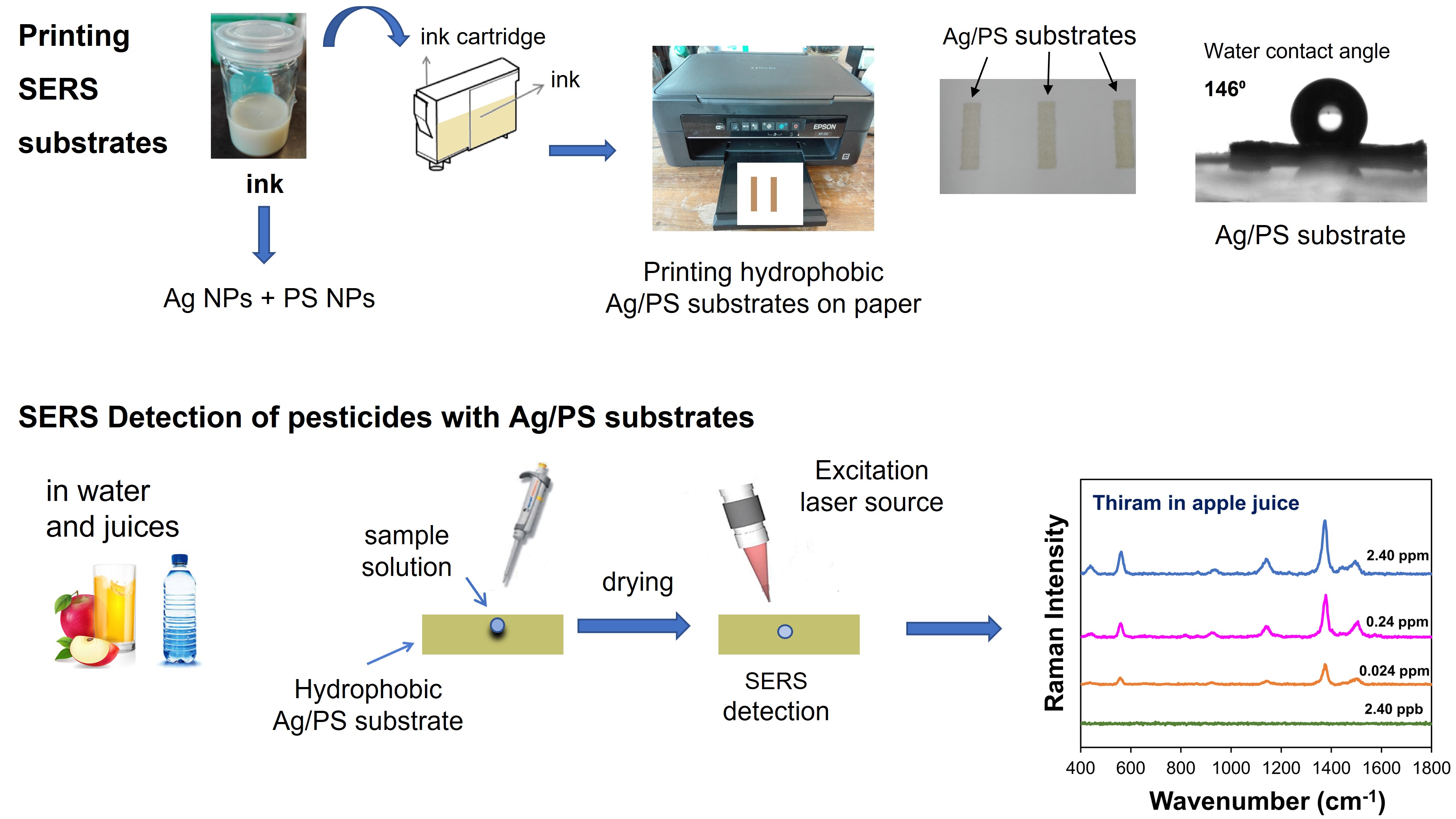 Monitoring trace levels of pesticides in food products is extremely important as a preventive measure for protecting public health. In the past years, surface enhanced Raman scattering (SERS) has been explored as a non-conventional method in the detection of trace chemical species in water and food, namely for the presence of vestigial pesticides. The use of materials that act as highly sensitive substrates in SERS is a crucial requirement in this type of surface analysis. In particular, hydrophobic SERS substrates are attracting significant attention, because in certain conditions allow the analyte molecules to concentrate in a smaller area of the sensor, thereby increasing its sensitivity. In this work, we propose an innovative strategy to prepare hydrophobic paper-based substrates for SERS analysis. The substrates have been manufactured by inkjet printing of formulations containing Ag colloids and polystyrene (PS) beads emulsions. The optimization of the substrates for SERS analysis was performed by varying parameters such as the weight % of PS in the ink formulation and the number of printing cycles. Several samples have been studied, including fruit juice and fruit peels spiked with the pesticide thiram. Using the new hybrid SERS substrates, thiram was detected in spiked water and apple juice at a level of 24 ppb, while in apple peel, the detection limit achieved was 600 ng/cm2. As such, the paper-based SERS substrates allowed the detection of thiram in laboratorial samples at concentrations lower than the MRL established by the European Union (Commission Regulation (EU) 2016/1).
This work was developed within the scope of the project CICECO-Aveiro Institute of Materials, UIDB/50011/2020 & UIDP/50011/2020, financed by national funds through the Portuguese Foundation for Science and Technology/MCTES. Natércia C.T. and Sara Fateixa are funded by National funds (OE), through FCT- Fundação para a Ciência e Tecnologia, I.P., in the scope of the framework contract foreseen in the numbers 4, 5 and 6 of the article 23, of the Decree-Law 57/2016, of August 29, changed by the law 57/2017, of July 19.
Twitter Poster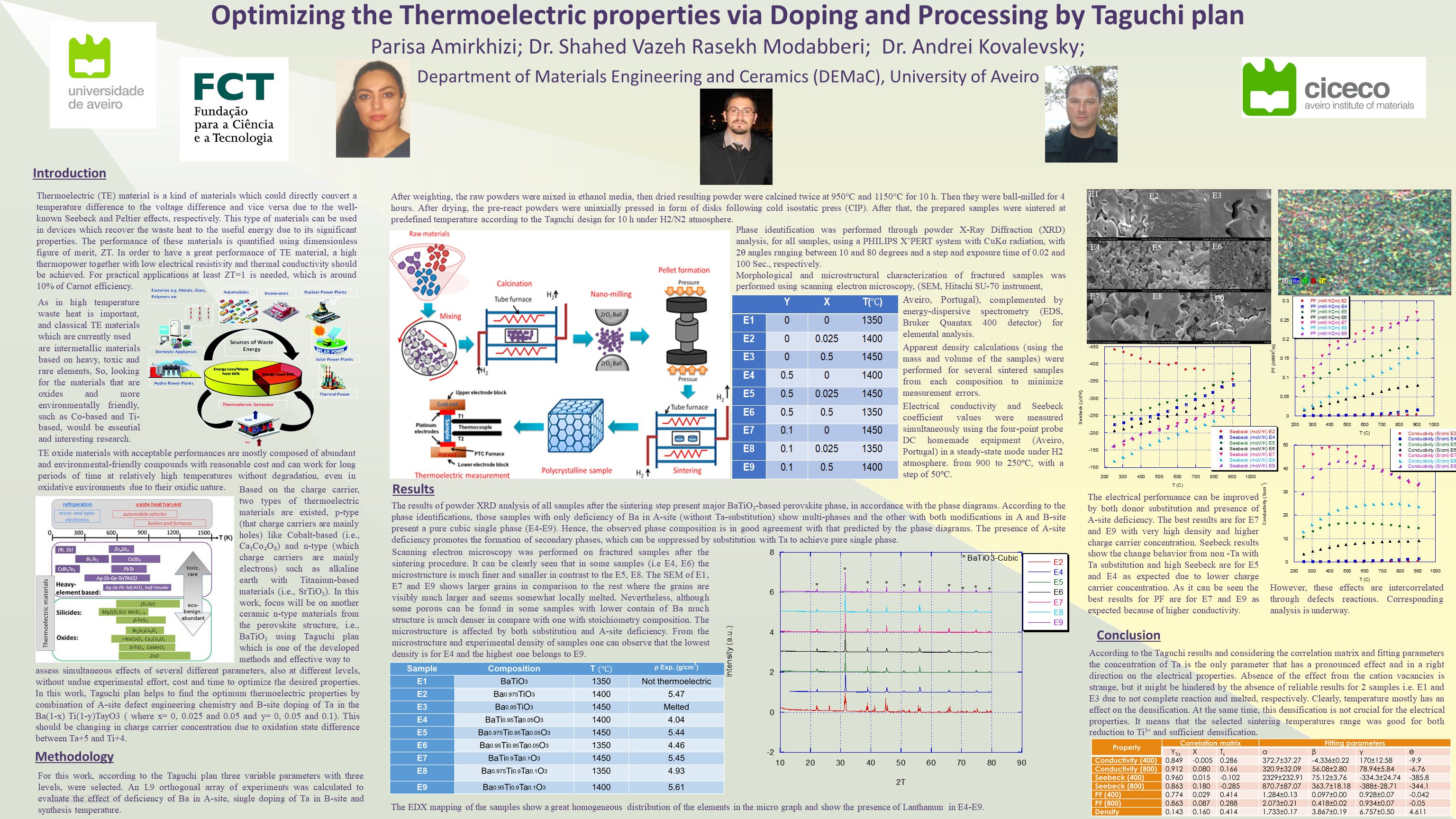 Among the emerging technologies for alternative green power generation, thermoelectric (TE) materials gain large attention due to their ability of direct electrical energy production from heat and vice versa. In this work, Taguchi plan was used to find the optimum thermoelectric properties by combination of A-site defect chemistry engineering and B-site doping of Ta in the Ba(1-x) Ti(1-y)TayO3 through solid-state sintering technique. The results of XRD of all samples present major BaTiO3-based perovskite phase, in accordance with the phase diagrams.The microstructure is affected by both substitution and A-site deficiency. The EDX of the samples show a great homogeneous distribution of the elements in the micrograph and show the presence of LanthanumThe electrical performance can be improved by both donor substitution and presence of A-site deficiency.According to the Taguchi results and considering the correlation matrix and fitting parameters the concentration of Ta was the only parameter that has a pronounced effect and in a right direction on the electrical properties. Absence of the effect from the cation vacancies is strange, but it might be hindered by the absence of reliable results for 2 samples i.e. E1 and E3 due to not complete reaction and melted, respectively. Clearly, temperature mostly has an effect on the densification. At the same time, this densification is not crucial for the electrical properties. It means that the selected sintering temperatures range was good for both reduction to Ti3+ and sufficient densificationHowever, these effects are intercorrelated through defects reactions. Corresponding analysis is underway.
The work is financially supported by Foundation for Ciencia and Technology (FCT), Lisbon. Portugal. Grant reference: 2020.08051.BD, Doctoral fellowship.
Twitter Poster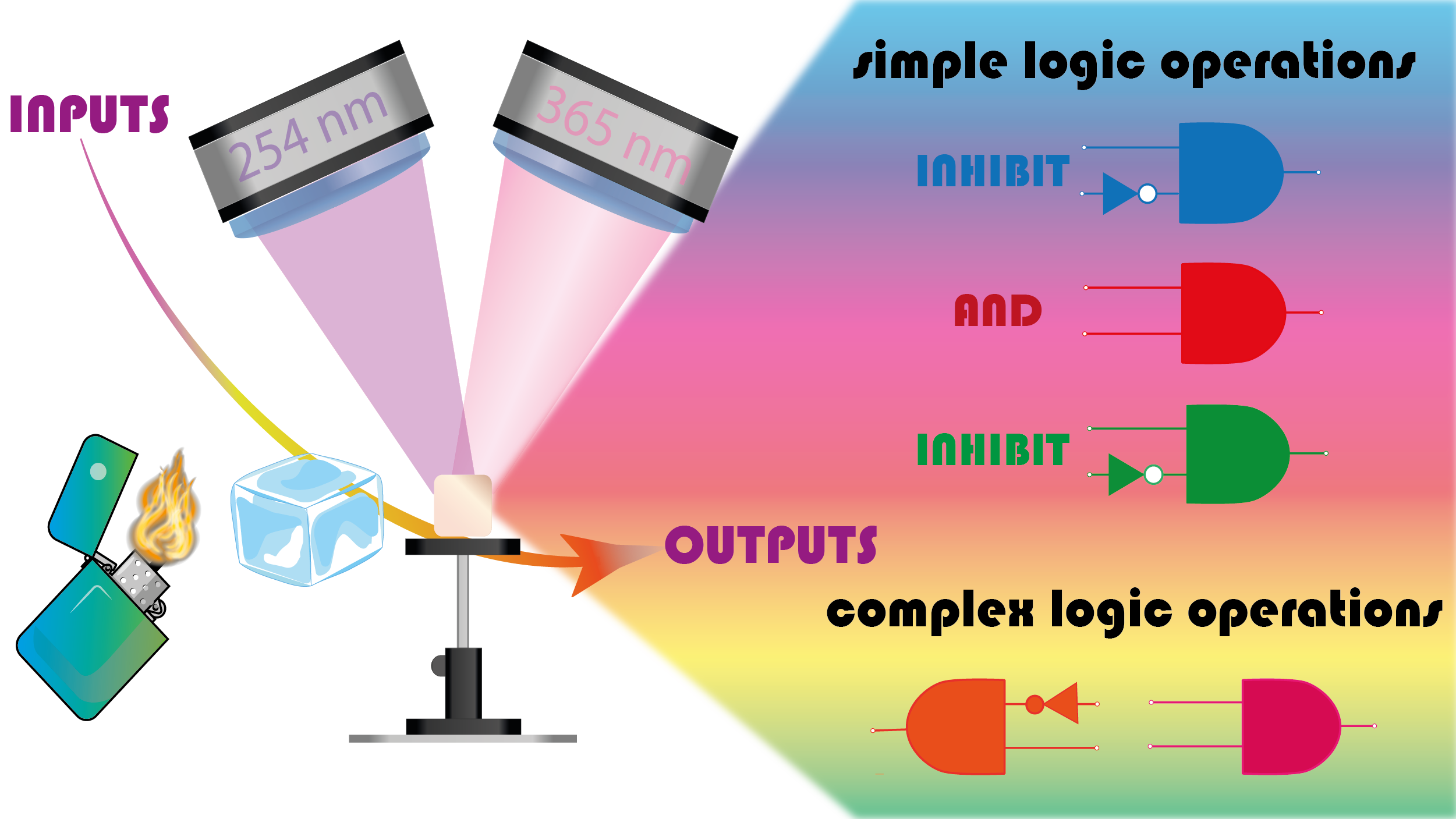 In a matter of 60 years computer have gone from requiring an entire room to operate to the desk, to our pocket. The development of new materials that allow to compute in a smaller and faster way triggered the research to look for new solutions, new methods, new approaches. In this regard the bottom-up approach may contribute to develop new materials using atom as building blocks. The information processing through molecules using the Bolean Algebra has been studied since the ‘80s but the field is still in its infancy. One of the approaches to study a system using the concept of logic is to exploit physical inputs (e.g. radiation, temperature) and outputs (e.g. radiance). In this regard, if we integrated the system with Ln3+ ions we can exploit their spectroscopy properties (such as long excited stated lifetimes, pure color emission mostly in the visible and near infrared ranges) in the frame of molecular logic. Herein we present an organic-inorganic hybrid doped with Eu3+ and Tb3+ as molecular logic toolbox to demonstrate the potential of lanthanide ions to define different logic operations. The system performs simple logic operations after stimulation through UV radiation and quantifying the output in term of radiance. Furthermore, using the time parameters associated to the measurements (e.g. starting delay and integration window) the system is demonstrated to be reprogrammable since is possible to tune the output in two different ranges of temperatures."
This work was developed within the scope of the projects CICECO-Aveiro Institute of Materials (UIDB/50011/2020 & UIDP/50011/2020) financed by Portuguese funds through the FCT/MEC and when appropriate co-financed by FEDER under the PT2020 Partnership Agreement. SZ acknowledges Fundação da Ciência e Tecnologia (Portugal) for a Ph.D. grant (SFRH/BD/144239/2019). MAHR acknowledges the SOLARFLEX project (CENTRO-01-0145-FEDER-030186) for grant, financed by Portuguese national funds through the FCT/MEC and when appropriate co-financed by FEDER under the PT2020 Partnership Agreement through European Regional Development Fund (FEDER) in the frame of Operational Competitiveness and Internationalization Programme (POCI).
Twitter Poster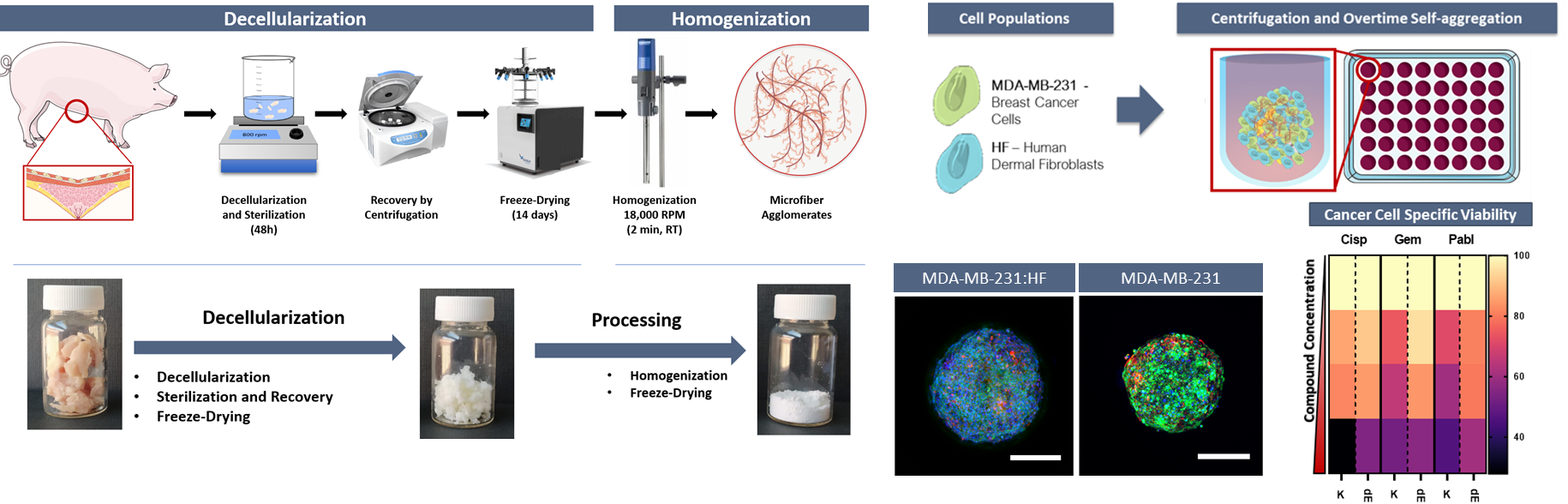 Decellularized extracellular matrix (dECM) is emerging as a valuable tool for generating 3D in vitro tumor models. Herein we employed microfiber processed dECMs for bioengineering 3D breast cancer spheroid models presenting key cellular and matrixial stromal components assembled in ULA surfaces. Providing reproducible and high-throughput compatible spheroid-shaped microtissues for in vitro drug screening. Herein, we engineered mono and co-culture 3D-MCTS containing dECM fragments derived from porcine mammary tissue. These dECM-enriched models promoted altered invasive and chemo-responsive profiles in cocultured populations. Increasing therapeutic resistance in cancer cells co-cultured with fibroblasts and promoting altered metabolical profiles.
This work was developed within the scope of the project CICECO-Aveiro Institute of Materials, UIDB/50011/2020 & UIDP/50011/2020, financed by national funds through the FCT/MEC and when appropriate co-financed by FEDER under the PT2020 Partnership Agreement. This work was also supported by the Programa Operacional Competitividade e Internacionalizaç˜ao (POCI), in the component FEDER, and by national funds (OE) through FCT/MCTES, in the scope of the project PANGEIA (PTDC/BTM-SAL/30503/2017). Vítor Gaspar acknowledges funding in the form of a Junior Researcher Contract under the scope of the project PANGEIA (PTDC/BTM-SAL/30503/2017). The authors acknowledge the financial support by the Portuguese Foundation for Science and Technology (FCT) through an individual Doctoral Grant (SFRH/BD/ 141718/2018, Luís Ferreira). Confocal imaging acquisition was per- formed in the LiM Facility of iBiMED, a node of PPBI (Portuguese Platform of BioImaging): POCI-01-0145-FEDER-022122. The NMR spectrometer is part of the National NMR Network (PTNMR), partially supported by Infrastructure Project Nº 022161 (co-financed by FEDER through COMPETE 2020, POCI and PORL and FCT through PIDDAC).
Twitter Poster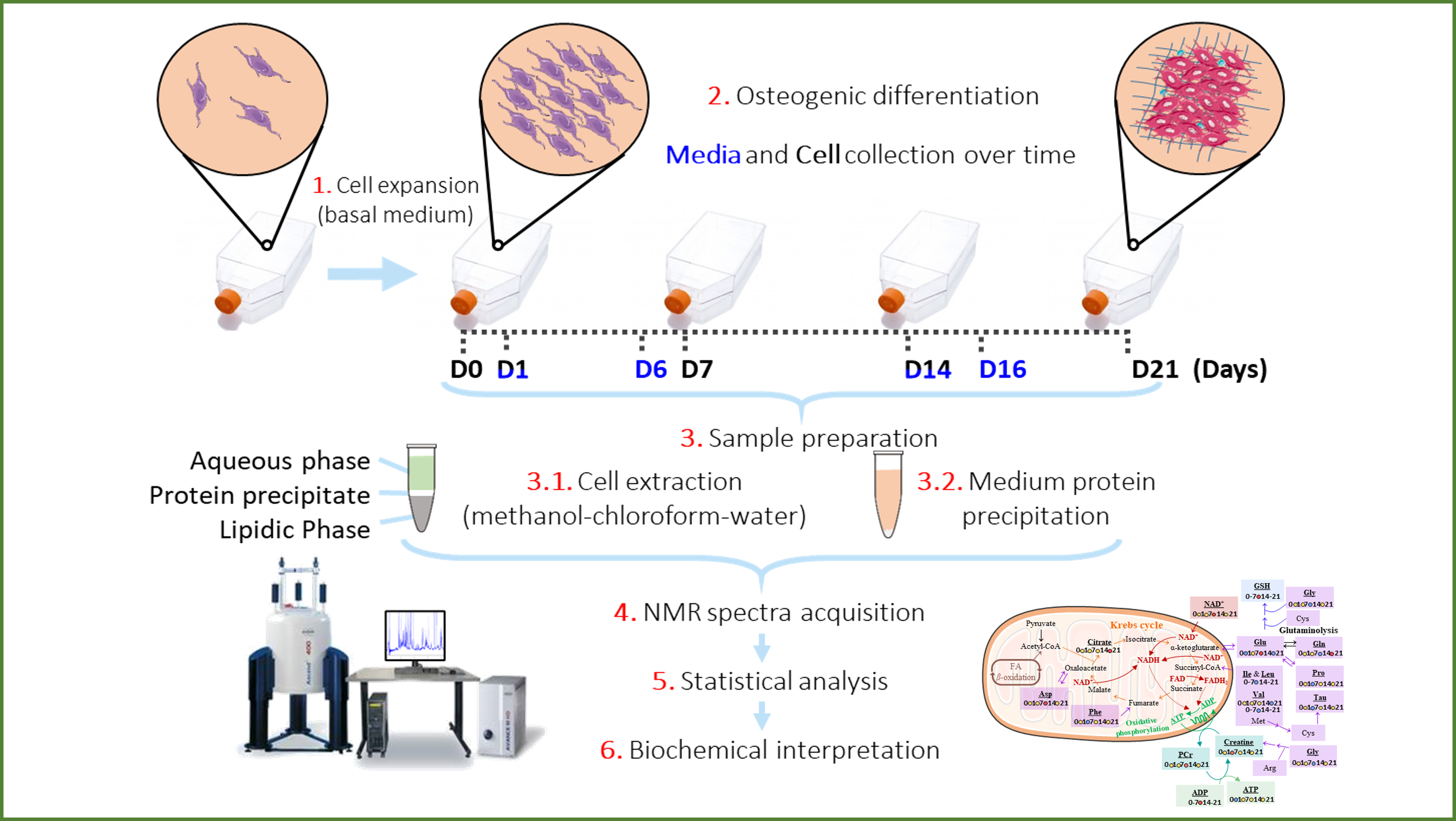 Mesenchymal stem cells (MSCs) differentiate into a variety of cell lineages, namely osteogenic, thus having great potential in bone regenerative medicine. Metabolomics offers exquisite insight into the metabolism of living organisms and, although some studies have already characterized MSC metabolome during differentiation, very few have monitored osteogenesis, with mass spectrometry approaches predominating [1-3] compared to nuclear magnetic resonance (NMR) spectroscopy [4]. Our aim was to unveil the metabolic pathways affected by osteogenesis. For the first time to our knowledge, we used untargeted 1H NMR metabolomics to analyse the polar endo-metabolome of human adipose tissue MSCs (hAMSC) throughout osteogenesis in 2D cultures (days 0-21). Our results showed significant differences over time in several endo-metabolites (including amino acids, creatine/phosphocreatine, choline compounds, among others). There was a clear metabolic separation before and after 7 days of culture. This work paves the way to characterize the dynamic metabolism during osteogenesis, ultimately enabling its monitoring through metabolic biomarkers, eventually translatable to in vivo clinical tissue regeneration strategies.[1] E. Alakpa, V. Jayawarna, A. Lampel, K. Burgess, et al., Chem. 1, (2016) 298.[2] M.Klontzas, S.Vernardis, M.Heliotis, et al., Stem Cells Dev. 26, (2017) 723.[3] M.H.Amer, M.Alvarez-Paino, J.McLaren, et al., Biomaterials. 266 (2021) 120450.[4] D. Gaur, Y.Yogalakshmi, S.Kulanthaivel, et al., Adv. Biosys. 2, (2018) 1800093.
We acknowledge the Portuguese Foundation for Science and Technology (FCT) for co-funding the BIOIMPLANT project (PTDC/BTM-ORG/28835/2017) through the COMPETE2020 program and European Union fund FEDER (POCI-01-0145-FEDER-028835). DSCB acknowledges the Sociedade Portuguesa de Química and FCT for her PhD grant SFRH/BD/150655/2020. AMG acknowledges the CICECO-Aveiro Institute of Materials project, (UIDB/50011/2020 & UIDP/50011/2020), financed by national funds through the FCT/MEC and when appropriate co-financed by FEDER under the PT2020 Partnership Agreement. The NMR spectrometer used in this work is part of the National NMR Network (PTNMR) and, partially supported by Infrastructure Project Nº 022161 (co-financed by FEDER through COMPETE 2020, POCI and PORL and FCT through PIDDAC).
Twitter Poster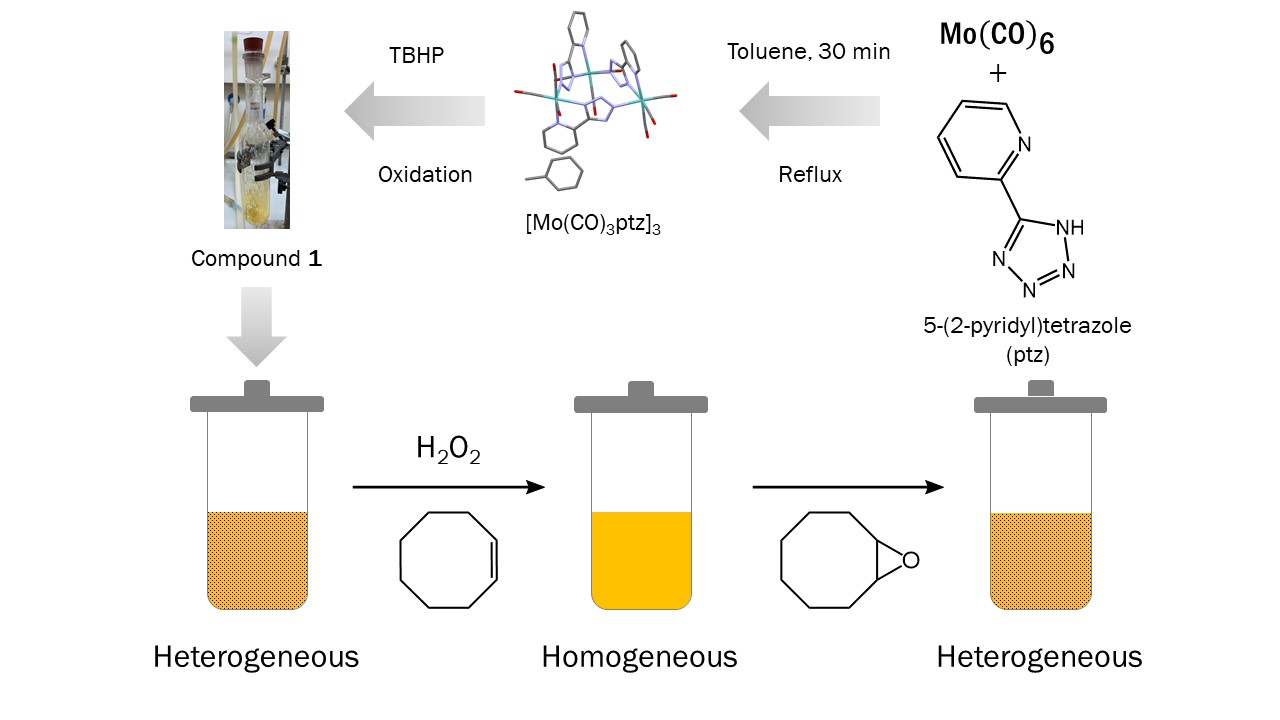 Reaction Induced Self-Separating (RISS) catalysts combine the advantages of both homogeneous and heterogeneous catalysis: they have high catalytic activity and are easily recoverable. Inorganic/organic compound 1 was synthesized by in situ reflux of Mo(CO)6 and ptz (ptz = 5-(2-pyridyl)tetrazole) in toluene, followed by oxidation with tert-butylhydroperoxide (TBHP). Catalytic studies based on the model reaction of the epoxidation of cis-cyclooctene (Cy) to cis-cyclooctene (CyO) with H2O2 indicated that compound 1 behaved as a RISS catalyst. Catalyst 1 was further explored using different types of solvents at 70 °C. High Cy conversions and CyO selectivities were achieved.
This work was carried out with the support of CICECO (FCT Ref. UIDB/50011/2020 & UIDP/50011/2020], REQUIMTE/LAQV (UIDB/50006/2020), and the COMPETE 2020 Operational Thematic Program (project POCI-01-0145-FEDER-030075), co-financed by national funds through the FCT/MCTES and the EU through the ERDF under the Portugal 2020 Partnership Agreement. The position held by P.N. was funded by national funds (OE), through FCT, I.P., in the scope of the framework contract foreseen in the numbers 4, 5 and 6 of article 23 of the Decree-Law 57/2016 of 29 August, changed by Law 57/2017 of 19 July. M.S.N. is grateful for a BI(M) grant associated with the project POCI-01-0145-FEDER-030075.
Twitter Poster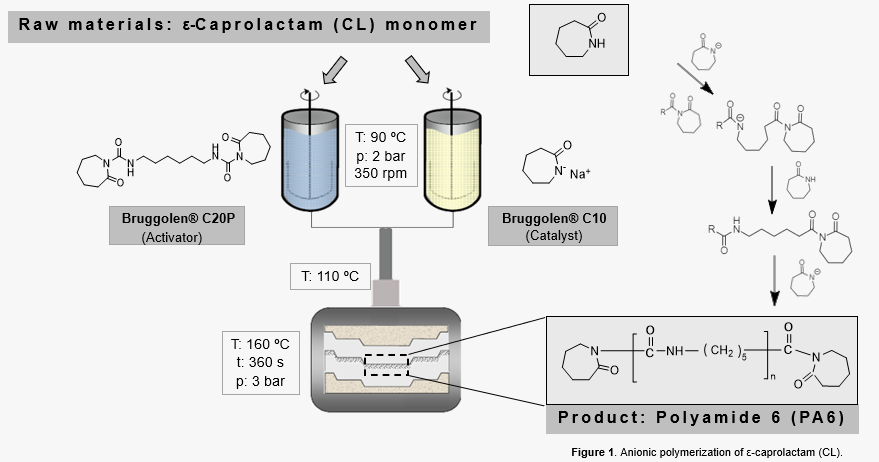 The current demands of the automotive market and the global policies concerning sustainability, recyclability, and energy efficiency, have attracted researchers to use innovative materials in order to reduce the weight of novel cars. Due to its low density and rigidity, thermoplastic matrix composites have emerged in the automotive industry as an alternative strategy with huge potential, capable of keeping the mechanical properties of thermoset matrix composites.Polyamide 6 (PA6), also known as nylon 6, is a widely used thermoplastic in automotive industry. Since, this material is used in the production of structural components for autoparts, its mechanical properties have an important role. In situ polymerization through thermoplastic resin transfer moulding (T-RTM) allows the polymerization of liquid polymeric precursors with low viscosity in the presence of suitable catalysers and activators. T-RTM is a technology that can be employed to produce tougher, lighter, and recyclable composites for use in automotive applications.The reactive anionic polymerization of ↋-caprolactam (CL) is one of the most developed forms of reactive processing of thermoplastics. This study analyses the influence of different catalyst and activator dosage levels in the polymerization of PA6. The results demonstrate the influence of catalyst and activator content in the final properties and highlight the importance of optimizing the dosage levels in order to maximize the physicochemical properties of PA6.
The authors would like to acknowledge the financial support from Simoldes Plásticos S.A. This is a project in collaboration with Simoldes Plásticos, S.A., and co-financed under Portugal 2020 and European Regional Development Fund, through COMPETE under the scope of the project POCI-01-0247-FEDER-017603. This work was also developed within the scope of the project CICECO-Aveiro Institute of Materials, UIDB/50011/2020 & UIDP/50011/2020, financed by national funds through the Portuguese Foundation for Science and Technology/MCTES.
Twitter Poster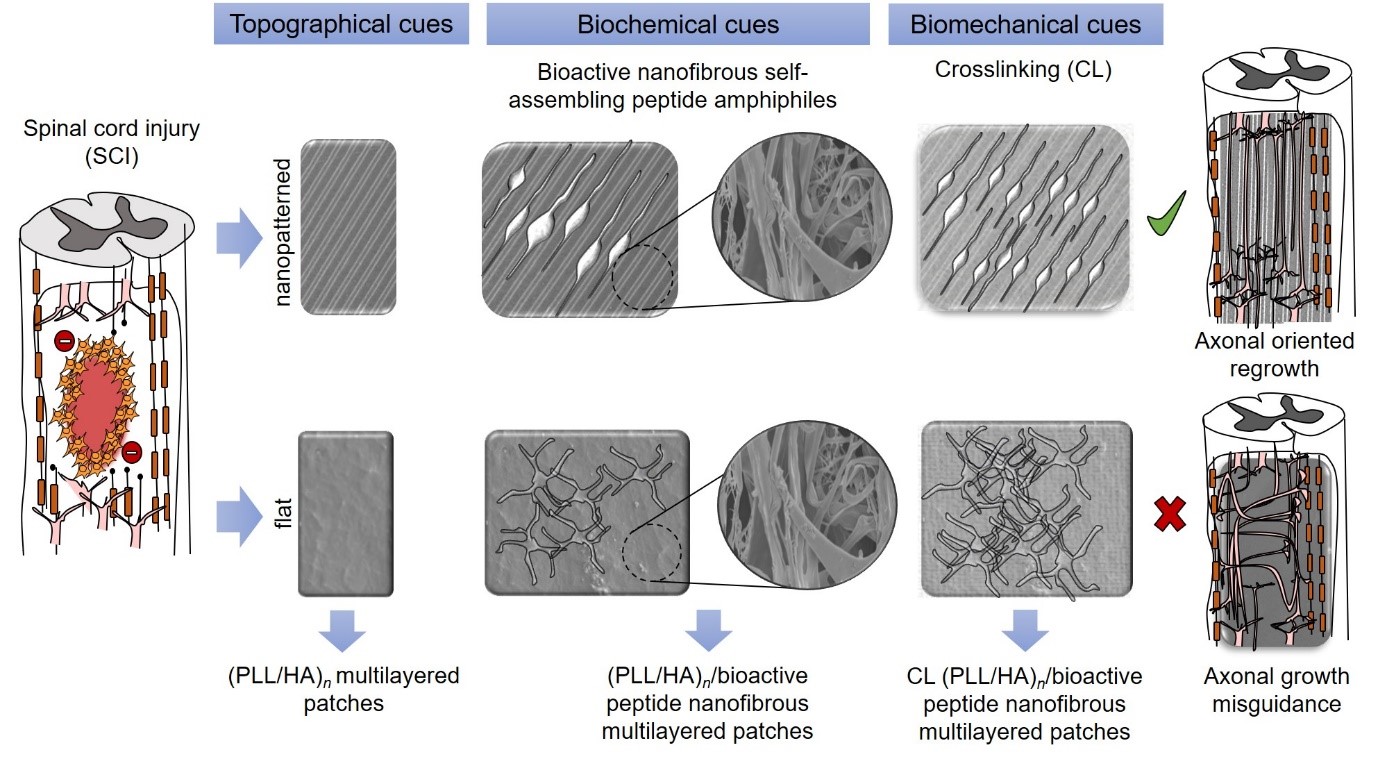 Spinal cord injury is a severe neurodegenerative disorder arising from traumatic damages inflicted on central nervous system (CNS), often resulting in a permanent loss of motor function and sensory perception. Despite the growing knowledge in understanding the lesion pathophysiology, there is not an effective therapy to promote functional recovery.Recently, the emerging field of supramolecular chemistry together with advances in nanotechnology, tissue engineering and regenerative medicine have paved the way for developing neural extracellular matrix (ECM)-mimetic biomaterials aimed at building up a pro-regenerative microenvironment at lesion site and triggering axonal repair. However, the developed biomaterials still fail in recreating the complex composition, multiresponsive dynamic nature and mechanical robustness of native ECM.Herein, emphasis will be given to the supramolecular design of biomimetic multitactical nanobiomaterials, endowed with topographical, biomechanical, and biochemical cues, to recapitulate the diversity of signals in native CNS microenvironment and stimulate axonal regrowth and spinal cord repair. The bioinstructive biomaterials rely on biocompatible hyaluronic acid and poly(L-lysine) biopolymers, and laminin-mimetic biofunctional peptide, recreating neural ECM and promoting neurite outgrowth. The biomaterials were assembled on templates denoting distinct nanotopographies by combining molecular self-assembly with the cost-effective and highly versatile Layer-by-Layer assembly technology. The biomaterials were further crosslinked to enhance cell functions. The physicochemical and morphological properties of developed biomaterials will be disclosed, and their in vitro biological performance unveiled using primary neuronal cortical cells aiming to reveal their potential to stimulate axonal outgrowth and be used in spinal cord repair.
This work was supported by Programa Operacional Regional do Centro – Centro 2020, in the component FEDER, and by national funds (OE) through FCT/MCTES, in the scope of the project “SUPRASORT” (PTDC/QUI-OUT/30658/2017). M. Lopes, C.F.V. Sousa, M. Torrado and J. Borges acknowledge FCT for the individual PhD grants (2020.05210.BD, 2020.04408.BD, SFRH/BD/146754/2019) and individual Assistant Researcher contract (2020.00758.CEECIND), respectively. This work was developed within the scope of the project CICECO – Aveiro Institute of Materials, UIDB/50011/2020 & UIDP/50011/2020, financed by national funds through FCT/MCTES.
Twitter Poster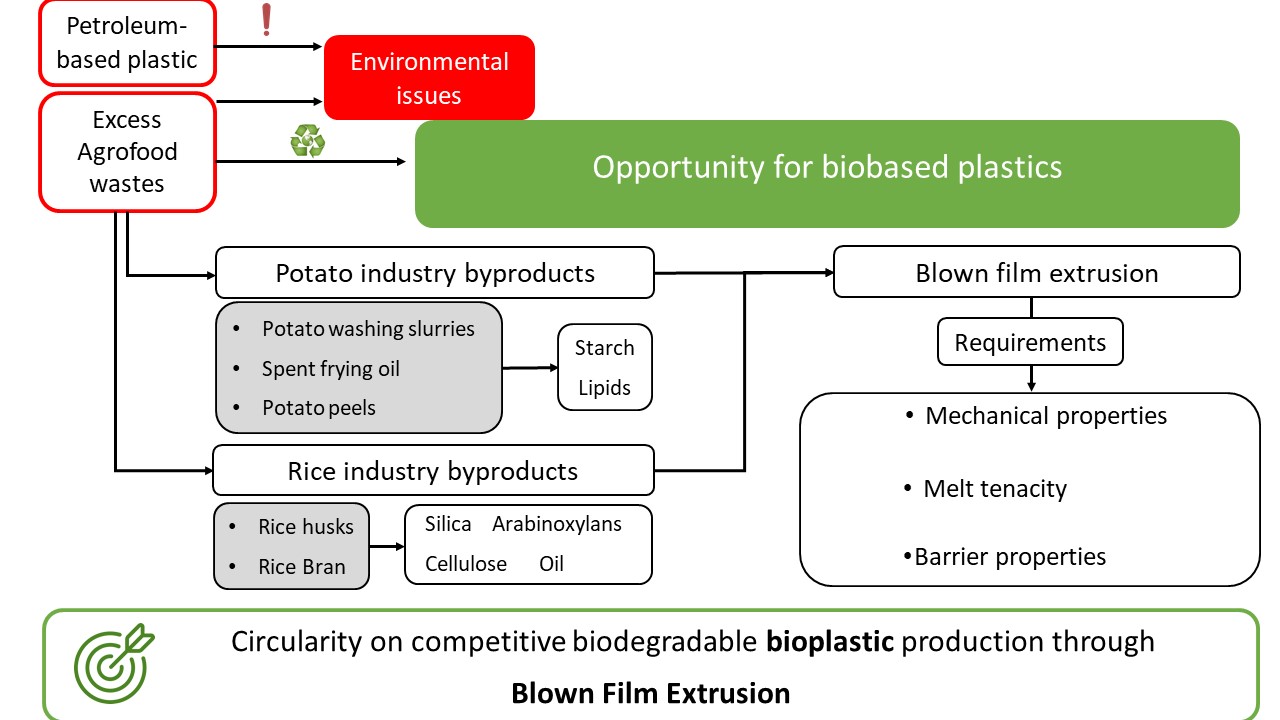 The increase of single-use plastics is contributing to climate change and pollution and should be urgently stopped, being the development of biodegradable bio-based plastics important. In this context, agrofood wastes contain compounds with potential for being used as feedstocks in the biodegradable bioplastics’ production, contributing to reduce the amount of these wastes discarded at land fields. This PhD thesis, in the scope of the Doctoral Program in Materials Science and Engineering, will explore the potential of using agrofood byproducts to develop sustainable bioplastic packaging materials by blown extrusion, as well as roues to overcome the challenges behind the blown extrusion of thermoplastic starch (TPS)-based materials. Potato and rice industry byproducts will be studied as a source of biomolecules suitable for developing TPS-based plastics with improved mechanical and physicochemical performance. Strategies that allow to overcome the blown extrusion limitations of TPS-based formulations, including the use of bio-based plasticizers/fillers and/or the TPS chemical modification will also be tested.
Thanks are due to the University of Aveiro and FCT/MCTES for the financial support of CICECO-Aveiro Institute of Materials (FCT Ref. UIDB/50011/2020 & UIDP/50011/2020) through national founds and, where applicable, co-financed by the FEDER, within the PT2020 Partnership Agreement, and to the Portuguese NMR Network. The authors acknowledge to FCT for the financing of the PhD research grant(UI/BD/151143/2021). Thanks are also due to “A Saloinha, Lda” for providing potato byproducts, “Qualiriso, Lda” and “Valente Marques, S.A” for providing rice byproducts. FCT is also thanked by the Scientific Employment Stimulus program (IG, CEECIND/00430/2017).
Twitter Poster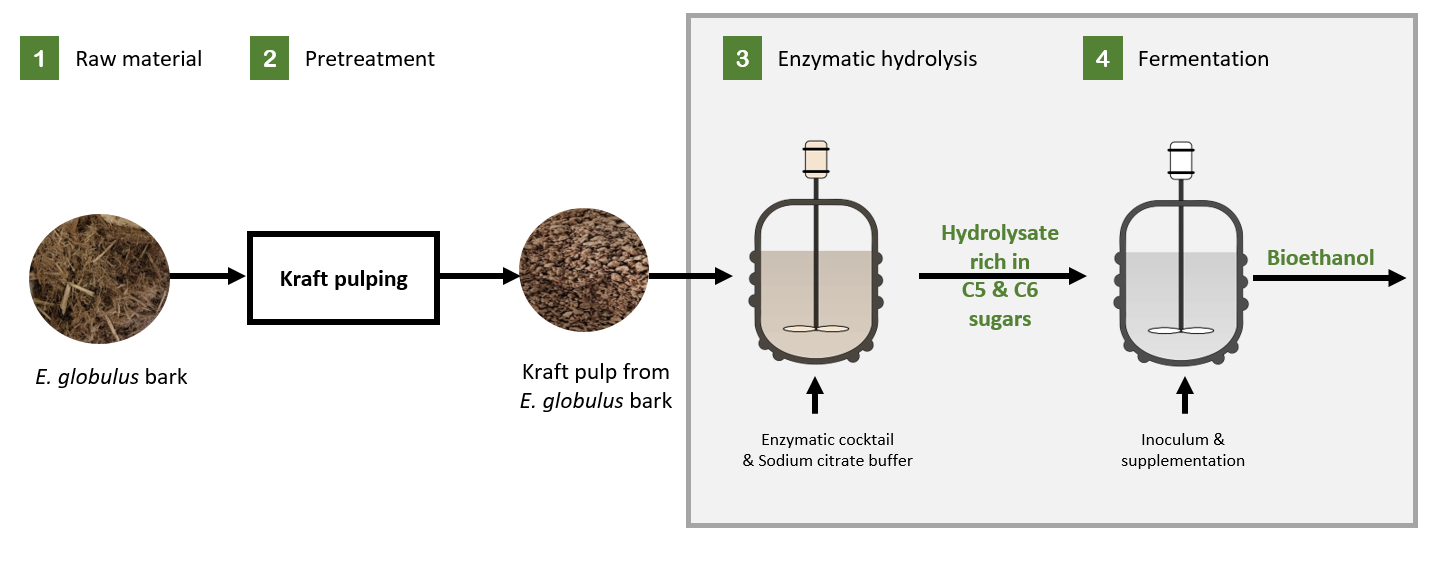 Eucalyptus globulus is recognized as one of the most widely used species in the pulp and paper sector. However, debarking is a crucial operation to ensure a high yield of the pulping process and quality of the pulp, which results in large amounts of this industrial residue. Typically, the bark is burned for energy purposes, although it can be converted into more profitable applications, contributing simultaneously to implementing the concept of biorefinery and the circular economy model. The conversion of E. globulus bark into cellulosic ethanol involved three main stages: pretreatment, hydrolysis and fermentation. The integration of cellulosic sugars and ethanol production into the pulp and paper sector leads to sustainable waste management, valorization of feedstock not suitable for pulp production, and boosts market opportunities. Also, this sector already has industrial facilities and logistics well established.The main achievements included the fed-batch strategy on the enzymatic hydrolysis step, resulting in a high-concentrated hydrolysate (about 160 g L-1 of cellulosic sugars). This hydrolysate was used for the fermentation process, achieving a maximum ethanol concentration of about 50 g L-1, corresponding to a yield of about 80%. Recently, a scale-up to 5L-bioreactor was carried out, achieving a similar performance compared to Erlenmeyer assays. This work proved that E. globulus bark kraft pulp could be a promising raw material for producing cellulosic sugars and ethanol.
This work is carried out under the Project InPaCTus – Innovative Products and Technologies from Eucalyptus, Project N.º 21874 funded by Portugal 2020 through European Regional Development Fund (ERDF) in the frame of COMPETE 2020 nº246/AXIS II/2017. This work was developed within the scope of the project CICECO-Aveiro Institute of Materials, UIDB/50011/2020 & UIDP/50011/2020, financed by national funds through the Portuguese Foundation for Science and Technology/MCTES. Authors would also like to thank the CIEPQPF - Strategic Research Centre Project UIDB/00102/2020, funded by the Fundação para a Ciência e Tecnologia (FCT). Mariana Amândio thank Inpactus for her PhD grant POCI-01-0247-FEDER-021874.
Twitter Poster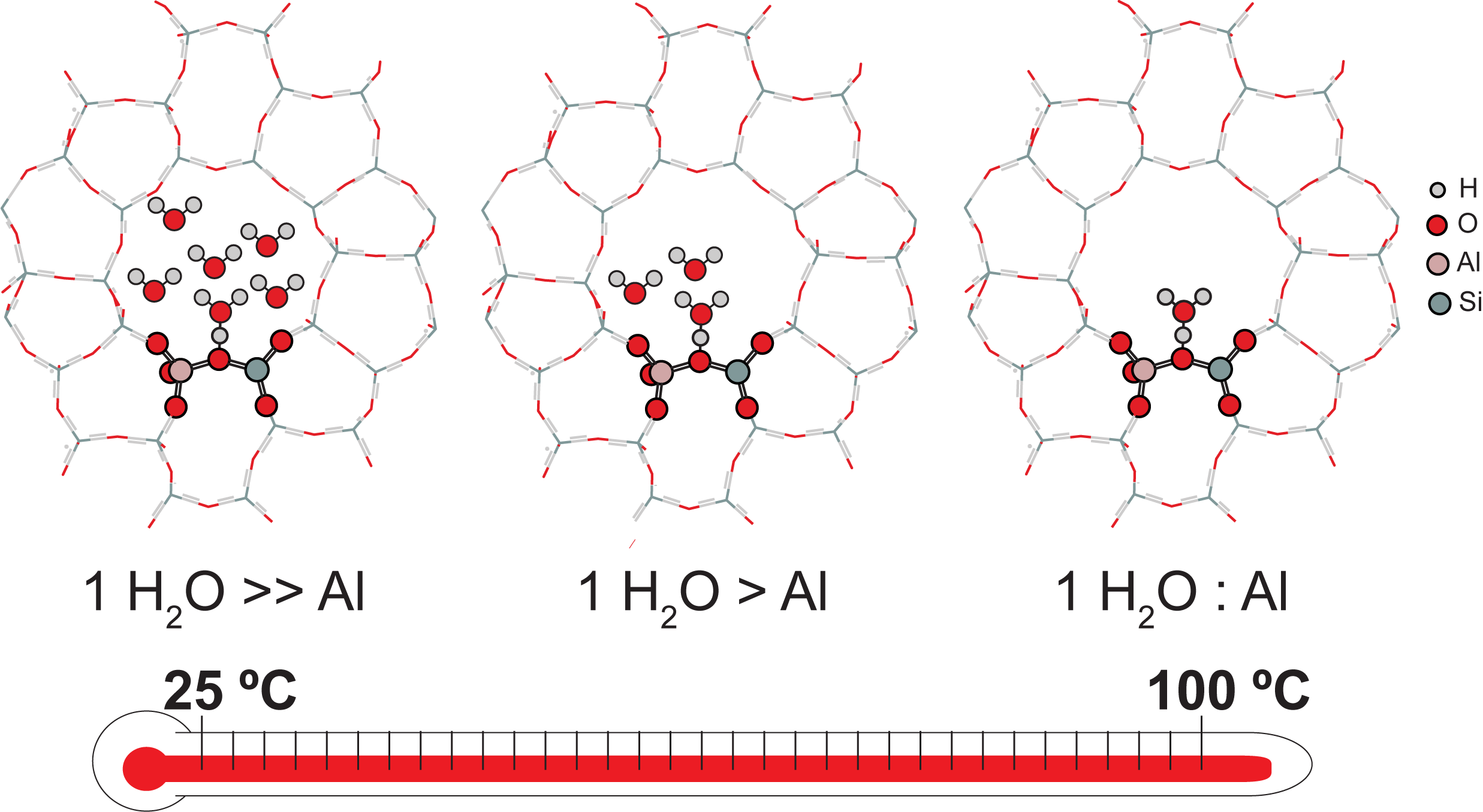 The many studies that have been conducted on water adsorption on zeolites were carried out in “adsorption”mode, from adsorption isotherms or single-point measurements, with the samples being first degassed at high temperature, and then exposed to water vapor at variable partial pressure. Here, we report Thermogravimetric Analysis (TGA) studies of HZSM-5 saturated with water at room temperature, thus studying water adsorption in “desorption” mode. TGA was used to ascertain the amount of water remaining as a function of the pretreatment temperature, and to identify the temperature at which one water molecule per framework Al atom persists. Solid-state 1H NMR spectroscopy, combined with molecular modeling, provided evidence for water molecules hydrogen-bonded to Brønsted acid sites and the formation of oxonium species for distinct water per framework Al atom. TGA is shown to be a simple and expeditious technique to measure the number of Brønsted acid sites in aluminosilicate zeolites, with advantages over the traditional methods of IR or TPD of dangerous adsorbed ammonia or pyridine. TGA of adsorbed water also provides information on the water clusters formed at the acid sites of HZSM-5, which are proportional to the number of acid sites.
J. Amelse thanks BP Amoco Chemical Company Petrochemicals Technology, Naperville, IL USA, and M. Peacock thanks BP Petrochemicals Technology, Hull, UK management. This work was developed within the scope of the project CICECO-Aveiro Institute of Materials, UIDB/50011/2020 & UIDP/50011/2020, financed by national funds through the FCT/MEC and when appropriate cofinanced by FEDER under the PT2020 Partnership Agreement.We also thank FCT for funding the project PTDC/QEQ-QAN/6373/2014. The NMR spectrometers are part of the National NMR Network (PTNMR) and are partially supported by Infrastructure Project No. 022161 (co-financed by FEDER through COMPETE 2020, POCI and PORL and FCT through PIDDAC). C. Bornes acknowledges FCT for the doctoral fellowship PD/BD/142849/2018 integrated in the PhD Program in NMR applied to chemistry, materials and biosciences (PD/00065/2013). Work at Argonne National Laboratory (Marshall/Schwartz) was supported by the U.S. Department of Energy, Office of Science, Office of Basic Energy Sciences, under Contract No. DE-AC02-06CH11357. We also acknowledge Zheng Lu for assistance in TGA measurements.
Twitter Poster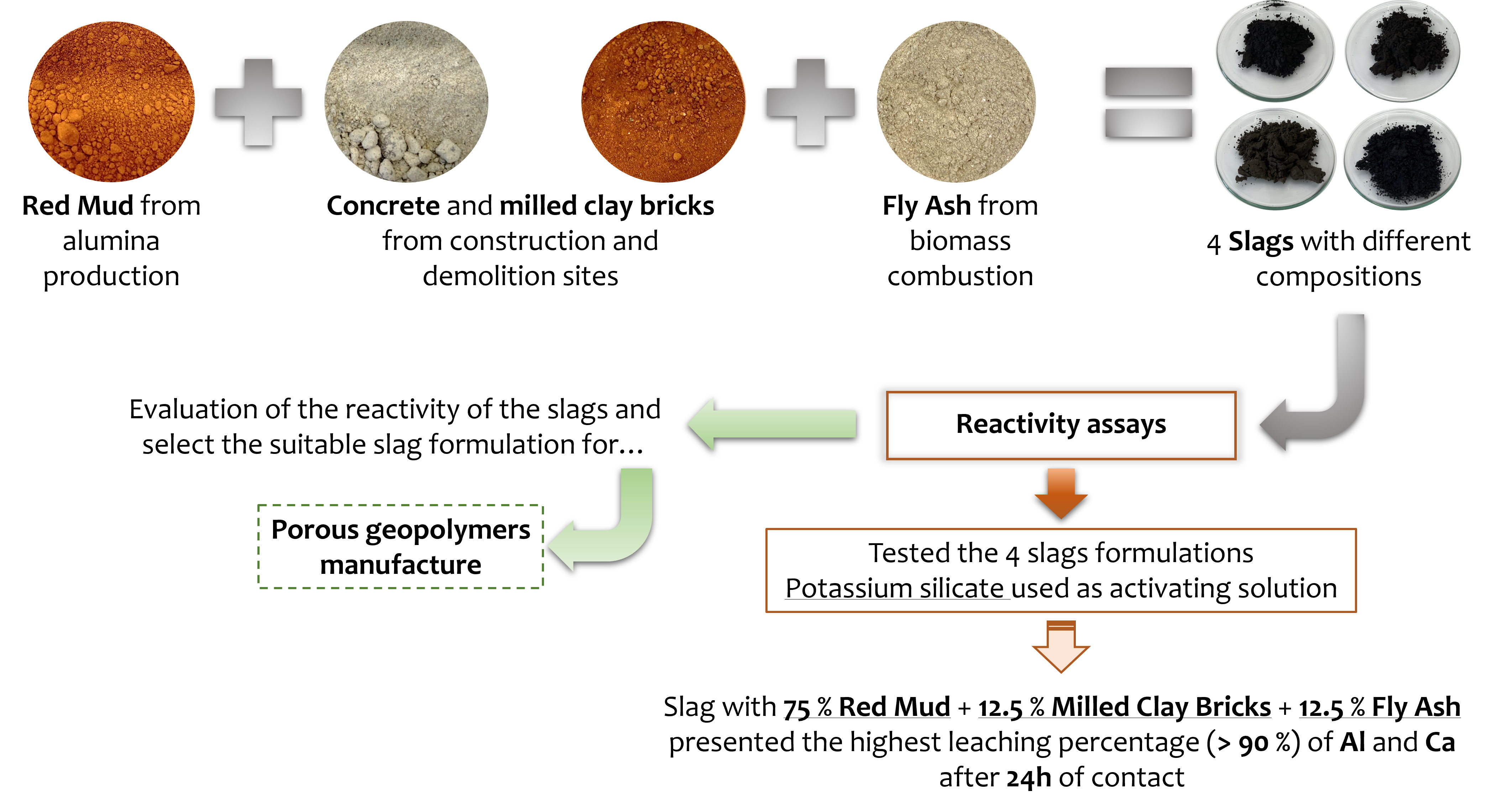 Bauxite residues from alumina production (also known as red mud), fly ash from coal combustion or construction and demolition wastes are some examples of solid wastes and residues generated worldwide in large amounts, every year. These wastes can be incorporated into new materials for the construction sector, thus creating value and avoiding resource depletion in the manufacture of new construction materials. During the geopolymerization process, the Si-based precursor reacts with an alkaline activator to form a geopolymeric past, which can be used to obtain new products such as mortars. In this work, the precursor was prepared as a slag, combining different proportions of the wastes under study, namely red mud, clay bricks from construction and demolition wastes, and fly ash. The reactivity of the slags was studied using a commercial activating solution to evaluate the leaching of aluminum, calcium, and iron in the first 24 h, at a constant temperature and stirring.Mixture 1, which has a red mud:clay bricks:fly ash ratio of 6:1:1, showed the highest leaching of Al, Ca, and Fe compared to the other compositions. In fact, approximately 70 % of Al and Ca were leached in the first 6 h, reaching values higher than 90 % after 24 h. These values suggest that the synthesized slag was a very high reactivity which will now be explored to produce geopolymeric components envisioned for the construction sector.
This work was developed under the project SMART-G- Smart Geopolymers, ERA-MIN 2 call 2019, project nº ERA-MIN/0001/2019, financially supported by Fundação para a Ciência e Tecnologia/MCTES, through national funding and, when applicable, co-financed by FEDER under the new partnership PT2020; and under the project CICECO-Instituto de Materiais de Aveiro, UIDB/50011/2020 & UIDP/50011/2020, financed by national funding through FCT/MEC and, when applicable, co-financed by FEDER under the partnership Acordo de Parceria PT2020.
Twitter Poster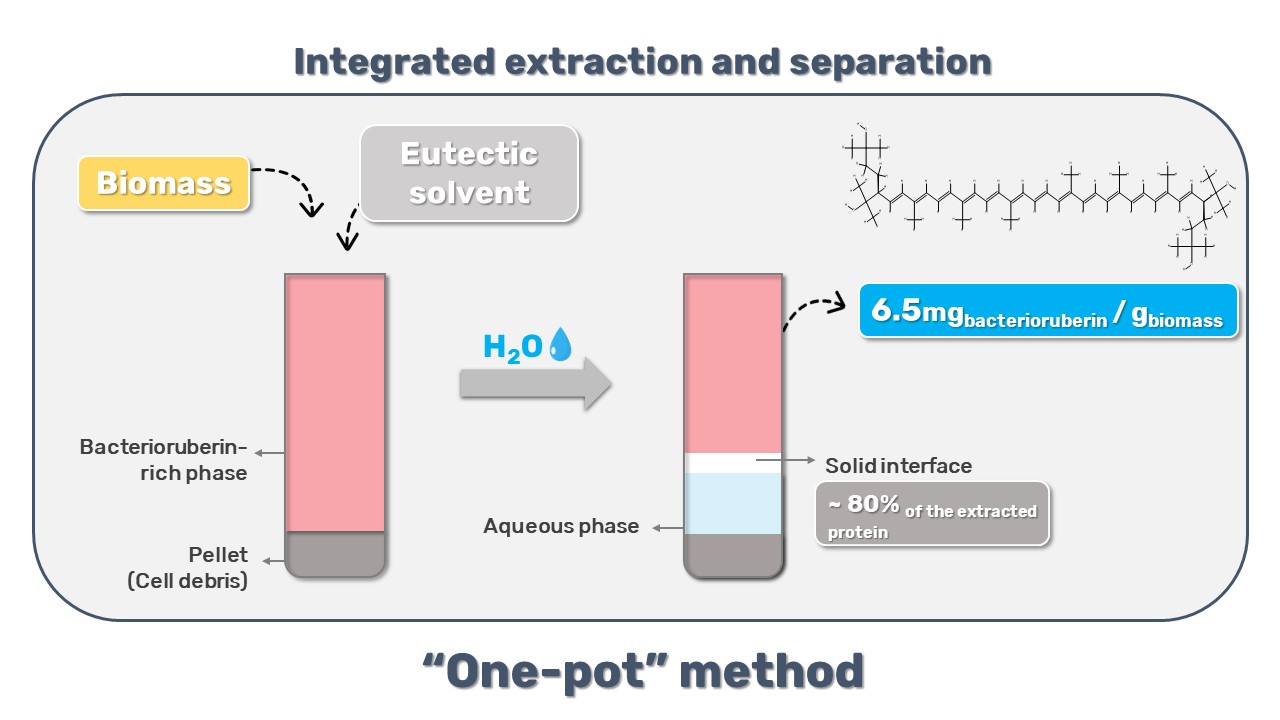 In the biorefinery context, both bulk and specialty chemicals can be produced and extracted from biomass, resulting in a potentially more sustainable alternative to petroleum-derived products. An example of this is Haloarchaea, an interesting class of extremophile microorganisms, also present in the Aveiro salt pans. Amongst these, Haloferax mediterranei is a highly promising candidate to produce bacterioruberin owing to its rapid growth and ability to consume a variety of carbon sources. Bacterioruberin is an uncommon C50 carotenoid with great biotechnological interest. This type of carotenoid exhibits a higher antioxidant capacity than the C40 carotenoids such as β-carotene, which can be explained due to the higher number of pairs of conjugated double bonds. This makes this carotenoid remarkably interesting for the food, pharmaceutical and biomedical industries. In this work, the valorization of Haloferax mediterranei ATCC 33500 was pursued through the recovery of bacterioruberin and its separation and purification from the remaining cell components. To formulate food and cosmetic grade compatible extracts, pigment recovery was accomplished through the use of bio-derived eutectic solvents. Operational conditions such as the solid-liquid ratio, concentration of eutectic mixture, hydrogen bond-donor and hydrogen-bond acceptor ratio and the time of extraction were accessed. These eutectic mixtures arise as more sustainable and appropriate solvents compared to the typical solvents used in chemical processes because of their simple preparation, extraction efficiency and integration of the extraction and separation in a “one-pot” method by using water as counter-solvent.
This work was developed within the scope of the project CICECO-Aveiro Institute of Materials, UIDB/50011/2020 & UIDP/50011/2020 and CESAM, UIDB/50017/2020 & UIDP/50017/2020, financed by national funds through the FCT/MCTES. The authors are also grateful to the FCT for the doctoral grants of M. Kholany (SFRH/BD/138413/2018), I.P.E. Macário (SFRH/BD/123850/2016) and T. Veloso (SFRH/BD/147346/2019).
Twitter Poster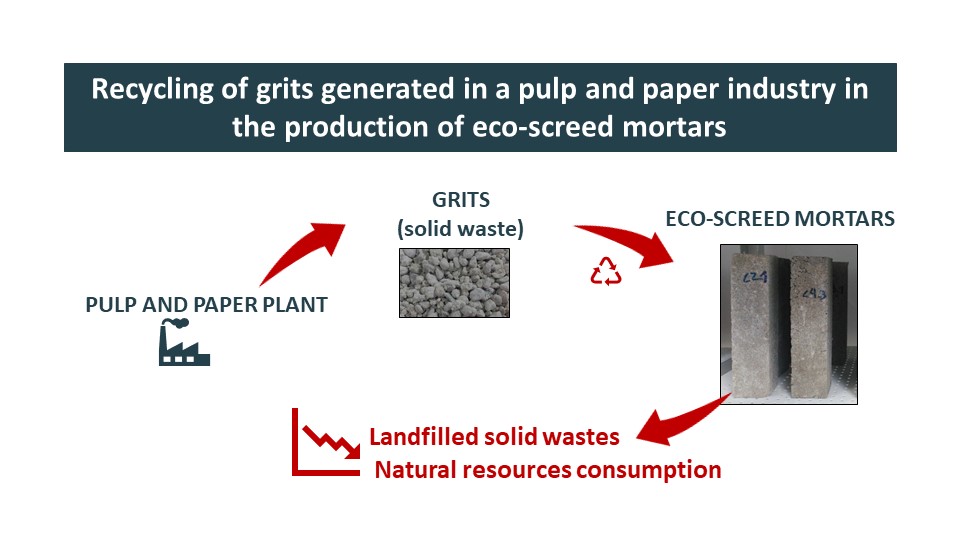 Grits are inorganic solid waste produced by the pulp and paper industry that are currently disposed in landfills, a process involving a high economic and environmental burden. This work investigates a more sustainable waste management strategy for this waste. After a screening process, grits were used as limestone substitute in the production of eco-screed mortars. The grits were characterized (SEM, XRD, XRF, particle size distribution). The influence of the grits incorporation amount was investigated in the fresh (workability) and hardened state (mass loss upon curing, bulk density, sorptivity by immersion and capillary, and flexural and compressive strength) properties of the screed mortars. The obtained results demonstrate that is possible to substitute up to 25 wt.% of limestone by grits in the screed mortars formulation, keeping the required properties. The successful incorporation of a waste in the screed mortar formulation promotes not only the decrease of natural resources consumption but also the reduction of solid wastes landfill amount, in line with the circular economy.
This work is financed by Portugal 2020 through European Regional Development Fund (ERDF) in the frame of Operational Competitiveness and Internationalization Programme (POCI) in the scope of the project INPACTUS, POCI-01-0247-FEDER-21874 and in the scope of the project CICECO - Aveiro Institute of Materials, UIDB/50011/2020 & UIDP/50011/2020, cofinanced by national funds through the FCT/MEC.
Twitter Poster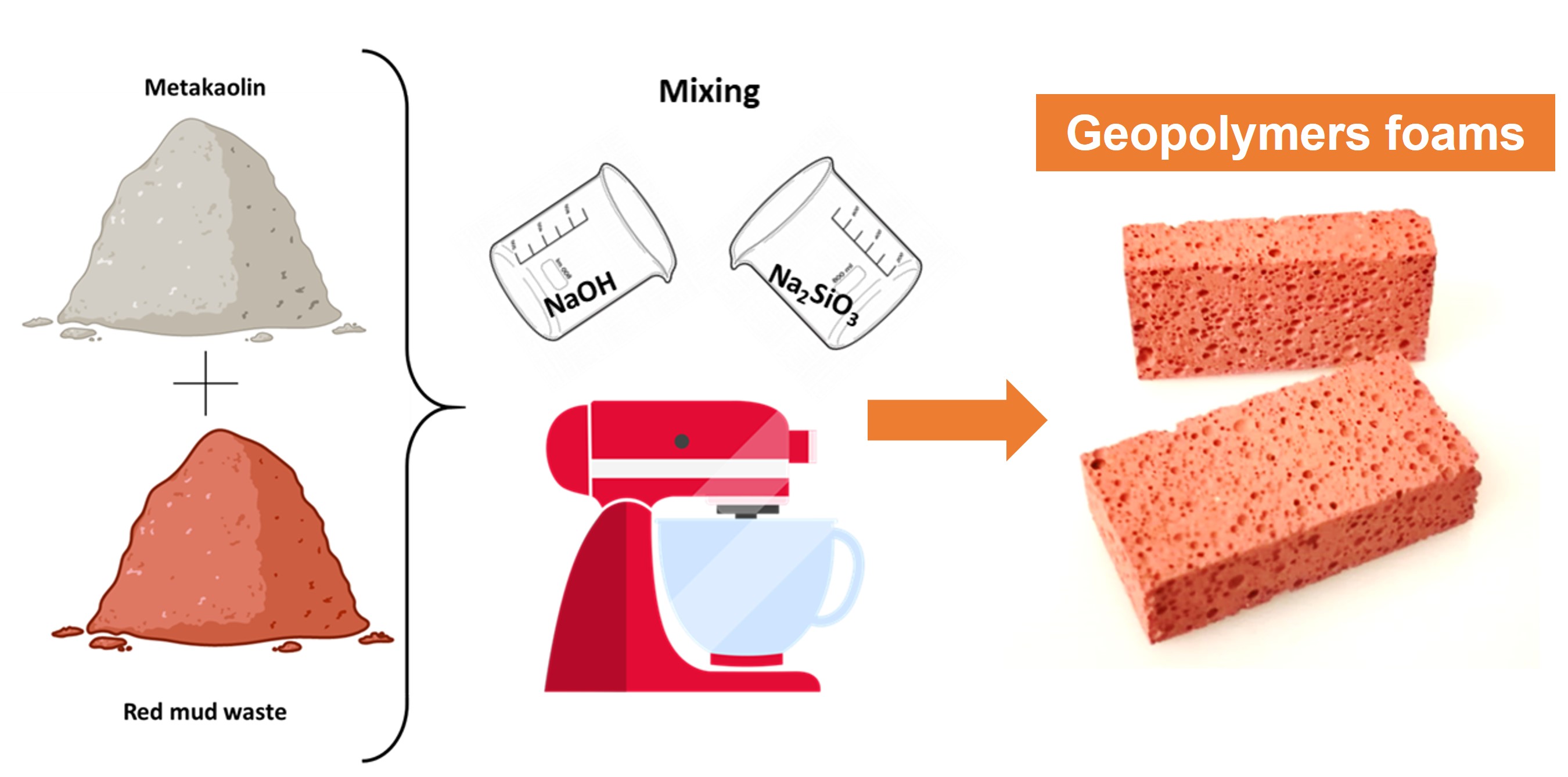 Alumina/aluminium industry is one of the most demanding mining activities, producing around 115 million tons of alumina annually. Red mud is a highly alkaline and toxic waste produced in large amounts during alumina production by the Bayer process; 1 ton of red mud is produced per ton of alumina. Despite decades of intense efforts/research, red mud is still stored in lagoons/dams with enormous environmental costs. The reuse of red mud is therefore an urgent issue. An unexplored, but promising, solution could be its use as a solid precursor in the synthesis of alkali-activated foams for water treatment systems.In this work, alkali-activated foams with red mud as the main precursor were produced and evaluated as a lead adsorbent. The adsorption behaviour of Pb2 + by the foams was investigated by varying the contact time and lead concentration. The results show that this innovative approach, using a toxic waste to treat lead-containing wastewaters, is not only feasible, but also very effective. The highest lead removal capacity reached 30.70 mg/g (at pH 5, C0 = 600 ppm). In addition, results showed that the contaminants present in the foams composition were safely immobilized and did not leach out into the solution. Moreover, the cm size of these sorbents is a safer and easier strategy when compared the µm size powders in wastewater treatment systems as it avoids filtration steps.
This work was developed within the scope of the project CICECO-Aveiro Institute of Materials, UIDB/50011/2020 & UIDP/50011/2020, financed by national funds through the Portuguese Foundation for Science and Technology/MCTES. João Carvalheiras (SFRH/BD/144562/2019) and Rui M. Novais (2020.01135.CEECIND) wish to thank Fundação para a Ciência e Tecnologia (FCT) for supporting their work. The authors would like to thank FCT project MAXIMUM (PTDC-CTM-CTM-2205-2020).
Twitter Poster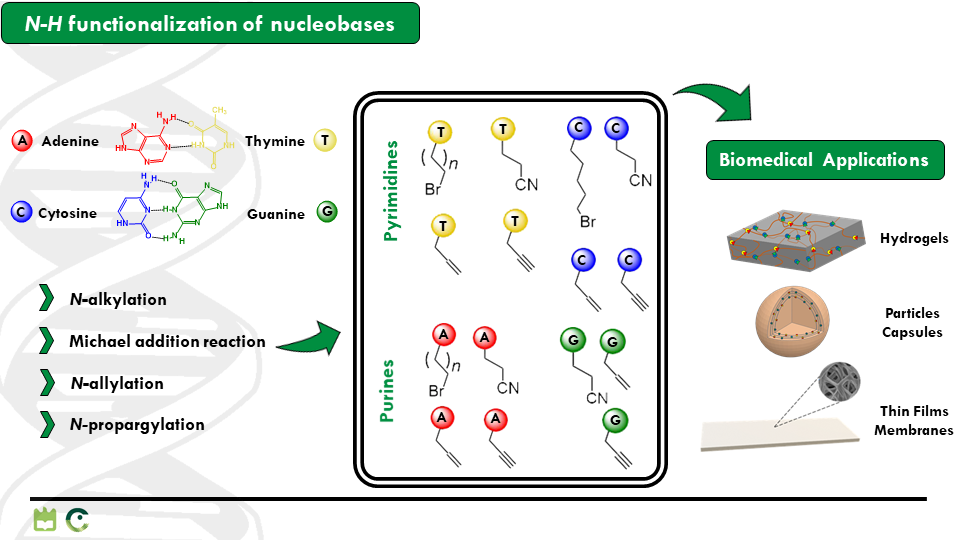 DNA is one of the most fascinating biomolecules in nature that has extended well beyond its classical key role on storing, encoding and conveying the genetic information in all living organisms through its basic molecular building blocks - adenine (A), guanine (G), thymine (T) and cytosine (C). Over the past decades, the interest in the rational design and development of DNA-based supramolecular nanoarchitectures has notably increased owing to the highly specific and selective interactions between complementary Watson-Crick base pairing. To date, several synthetic methodologies have been pursued towards the functionalization of DNA nucleobases. However, challenges such as preservation of nucleobases’ hydrogen bonding capabilities, successful introduction of functional groups in high yield and poor solubility in common organic solvents remain as major bottlenecks for modulating their reactivity, physicochemical and biological properties. Herein, simple and one-pot synthetic procedures have been implemented for producing a library of DNA nucleobase derivatives endowed with reactive functional groups for bioconjugation and crosslinking strategies with other (bio)molecules. The in vitro biocompatibility of the native and nucleobase derivatives was evaluated by culturing them with human fibroblasts, revealing their cytocompatibility. This new library of nucleobase derivatives holds great promise for being coupled to different biomolecules, including biopolymeric materials, lipids, and peptides, thus potentially leading to modular supramolecular biofunctional nanomaterials, including hydrogels, thin films/membranes and capsules for being used in a variety of biomedical scenarios.
This work was funded by the Programa Operacional Regional do Centro – Centro 2020, in the component FEDER, and by national funds (OE) through Fundação para a Ciência e a Tecnologia/Ministério da Ciência, Tecnologia e Ensino Superior (FCT/MCTES), in the scope of the project “SUPRASORT” (PTDC/QUI-OUT/30658/2017, CENTRO-01-0145-FEDER-030658). This work was also funded by the European Research Council under the scope of the project “ATLAS” (ERC-2014-AdG-669858). D. H. A. Rocha, C. M. Machado and V. Sousa acknowledge the financial support through the project “SUPRASORT”. C. F. V. Sousa and V. Sousa acknowledge FCT for their individual PhD grants (2020.04408.BD, C. F. V. Sousa; 2020.06771.BD, V. Sousa). V. L. M. Silva thanks funding through FCT under the Scientific Employment Stimulus – Institutional Call– reference CEECINST/00026/2018. J. Borges gratefully acknowledges FCT for his individual Junior Researcher (CEECIND/03202/2017) and Assistant Researcher (2020.00758.CEECIND) contracts under the Scientific Employment Stimulus – Individual Call. This work was developed within the scope of the project CICECO – Aveiro Institute of Materials (UIDB/50011/2020 & UIDP/50011/2020), and LAQV-REQUIMTE (UIDB/50006/2020) financed by nationalfunds through the FCT/MCTES.
Twitter Poster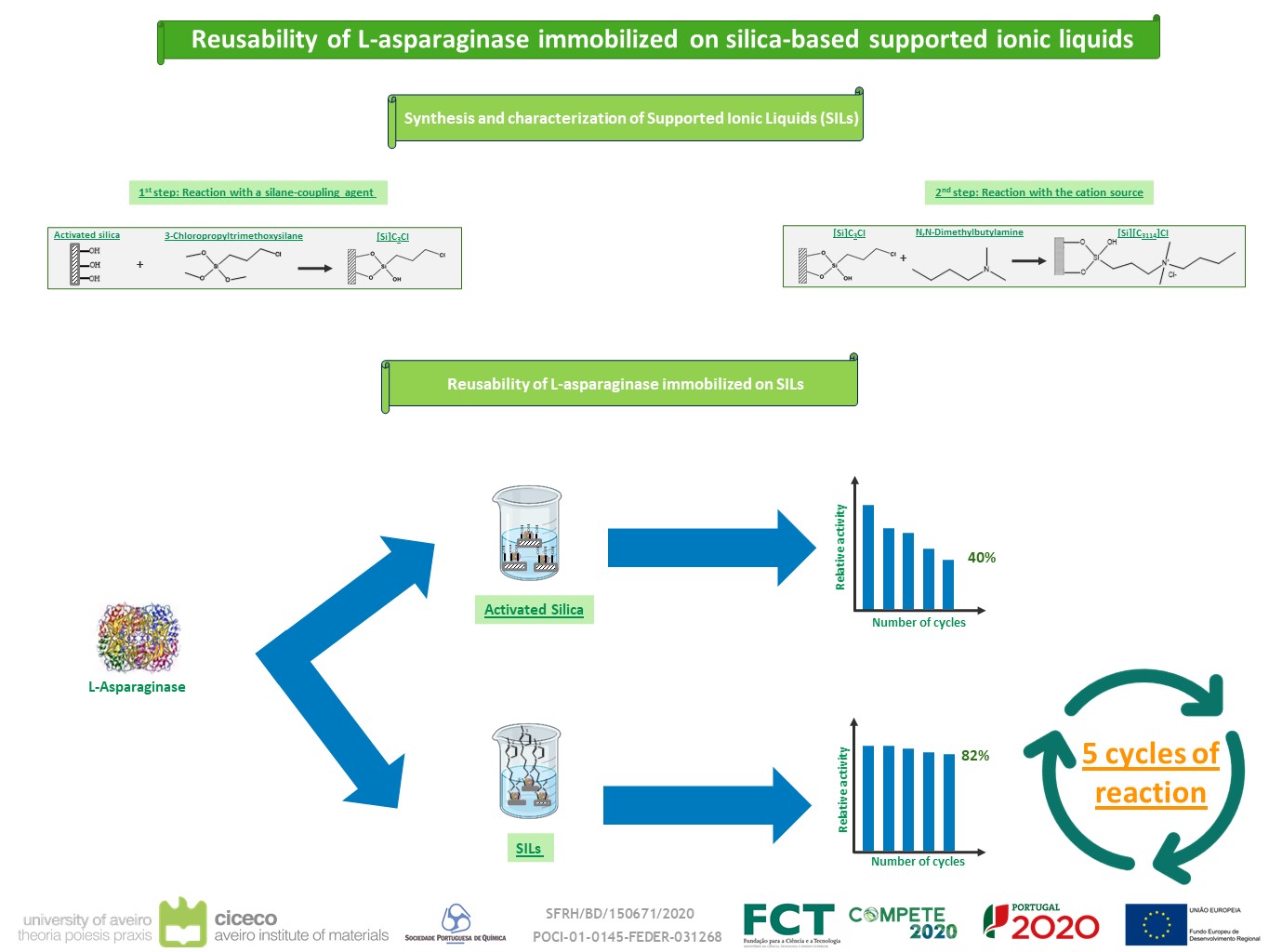 L-asparaginase (ASNase) is an aminohydrolase enzyme used as an anticancer drug, e.g. in the treatment of acute lymphoblastic leukemia, in acrylamide reduction and in biosensing. Nevertheless, its low stability and thermolability, and susceptibility to proteases, hinder its application in the health and food industries. Hence, the improvement of its properties through efficient immobilization methods is in high demand. Thus, this work aims the development of silica-based supported ionic liquids (SILs) for the ASNase immobilization to improve its stability and enable its reusability. While activated silica with no ILs only kept total initial ASNase activity during the first cycle of reaction, SILs allowed 5 cycles of reaction, keeping 82% of initial ASNase activity, reinforcing their potential as alternative enzymatic supports.
This work was developed within the scope of the project CICECO-Aveiro Institute of Materials, UIDB/50011/2020 & UIDP/50011/2020, financed by national funds through the Portuguese Foundation for Science and Technology/MCTES, and project POCI-01-0145-FEDER-031268 - funded by FEDER, COMPETE2020, POCI and OE. Ana P.M. Tavares and Márcia C. Neves acknowledge FCT for the research contract CEECIND/2020/01867 and CEECIND/00383/2017, respectively. Valéria C. Santos-Ebinuma acknowledges FAPESP (2018/06908-8) for financial support. João C. F. Nunes acknowledges SPQ and FCT for the PhD fellowship (SFRH/BD/150671/2020).
Twitter Poster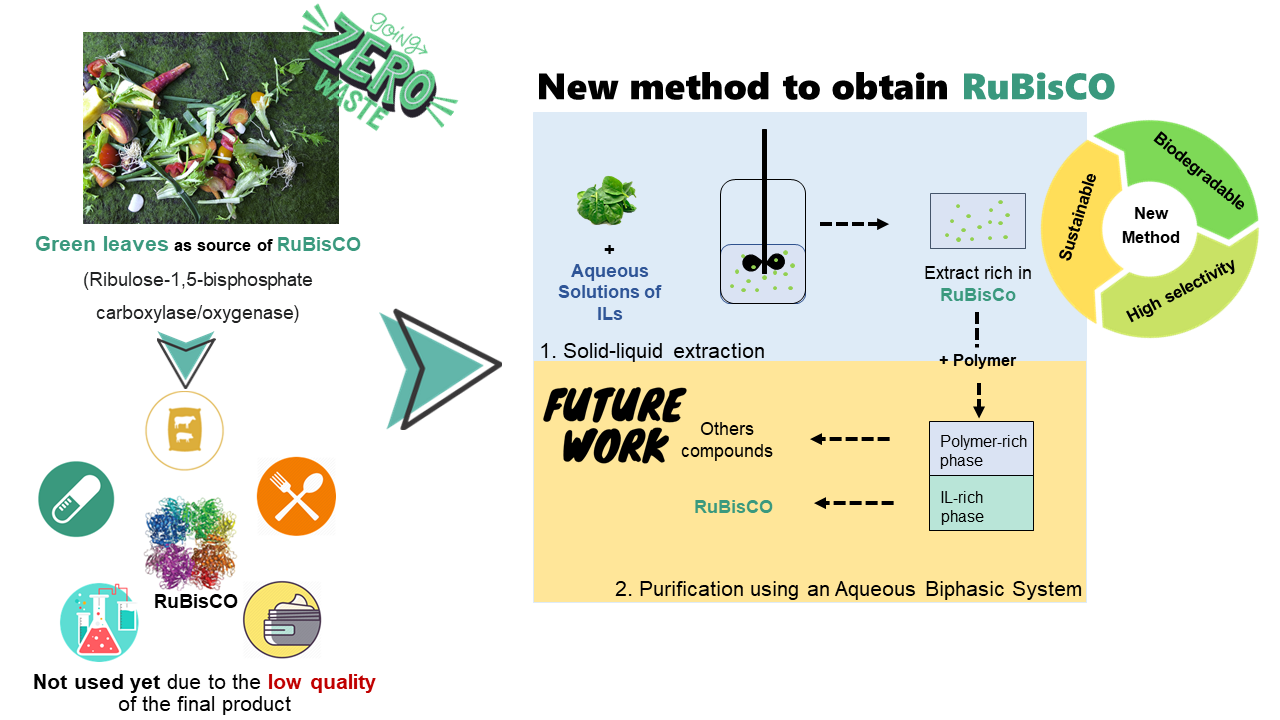 RuBisCO (Ribulose-1,5-bisphosphate carboxylase/oxygenase) is the most abundant protein on Earth. Commonly, RuBisCO is applied in the feed industries as a protein source, and in the future, its peptides can be applied in nutraceuticals and functional foods. However, the current methods used for RuBisCO extraction lack sustainability. In this work, a new extraction method of RuBisCO from biomass was developed. Aqueous solutions of biocompatible ionic liquids (ILs) were used, and a response surface methodology was applied to optimize the extraction conditions. Under optimum conditions, extraction yields of 10.92 and 10.57 mg of RuBisCO/ g of biomass were obtained with cholinium acetate ([Ch][Ac]) and cholinium chloride ([Ch]Cl), respectively. When compared with the conventional solvent (NH4OH), the extraction yield results were better for the IL solutions. Moreover, the CD spectroscopy results showed that the secondary structure of the RuBisCO is better preserved in the IL solutions. Thus, as future work is planned the development of an integrated process for the separation and purification of the target enzyme.
This work was developed within the scope of the project CICECO-Aveiro Institute of Materials, UIDB/50011/2020 & UIDP/50011/2020, financed by national funds through the FCT/MCTES. This work was financially supported by Acção Integrada/ França Programa Pessoa - 2018-2019 Nº 441.00. Ana P. M. Tavares acknowledges the FCT and thanks the FCT for the research contract CEECIND/2020/01867.
Twitter Poster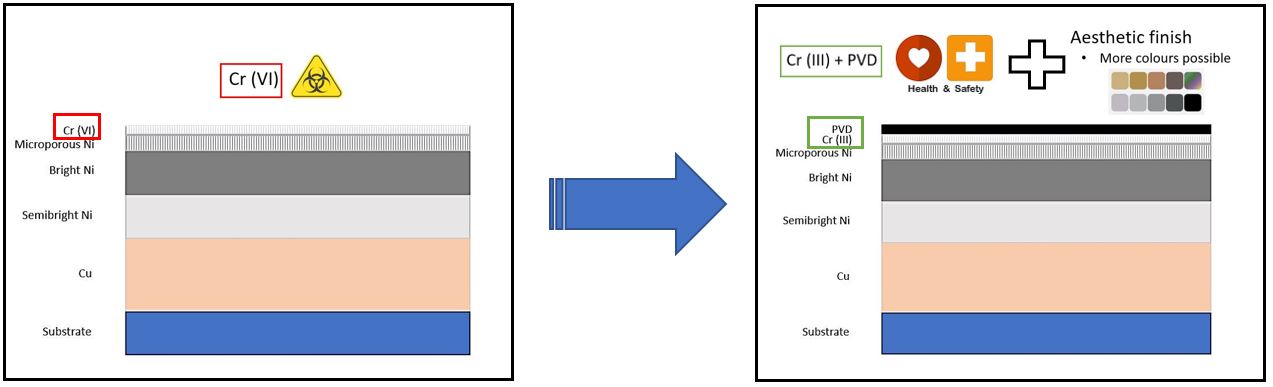 SafeChrome project aims to investigate a hybrid solution to replace the hexavalent chromium-based multilayer decorative coatings applied on polymeric and metallic components. This hybrid solution consists of a PVD coating deposited on a trivalent chromium layer that must have an aesthetical finish, and mechanical and corrosion resistances identical or improved compared to the hexavalent chromium-based decorative coatings. The PVD coating applied on the trivalent chromium layer will have the advantage of allowing a wider colour choice that can promote the development of new products for the automotive and optoelectronic industries. The PVD coating adhesion and thickness uniformity throughout the parts surface will be a challenge, particularly for parts with complex geometry. Additionally, the temperature of the polymeric substrates cannot exceed their glass transition during the PVD coating deposition, which require new solutions. The deposition of a PVD coating on a trivalent chromium layer can change the corrosion mechanism active during exposition to the environment. The PVD coating material, thickness and microstructure can have a great effect on the overall mechanical and corrosion resistance of the hybrid coating. Therefore, different PVD deposition techniques and materials will be tested, and the resulting coatings will be evaluated on aesthetic finishing, corrosion and mechanical resistance.
This work was developed within the scope of project CICECO-Aveiro Institute of Materials, UIDB/50011/2020 & UIDP/50011/2020 financed by national funds through the Portuguese Foundation for Science and Technology/MCTES (FCT I.P.), and project SafeChrome POCI-01-0247-FEDER-047092, co-financed via FEDER, under the PT2020 Partnership Agreement. The research contract of A. V. Girão is funded by national funds (OE), through FCT – Fundação para a Ciência e a Tecnologia, I.P., in the scope of the framework contract foreseen in the numbers 4, 5 and 6 of article 23, of the Decree-Law 57/2016, of August 29, changed by Law 57/2017, of July 19.
Twitter Poster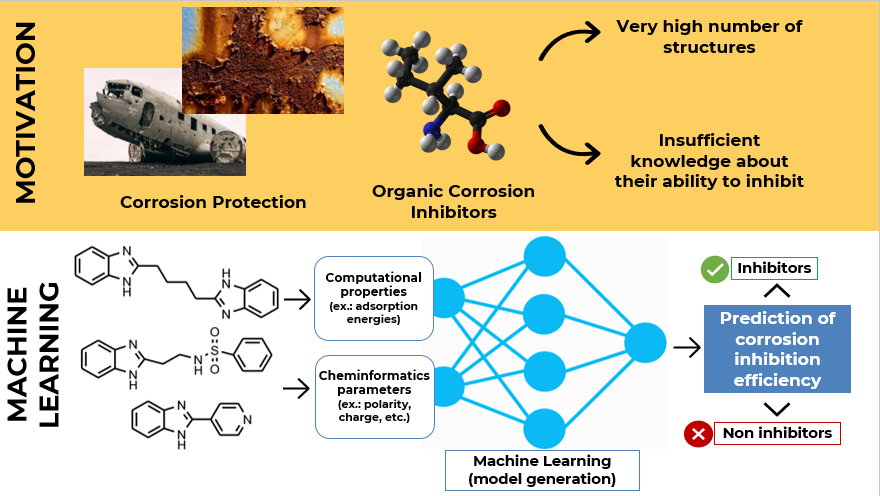 Corrosion inhibitors have an important role because they help to limit metallic corrosion, preventing the appearance of serious problems in these materials. Currently, there is a great interest in replacing protective compounds frequently used in the past, by organic corrosion inhibitors, as these can be modified to make them more environmentally friendly and without being associated with the high toxicity problems of previous solutions. However, the number of structures that can be obtained is extremely high, making it impossible to test all compounds experimentally, while the knowledge about their inhibition capacity is still insufficient, due to their high degree of complexity and all the factors that are involved in the corrosion process.In this work, a larger set of data was obtained from literature in comparison with previous works, which contributed to develop an open data management online tool that allows to compare different compounds and to facilitate the search for the most suitable inhibitors for the intended conditions. Afterwards, Machine Learning approaches were applied, considering different computational and cheminformatics descriptors, to predict the inhibition efficiency of organic compounds for aluminum alloys used in aeronautics applications. This approach can be useful to perform an initial virtual screen of potential compounds to be tested experimentally as inhibitors, thus reducing the time necessary to obtain the right corrosion inhibitor under specific application conditions. Moreover, it can be the core of a subsequent ML based online application.
This work was developed within the scope of the project CICECO-Aveiro Institute of Materials, UIDB/50011/2020 & UIDP/50011/2020, financed by national funds through the FCT/MEC and when appropriate co-financed by FEDER under the PT2020 Partnership Agreement, as well as project DataCor (refs. POCI-01-0145-FEDER-030256 and PTDC/QUI-QFI/30256/2017, datacorproject.wixsite.com/datacor).
Twitter Poster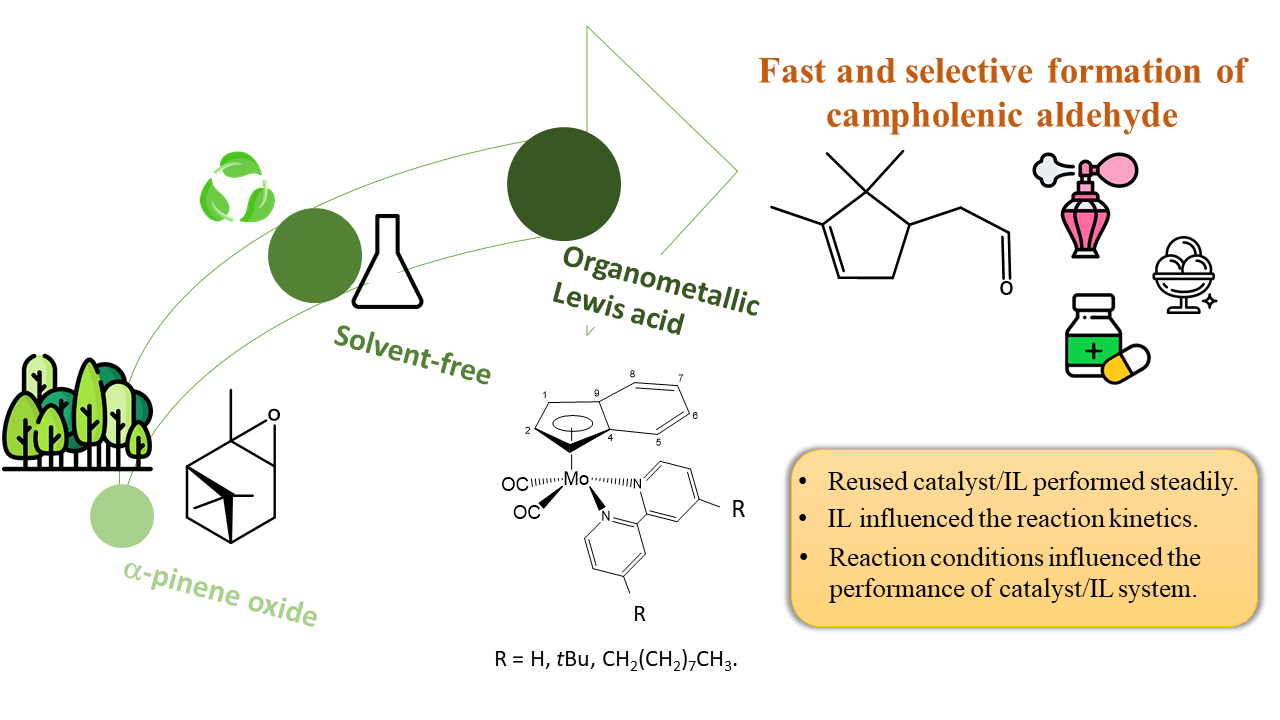 Campholenic aldehyde (CPA) is an important intermediate in the synthesis of sandalwood fragrances, e.g. Sandalores and Javanols (Givaudan), Bacdanols (IFF), Brahmanols (Dragoso) and Polysantols (Firmenich). CPA may be produced via the acid-catalyzed isomerization of α-pinene oxide (PinOx) in the presence of Lewis acids. The use of ionic liquid (IL)-standing catalysts (ILSC) for CPA synthesis has shown some promise in a limited number of published studies. Combining organometallic Lewis acids such as [IndCpMo(MeCN)2](BF4)2 with ILs has thus led to systems that can give quantitative CPA yield within minutes of reaction under mild conditions (35 °C). Besides catalytic activity and selectivity, the catalyst recovery/reuse is an important aspect for practical application. In previous work, we found that the ILSC system [IndCpMo(MeCN)2](BF4)2/[choline bis(trifluoromethylsulfonyl)imide] led to increasing CPA yield in consecutive batch runs, reaching 98 % in the fifth run. In the present work, indenyl molybdenum dicarbonyl complexes of the type [IndMo(L)(CO)2]BF4 (L = 2,2’-bipyridine (bpy, 1), 4,4'-di-tert-butyl-2,2'-bipyridine (tBubpy, 2) or 4,4′-dinonyl-2,2′-bipyridine (dNbpy, 3)) were prepared and fully characterized. These complexes were tested as catalysts for PinOx isomerization under mild conditions, achieving relatively fast and selective formation of CPA. The influence of the type of ionic liquid and reaction conditions (initial PinOx molar concentration and initial catalyst concentration) on the catalytic reaction were investigated for the best performing catalyst.
This work was developed in the scope of the project CICECO – Aveiro Institute of Materials (POCI-01-0145-FEDER-007679) financed by national funds through the Fundação para a Ciência e a Tecnologia, I.P. (FCT) (ref. UID/CTM/50011/2019), Ministério da Educação e Ciência (MEC) and when applicable, cofinanced by Fundo Europeu de Desenvolvimento Regional (FEDER) under the PT2020 Partnership Agreement.
Twitter Poster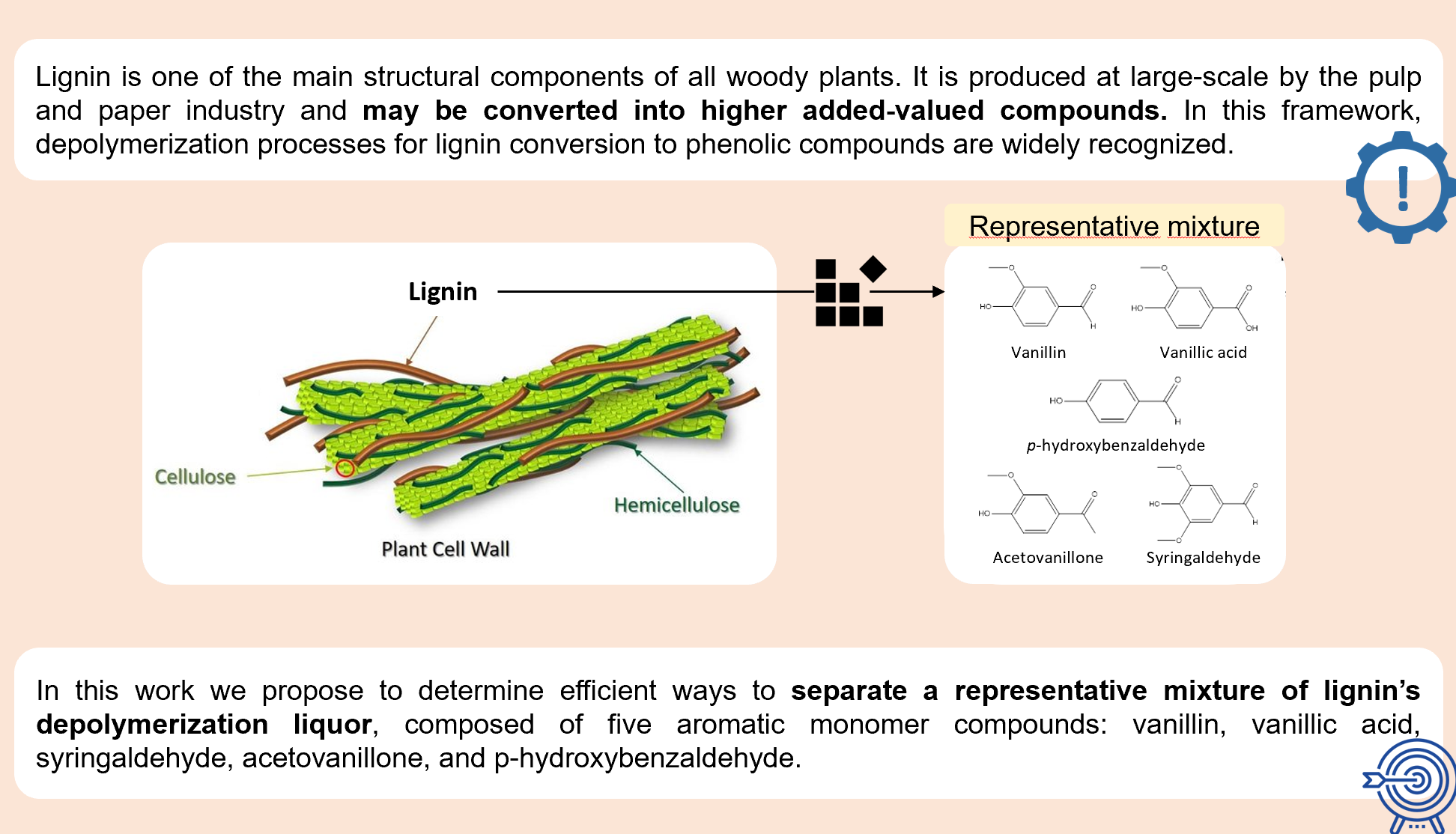 Lignin, one of the main structural components of all woody plants, is available at large-scale from the pulping liquor produced by the pulp and paper industry. Nowadays, pulp and paper mills largely burn this liquor in an integrated process to produce electric and thermal energy. Although this combustion is still a valuable contribution to reduce fossil fuels consumption, lignin offers perspectives for higher added-valued applications and could be converted into several profitable commodities, a key factor for creating economically feasible biorefinery processes. This is an opportunity to transform conventional pulp and paper mills into integrated forest biorefineries capable of producing new biochemicals and biomaterials. In this framework, depolymerization processes for lignin conversion to phenolic compounds are widely recognized. However, their high price, resulting from significant shortcomings of the lignocellulosic biorefinery processing, creates a significant drawback while simultaneously highlighting the need for more effective purification methods and downstream processes. Vanillic acid, known for its antimicrobial, antioxidant and antibacterial properties, is particularly valuable. As such, in this work we set out to determine efficient ways to separate and purify vanillic acid from a mixture of five model phenolic compounds frequently derived from lignocellulosic depolymerization, namely vanillin, vanillic acid, syringaldehyde, acetovanillone and p-hydroxybenzaldehyde. For such, aqueous biphasic systems (ABS) formed by polyethylene glycol, sodium polyacrylate, and inorganic salts or ionic liquids as electrolytes were applied, followed by the use of centrifugal partition chromatography (CPC) to reinforce the fractionation process scale-up. In single-step experiments, for the chosen optimal operational conditions, we were able to separate and purify our target molecule from the remaining phenolic mixture with a purity of up to 95%.
This work was carried out under the Project inpactus – innovative products and technologies from eucalyptus, Project N.º 21874 funded by Portugal 2020 through European Regional Development Fund (ERDF) in the frame of COMPETE 2020 nº246/AXIS II/2017
Twitter Poster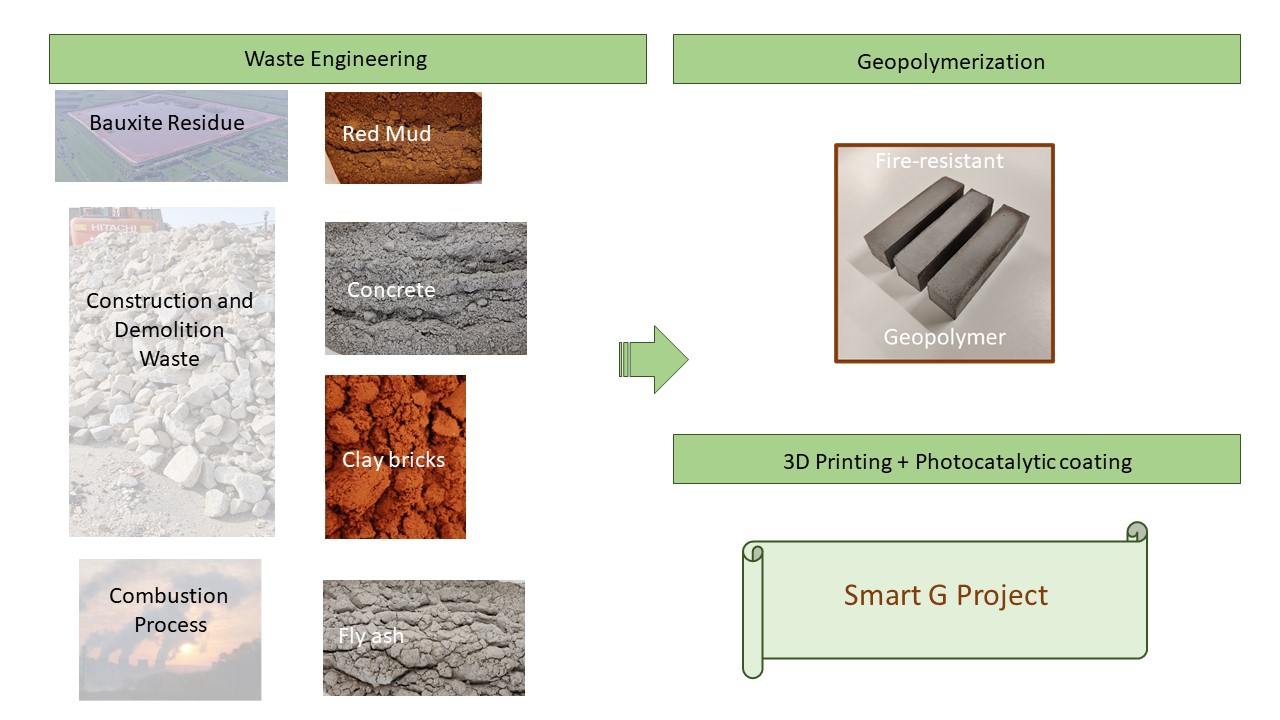 Geopolymers arise as an environment-friendly alternative to common building materials such as those derived from Portland cement. The geopolymer production allows the incorporation of various industrial waste streams being this particularly relevant under the circular economy paradigm. The demand of materials, namely those based on aluminium, increased the generation of waste materials associated with the extraction and refining processes of bauxite. To obtain one ton of alumina, the discharge of red mud can be around 0.6-2.5 ton depending on the raw material quality and the process used. The construction sector is also known to be one of the main sources of waste in Europe contributing with around one third of the waste generated. The recycling of construction and demolition waste can play a major environmental role: it reduces the consumption of energy, natural sources, emission of CO2 and promotes the achievement of recycling goals according to the Waste Framework Directive. SMART G is a European project, under the ERA-MIN 2019, that aims the development, production, and demonstration of lightweight, fire-resistant components for the construction industry. Industrial residues will be valorized via geopolymerization and turned into fire resistant materials, avoiding the most common destinies such as downcycling or landfilling. In this project, the different waste streams will be combined in the right proportions, after physico-chemical pre-treatment, to produce a high-performance material envisioned for the construction sector.
This work was developed under the project SMART-G- Smart Geopolymers, ERA-MIN 2 call 2019, project nº ERA-MIN/0001/2019, financially supported by Fundação para a Ciência e Tecnologia/MCTES, through national funding and, when applicable, co-financed by FEDER under the new partnership PT2020; and under the project CICECO-Instituto de Materiais de Aveiro, UIDB/50011/2020 & UIDP/50011/2020, financed by national funding through FCT/MEC and, when applicable, co-financed by FEDER under the partnership Acordo de Parceria PT2020.
Twitter Poster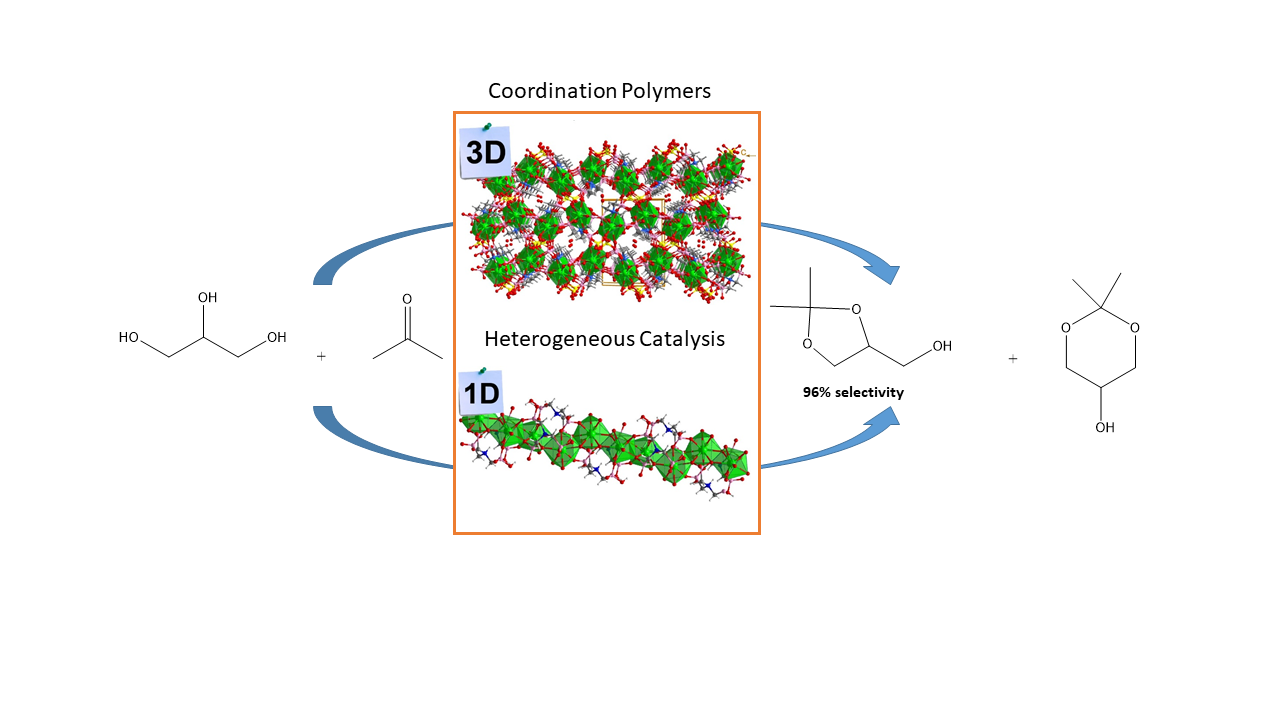 Biodiesel is one of the most significant and valuable alternatives to fossil fuels. In the process of transesterification to produce biodiesel from various feedstocks, glycerol is one of the side products obtained, in a high glycerol:biodiesel weight ratio (1:10). Therefore, the growing world demand for biodiesel prompted a glycerol surplus. It is, thus, of interest to find new and added-value paths for the transformation of this abundant chemical. One of the most auspicious glycerol applications is the production of fuel additives, namely cyclic acetals and ketals, from aldehydes and ketones, respectively. In this work, coordination polymers based on nitrilo(trimethylphosphonic acid) and Ln3+/Eu3+ are used as catalysts for the acetalization of the bio-renewable glycerol into oxygenated fuel additives. Solketal is the major product obtained from the reaction of glycerol with acetone. This product improves the cold flow properties, lowering the viscosity of biodiesel, improving combus-tion, and boosting the octane number. The stability of the materials is studied as well as their re-covery and reuse.
This work received financial support from PT national funds (FCT/MCTES, Fundação para a Ciência e Tecnologia and Ministério da Ciência, Tecnologia e Ensino Superior) through LAQV-REQUIMTE (UIDB/50006/2020) and CICECO-Aveiro Institute of Materials (UIDB/50011/2020 & UIDP/50011/2020). The position held by I.C.M.S.S.V. (Ref. 197_97_ARH-2018) was funded by national funds (OE), through FCT, I.P., in the scope of the framework contract foreseen in the numbers 4, 5 and 6 of article 23 of the Decree-Law 57/2016 of 29 August, changed by Law 57/2017 of 19 July. R.F.M. gratefully acknowledges FCT for a Junior Research Position (CEECIND/00553/2017)
Twitter Poster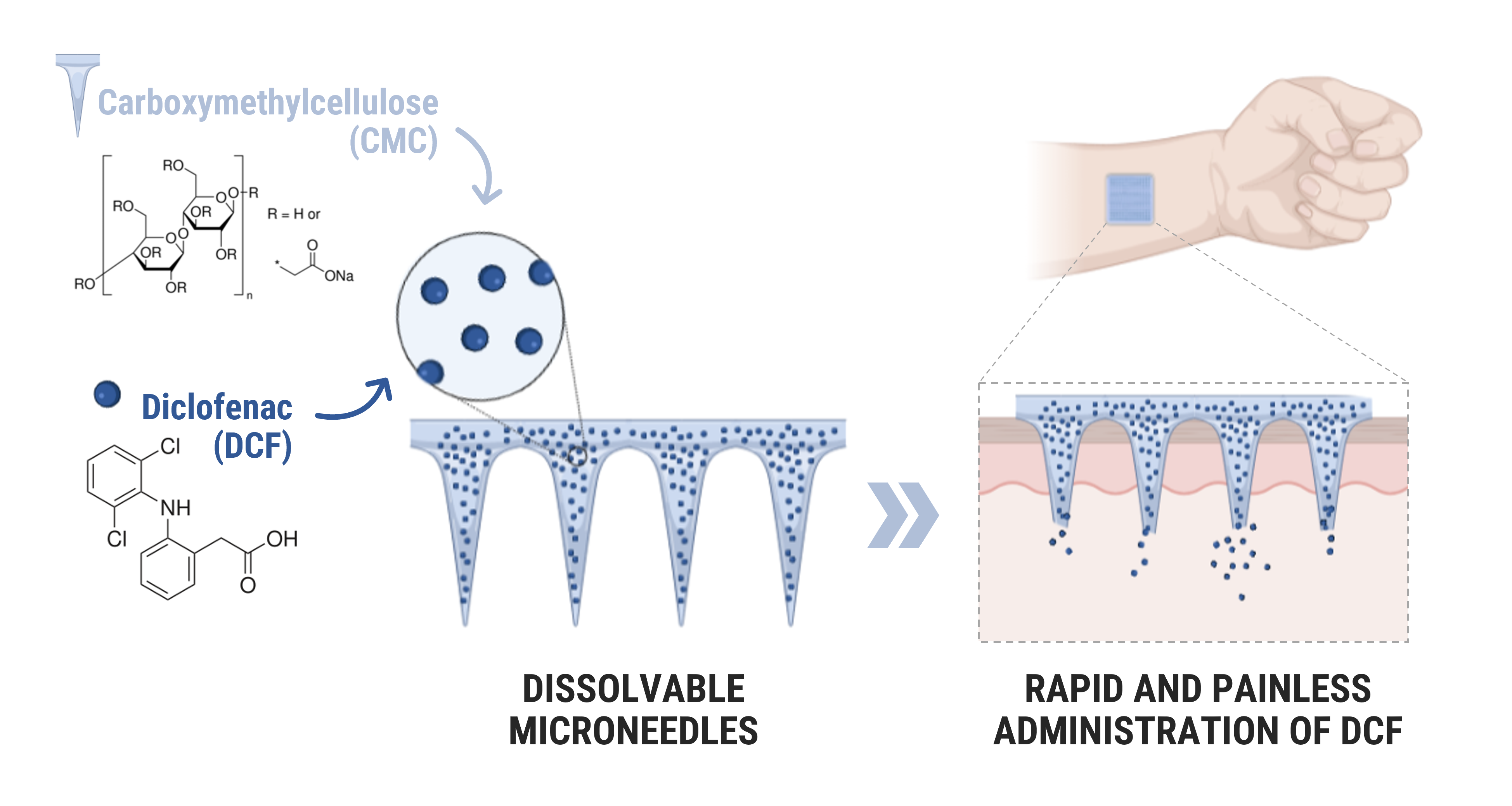 Microneedles (MNs) are minimally-invasive systems comprised of an array of micron scale needles designed to penetrate the skin barrier (i.e. stratum corneum) in a painless mode [1]. Amongst the catalogue of MNs systems, microneedles produced with water-soluble, safe and biocompatible biopolymers are stepping forth in the field of drug delivery, as they are able to promptly dissolve after insertion and release the therapeutic agents across the epidermal layer. In the present work, we report the fabrication of soluble carboxymethylcellulose (CMC) microneedles for the administration of an analgesic non-steroidal anti-inflammatory drug (NSAID), viz. diclofenac (DCF), envisioning rapid pain relief. The biopolymeric MNs were prepared by a simple and eco-friendly micromoulding methodology. The master mould was successfully replicated, achieving complete arrays of pyramidal-shaped needles with ca. 428 µm in height and sharp tips. The MNs revealed good thermal stability (up to 200 °C) and mechanical properties (> 0.15 N/needle). Preliminary in vitro skin studies confirmed the ability of the MNs to pierce the stratum corneum, showing great promise for the permeation of DCF across the skin. [1] Fonseca DFS, Vilela C, Silvestre AJD, Freire CSR. A compendium of current developments on polysaccharide and protein-based microneedles. Int J Biol Macromol 2019; 136: 704–728. DOI: 10.1016/J.IJBIOMAC.2019.04.163.
This work was developed within the scope of the project CICECO-Aveiro Institute of Materials, UIDB/50011/2020 & UIDP/50011/2020, financed by national funds through the Portuguese Foundation for Science and Technology (FCT)/MCTES. FCT is also acknowledged for the doctoral grant to A.C.Q.S. (SFRH/BD/140230/2018) and the research contracts under Scientific Employment Stimulus to C.V. (CEECIND/00263/2018) and C.S.R.F. (CEECIND/00464/2017).
Twitter Poster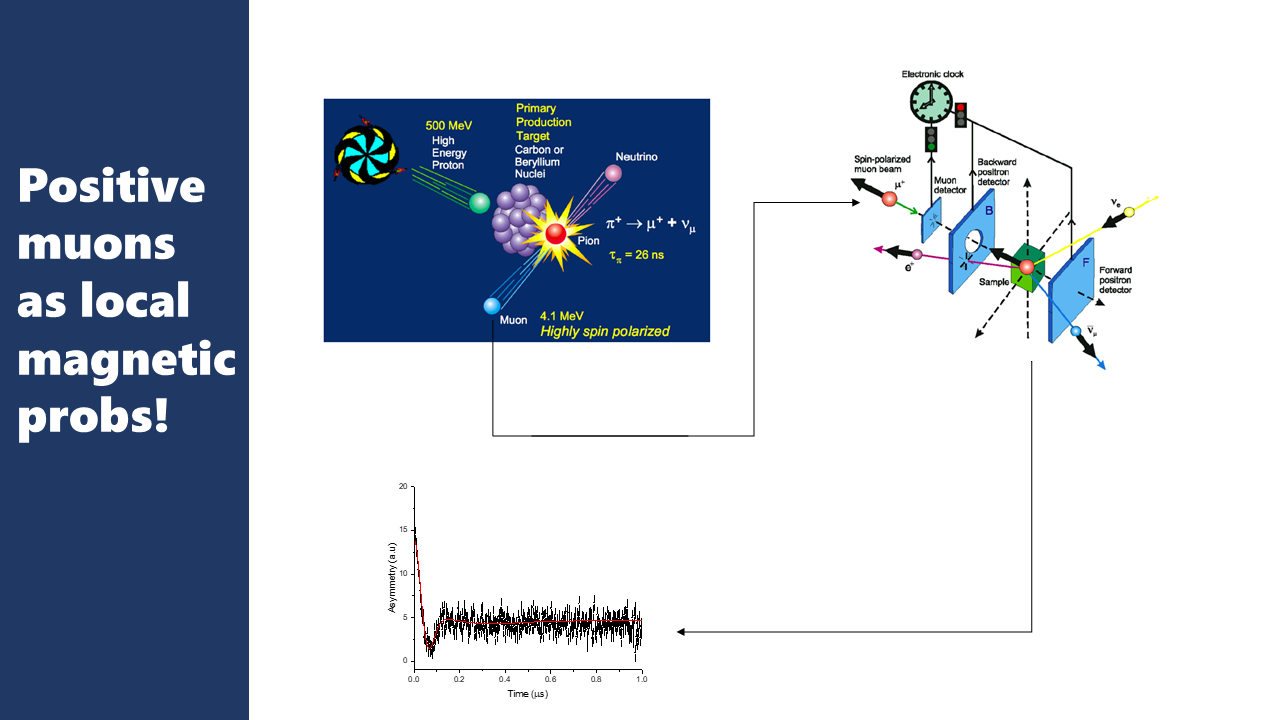 One of the most promising groups of small molecular magnets for the use in qubits and magnetic storage are polioxometalates (POM) of the type [Er(W5O18)2]-n. We show the potentials of muon spectroscopy to prob local magnetic dynamics of this molecular magnet. Understanding the dynamical magnetic processes could potentially pave the way to new breakthroughs and ultimately help designing more coherent molecular magnets.
FCT is also acknowledged by R.V. for a Junior Researcher Position (CEECIND/02127/2017). We are also grateful to the PSI machine and beamline groups whose outstanding efforts have made these experiments possible.
Twitter Poster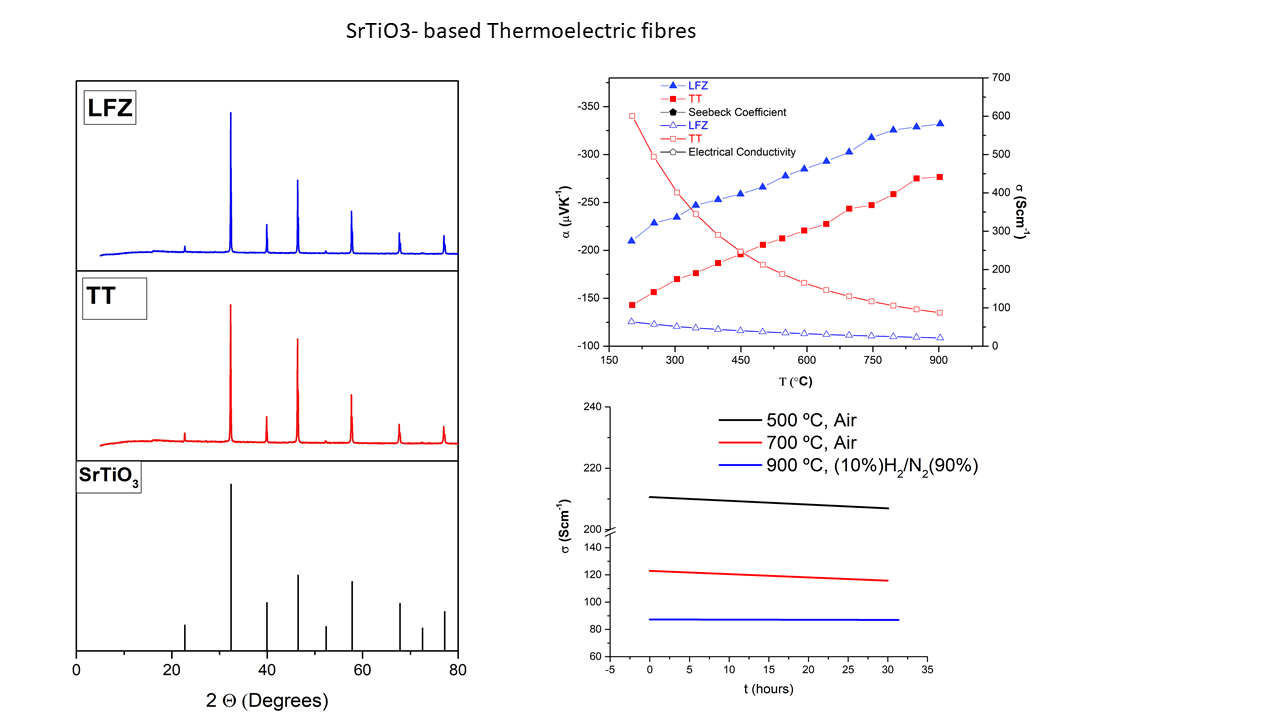 Thermoelectric technology has a great potential to contribute to the challenge of recoveringwaste heat if efficient, cheap and environmentally friendly thermoelectric materials aredeveloped [1]. Semiconducting oxides [2] with appropriate electrical and thermal transportproperties are based on abundant, mostly non-toxic elements, in opposition to traditionalthermoelectrics. Oxides show great promises for the conversion of waste heat from nuclearstations, thermal power plants, combustion engines and exhaust gases of high-temperatureindustries [1]. SrTiO3 is a promising TE oxide as confirmed from previous TE studies of SrTiO3single crystals [3,4]. Undoped SrTiO3 is an insulator with no free electrons, but when dopedwith a small amount of a rare earth element like La, becomes an n-type semiconductor withmetallic behaviour [5]. Electron-doped SrTiO3 has a large ZT not only because of its relativelyhigh electrical conductivity but also a large Seebeck coefficient induced by high carrier mobilityand large effective mass. Although its ZT is less than 1 because of its large thermal conductivity,La-doped SrTiO3 is one of the best n-type oxide thermoelectric materials [6]. A majorchallenge in developing highly efficient thermoelectric materials is seeking a delicate balancebetween functional properties, like electrical/ thermal conductivities and Seebeck coefficient.The Laser Floating Zone method was employed for processing some thermoelectrical materials,showing significant prospects for enhancing performance [7]. The ability to produce highlydense fibers, aswell as the formation of metastable phases during growth make this technique agreat process to obtain high performance oxide thermoelectric materials.References[1] R. Freer, A. V. Powell, Realising the potential of thermoelectric technology: A Roadmap, J.Mater. Chem. C. 8 (2020) 441–463. https://doi.org/10.1039/c9tc05710b.[2] M. Backhaus-Ricoult, J. Rustad, L. Moore, C. Smith, J. Brown, Semiconducting large bandgapoxides as potential thermoelectric materials for high-temperature power generation?, Appl.Phys. A Mater. Sci. Process. 116 (2014) 433–470. https://doi.org/10.1007/s00339-014-8515-z.[3] T. Okuda, K. Nakanishi, S. Miyasaka, Y. Tokura, Large thermoelectric response of metallicperovskites: Sr1−xLaxTiO3 (0 ≤ x ≤ 0.1), Phys. Rev. B - Condens. Matter Mater. Phys. 63 (2001)3–6. https://doi.org/10.1103/PhysRevB.63.113104.[4] S. Ohta, T. Nomura, H. Ohta, K. Koumoto, High-temperature carrier transport andthermoelectric properties of heavily La- Or Nb-doped SrTiO 3 single crystals, J. Appl. Phys. 97(2005). https://doi.org/10.1063/1.1847723.[5] I. Suzuki, Bando, Hiroshi, Ootuka, Youiti, H.Inoue, Superconductivity in Single-Crystalline Sr1-xLaxTiO3, J. Physical Society of Japan (1996), https://doi.org/10.1143/JPSJ.65.1529.[6] G. Ren, J. Lan, C. Zeng, Y. Liu, B. Zhan, S. Butt, Y.H. Lin, C.W. Nan, High Performance Oxides-Based Thermoelectric Materials, Jom. 67 (2015) 211–221. https://doi.org/10.1007/s11837-014-1218-2.[7] F.P. Carreira, N.M. Ferreira, A. V. Kovalevsky, Laser processing as a tool for designing donor-substituted calcium manganite-based thermoelectrics, J. Alloys Compd. 829 (2020) 154466. https://doi.org/10.1016/j.jallcom.2020.154466.
This work was developed within the scope of the projects i3N (UIDB/50025/2020 & UIDP/50025/2020) and CICECO - Aveiro Institute of Materials (UID/CTM/50011/2020), financed by national funds through the Portuguese Foundation for Science and Technology/MCTES. Diogo Lopes (2020.06454.BD) wishes to thank Fundação para a Ciência e Tecnologia (FCT) for supporting their work.
Twitter Poster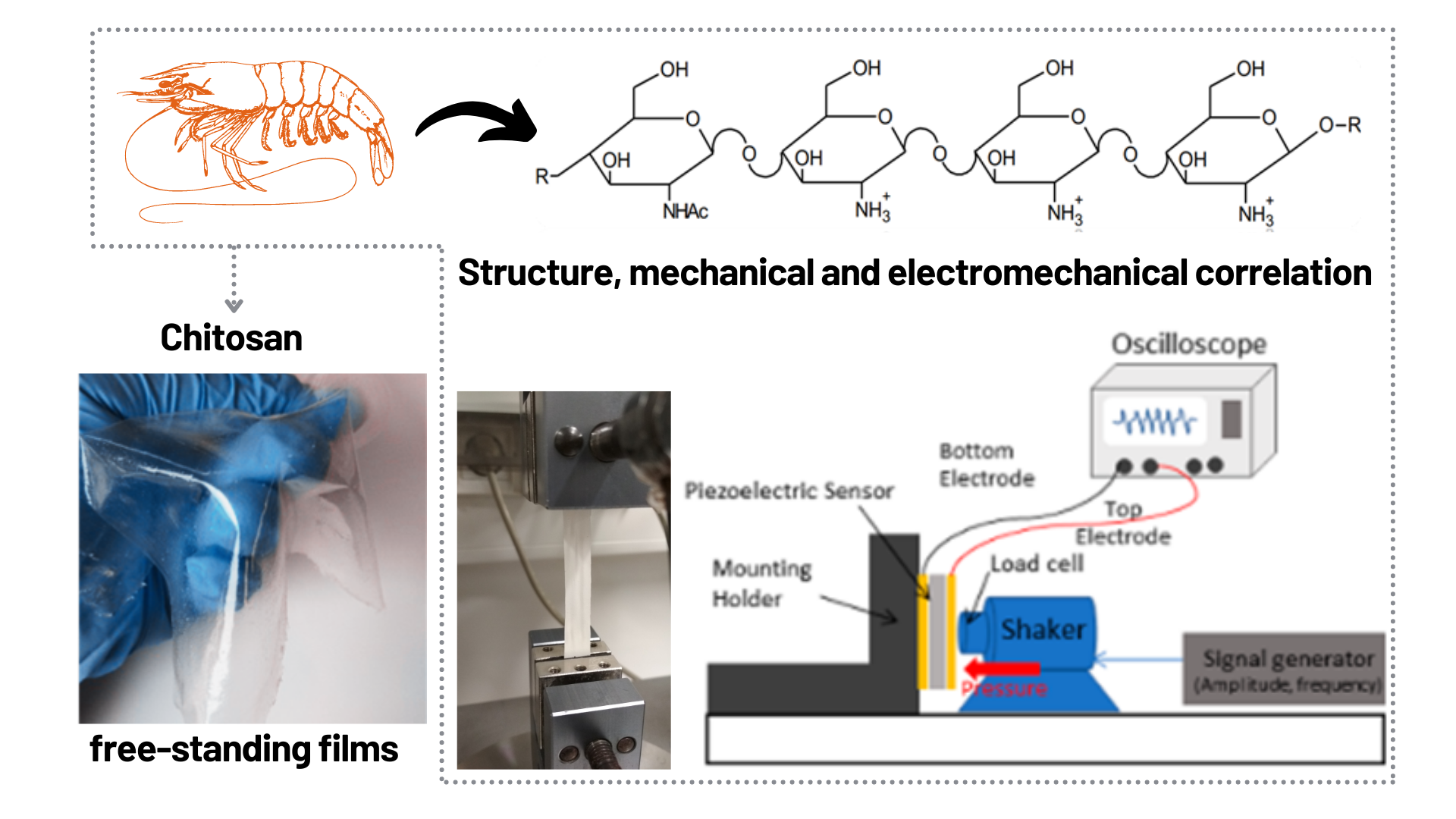 Chitin is the second most abundant polysaccharide in the world after cellulose. It is obtained from molluscs, shrimps, and insect shells. Chitin possesses a semicrystalline structure and has been identified in the literature as a piezoelectric system. Nevertheless, its derivative, chitosan (obtained by chitin deacetylation), is a more accessible manipulating material with better mechanical characteristics for free-standing membranes. The electromechanical response of chitosan has been reported in the literature. However, a better understanding of this information is needed. The precise electromechanical characterisation of chitosan will be helpful for biomedical applications, considering the already known antibacterial, non-toxic and biocompatibility advantages.In this work, we present a systematic characterisation of chitosan films fabricated with different acids and amounts of plasticiser, intending to understand the influence of structural modifications on the mechanical performance and consequently on the electromechanical response. The film structure was analysed using XRD and FTIR. TGA and DSC obtained the thermal response, and the mechanical behaviour was analysed by the tensile until rupture test. A vibration setup measured the electromechanical response at low frequencies, and LCR meter measurements were performed for dielectric response analysis.The structural characterisation suggests that adding 50wt% of glycerol affect the semicrystallinity of the films. The mechanical measurements show that lactic acid increases the elasticity and stretchability of pristine films by ~16%. The addition of glycerol increases these properties by ~93%. Furthermore, thermal stability improved with the presence of the plasticiser; electromechanical response increased by 50% in acetic acid films. The results suggest a high correlation between physical and mechanical properties with the electric performance of the films, highlighting the main variables to modify for further application development.
This work was developed under the scope of the projects CICECO (UIDB/50011/2020 & UIDP/50011/2020), NANOTRONICS (IF/300/2015); FLEXIDEVICE (PTDC/CTM-CTM/29671/2017) through the FCT/MCTES under COMPETE, by FEDER and Portugal 2020. This work was funded by national funds, through FCT, I.P., in the scope of the framework contract foreseen in the numbers 4, 5 and 6 of the article 23, of the Decree-Law 57/2016, changed by Law 57/2017. This work continues thanks to FCT PhD fellowship ref. UI/BD/151142/2021.
Twitter Poster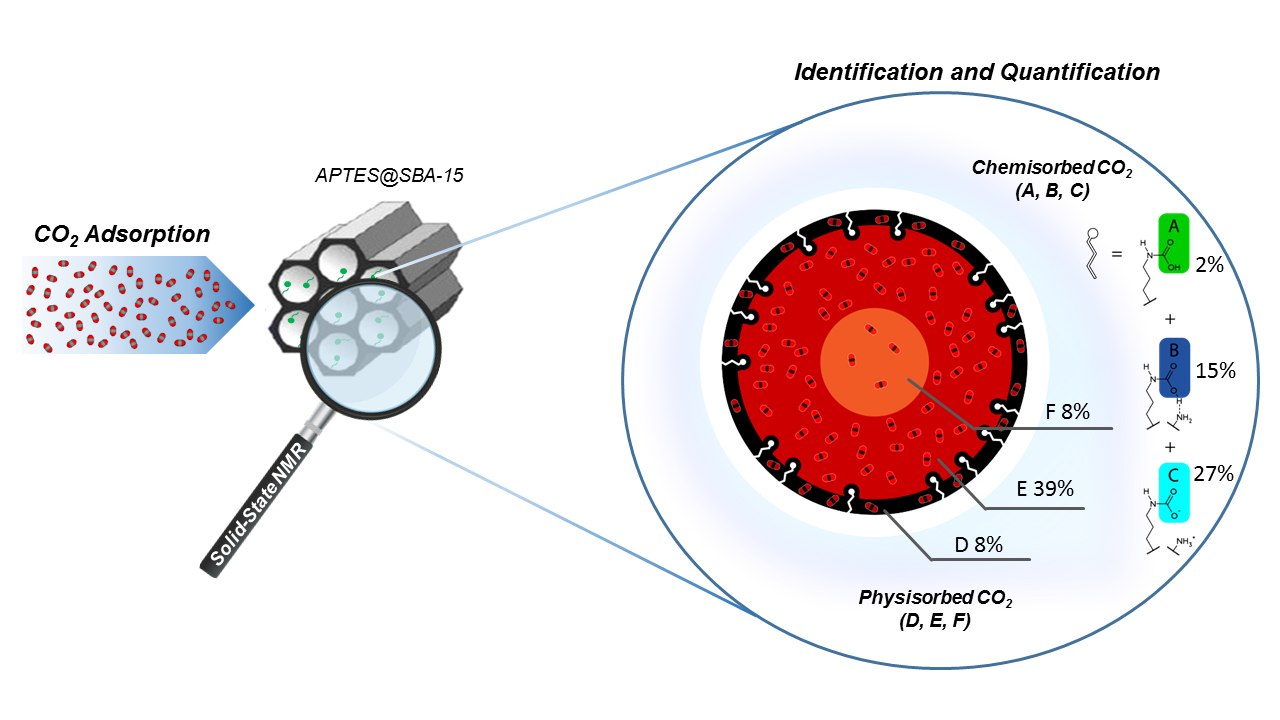 Global warming has triggered the development of CO2 capture technologies from large point emission sources as one of the most efficient ways to mitigate CO2 emissions. Amine-modified mesoporous silicas (AMPS) have attracted major attention as the next generation of CO2 adsorbents as their surfaces can be easily tailored for improved CO2 adsorption.Despite the great promise of AMPS materials, CO2 adsorption mechanisms at their surfaces are not yet well understood. A number of distinct CO2 species may form in silica surfaces that govern many relevant adsorbent properties (e.g., adsorption capacity, selectivity, cyclic stability). Although the nature of these species have been investigated by vibrational and NMR spectroscopies, their assignment are often contentious. In our group, the tandem use of NMR and modelling have been a very successful approach to address CO2 chemisorption mechanisms. However, either the quantification or the molecular dynamics of surface CO2 species are yet to be studied.In this presentation we demonstrate how relaxation and CSA NMR measurements can be used to characterize the dynamics of confined chemisorbed and physisorbed CO2 species. This approach has allowed the identification and quantification of up to six CO2 species.
This work was developed within the scope of the project CICECO-Aveiro Institute of Materials, UIDB/50011/2020 & UIDP/50011/2020, financed by national funds through the Portuguese Foundation for Science and Technology/MCTES. We also acknowledge funding from project PTDC/QUI-QFI/28747/2017 (GAS2MAT-DNPSENS - POCI-01-0145-FEDER-028), financed through FCT/MEC and cofinanced by FEDER under the PT2020 Partnership Agreement. The NMR spectrometers are part of the National NMR Network (PTNMR) and are partially supported by Infrastructure Project 022161 (cofinanced by FEDER through COMPETE 2020, POCI and PORL and FCT through PIDDAC). This work has received funding from the European Research Council (ERC) under the European Union’s Horizon 2020 research and innovation program (Grant Agreement 865974). FCT is also acknowledged by R.V. and M.I. for a Junior Researcher Position (CEECIND/02127/2017 and CEECIND/00546/2018, respectively), M.S. for an Assistant Research Position (CEECIND/00056/2020), and by J.P. for a Ph.D. Studentship (SFRH/BD/145004/2019).
Twitter Poster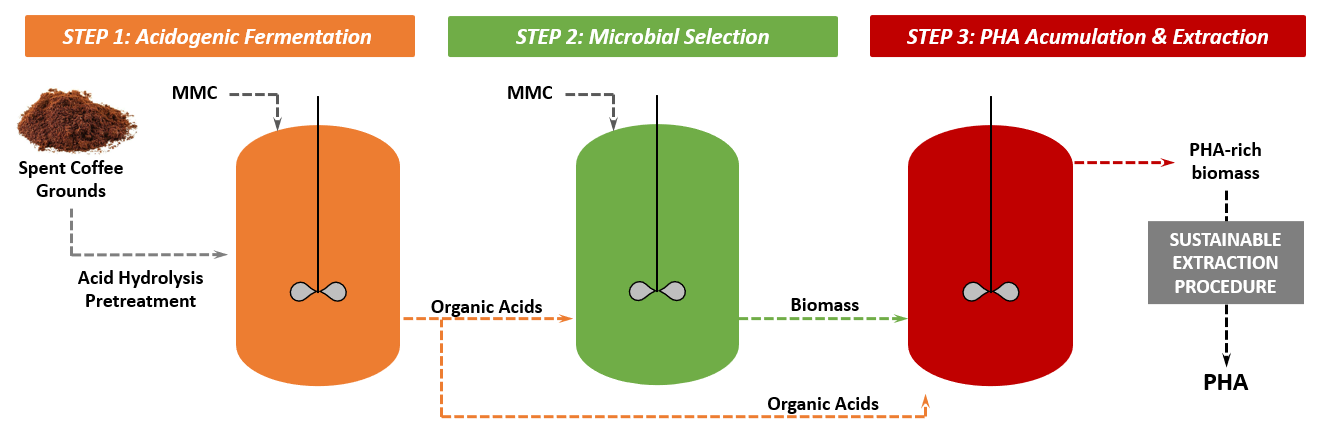 The coffee industry generates high amounts of residues, like spent coffee grounds (SCGs). Those are still very rich in lipids and sugars, which makes their valorization through biological processes feasible. Polyhydroxyalkanoates (PHAs) are biodegradable polymers with similar properties to traditional plastics and can be produced from complex carbon sources by mixed microbial cultures (MMC), leading to a significant reduction in production costs.A three-step production system was applied, where physical separation of the different steps was used to ensure optimal conditions: (1) acidogenic fermentation to produce short-chain organic acids (SCOAs) mixtures the preferred precursors of PHAs biosynthesis; (2) culture selection using the stream produced, by imposing high selective pressure for microorganisms storage ability; and, finally, (3) PHAs production stage were the selected microorganisms accumulate PHAs at maximum capacity.The first step was conducted in a Fluidized Bed Biofilm Reactor and resulted in a maximum production of 2.52 g/L of SCOAs, corresponding to a sugar conversion degree of 57%, with a profile of acetic, propionic, butyric, and valeric acids in an average proportion of 55/18/17/10%, respectively. The selection step used a Sequencing Batch Reactor reactor, where a PHA-accumulating culture was successfully selected, as indicated by the low feast/famine ratio of 0.1. On average the biomass concentration in the reactor was 3.26±0.56 g/L and the PHA content was 20.7±7.4%. In the last step, the best results were achieved using fed-batch feeding. After 7 pulses, the culture was able to accumulate 80% of PHA.
This work was developed within the scope of the project CICECO-Aveiro Institute of Materials (UIDB/50011/2020 & UIDP/50011/2020), Associate Laboratory for Green Chemistry – LAQV (UIDB/50006/2020), financed by national funds through the FCT/MCTES and when appropriate co-financed by FEDER under the PT2020 Partnership Agreement. Paulo C. Lemos acknowledges the support by FCT/MCTES for contract IF/01054/2014/CP1224/CT0005 and Joana Pereira thank FCT/MCTES for her PhD grant SFRH/BD/130003/2017.
Twitter Poster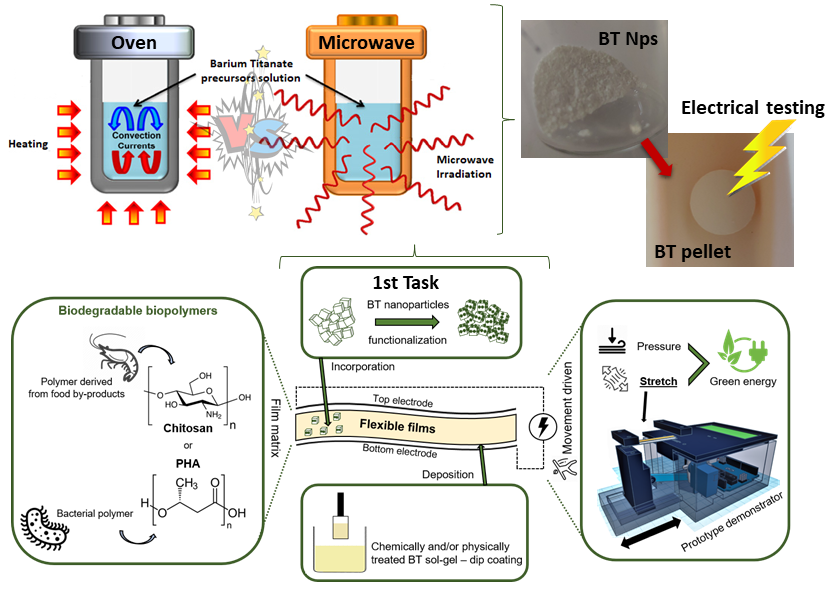 Microwave hydrothermal synthesis of barium titanate (BT) nanoparticles has been investigated for the past years as an alternative to the conventional procedure. However, there is still a need to properly distinguish these two methodologies regarding BT crystallographic phase and, most importantly, piezo and ferroelectric responses. In this work we produced BT nanoparticles by two distinct hydrothermal processes: i) hydrothermal synthesis with a conventional oven, and ii) microwave-assisted hydrothermal synthesis (MW), in order to fully compare the procedures and understand the differences between them. A temperature of 200 °C and different times were chosen for both methods and the resulted nanoparticles were structurally and morphologically characterized by X-ray diffraction (XRD), Raman spectroscopy, thermogravimetric analysis, scanning and transmission electron microscopy. The dielectric, ferroelectric and piezoelectric properties of the corresponding ceramics were also analysed. XRD and Raman analysis showed a faster BT phase formation for MW powders as well as better defined particles comparing to the conventional ones. Regarding the tetragonal phase presence, the MW procedure presented this phase at about one order of magnitude shorter synthesis time in regard to the conventional procedure. Over 95% dense ceramics sintered at 1300 °C revealed room-temperature dielectric permittivity of around 1750 for both powders, but higher d33 value of around 146 pC/N was obtained for MW BT, comparing with 79 pC/N for conventional BT ceramics.
Work developed under PhD grant from FCT, with the reference SFRH/BD/150787/2020
Twitter Poster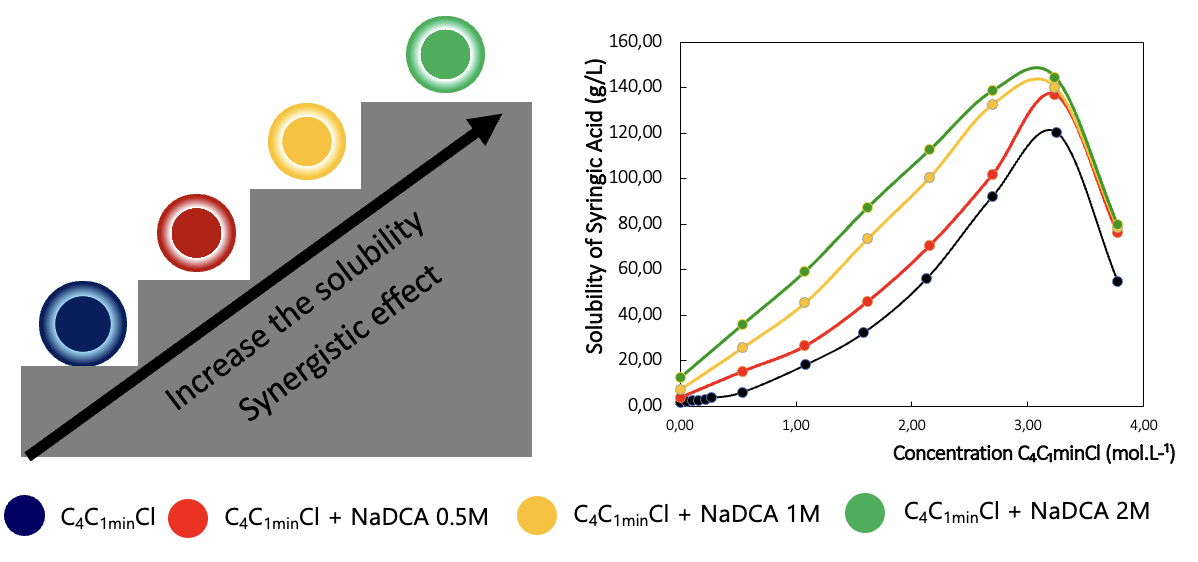 Improving water solubility is a longstanding challenge in a multitude of chemistry-related fields. Hydrotropy is a simple and efficient method to improve the solubility of hydrophobic molecules in an aqueous medium. The mechanism behind this phenomenon is controversial and not yet fully understood. Recently, a co-aggregative model has been proposed and supported by statistical descriptions of thermodynamics, but it still lacks experimental evidence. Some ionic liquids were shown to display a strong ability to enhance the solubility of phenolic compounds through hydrotropy. Herein we study the impact of the sodium dicyanamide salt on the hydrotropy phenomenon and specific intermolecular interactions using the ionic liquid 1-butyl-3-methylimidazolium chloride ([C4mim]Cl) as the hydrotrope and the phenolic compound syringic acid as the solute. Dynamic light scattering and resonance magnetic nuclear were used to investigate the mechanism of the mixture IL-salt solubility. The results obtained show that ionic liquid C4minCl are able to increase the solubility of syringic acid 120-fold,while the mixtures (ionic liquid and salt) in three concentration (0.5, 1 and 2 M) revealed solubility enhancements up to 140-fold. These results are especially relevant in the field of hydrotropy, promoting the synergistic effect in this system indicating that the structure of aqueous solutions of ionic liquids and the role it plays in the formation of ionic liquid-salt aggregates is the mechanism driving the hydrotropic dissolution.
This work was developed within the scope of the project CICECO-Aveiro Institute of Materials, UIDB/50011/2020 &UIDP/50011/2020, financed by national funds through the Foundation for Science and Technology/MCTES, financially supported by the project POCI-01-0145-FEDER-030750 (PTDC/EQU-EPQ/30750/2017) - funded by FEDER, through COMPETE2020 - Programa Operacional Competitividade e Internacionalização (POCI), and by national funds (OE), through FCT/MCTES. J.B.S. acknowledges FCT for her Ph.D. grant 2020.05802.BD.
Twitter Poster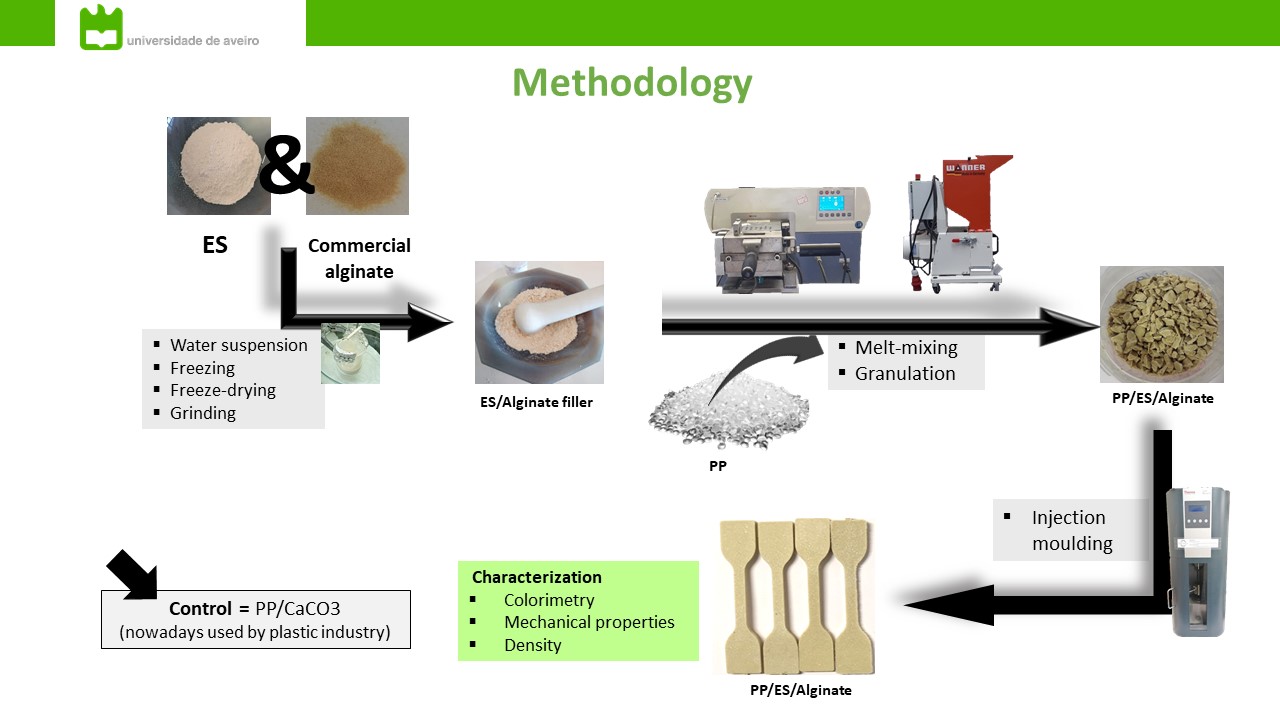 Polysaccharides can be used to create lightweight ceramics. In turn, plastic industry uses non-renewable calcium carbonate (CaCO3) to reinforce their polymers, but their high density compromises the amount that can be added into the plastic formulation. Therefore, lightweight fillers for plastics are required. In this work, the feasibility of conjugating alginate with CaCO3 to develop low density fillers compatible with polypropylene (PP)-based formulations was studied. Following a circular economy strategy, eggshells-derived CaCO3 (ES) was used. The influence of the ES/alginate fillers on colorimetric, mechanical performance, and density of PP-based materials was studied using PP/non-renewable CaCO3-based plastics as a control group.
Thanks are due to University of Aveiro and FCT/MCTES for the financial support of CICECO-Aveiro Institute of Materials (FCT ref. UIDB/50011/2020 & UIDP/50011/2020) and LAQV-REQUIMTE research Unit (FCT ref. UIDB/50006/2020) through national funds. The authors acknowledge to PLASTICOLIGHT project (POCI-01-0247- FEDER-33848), financed by FEDER through POCI, to Isolago – Indústria de Plásticos, S. A., the project leader, and to Derovo group for providing eggshells. FCT is also thanked for the Investigator FCT program (PF), Scientific Employment Stimulus program (IG, CEECIND/00430/2017), PhD grant SFRH/BD/145660/2019 (JDCS), and by national funds (OE) in the scope of the framework contract foreseen in the numbers 4, 5, and 6 of the article 23, of the Decree-Law 57/2016, of August 29, changed by Law 57/2017, of July 19.
Twitter Poster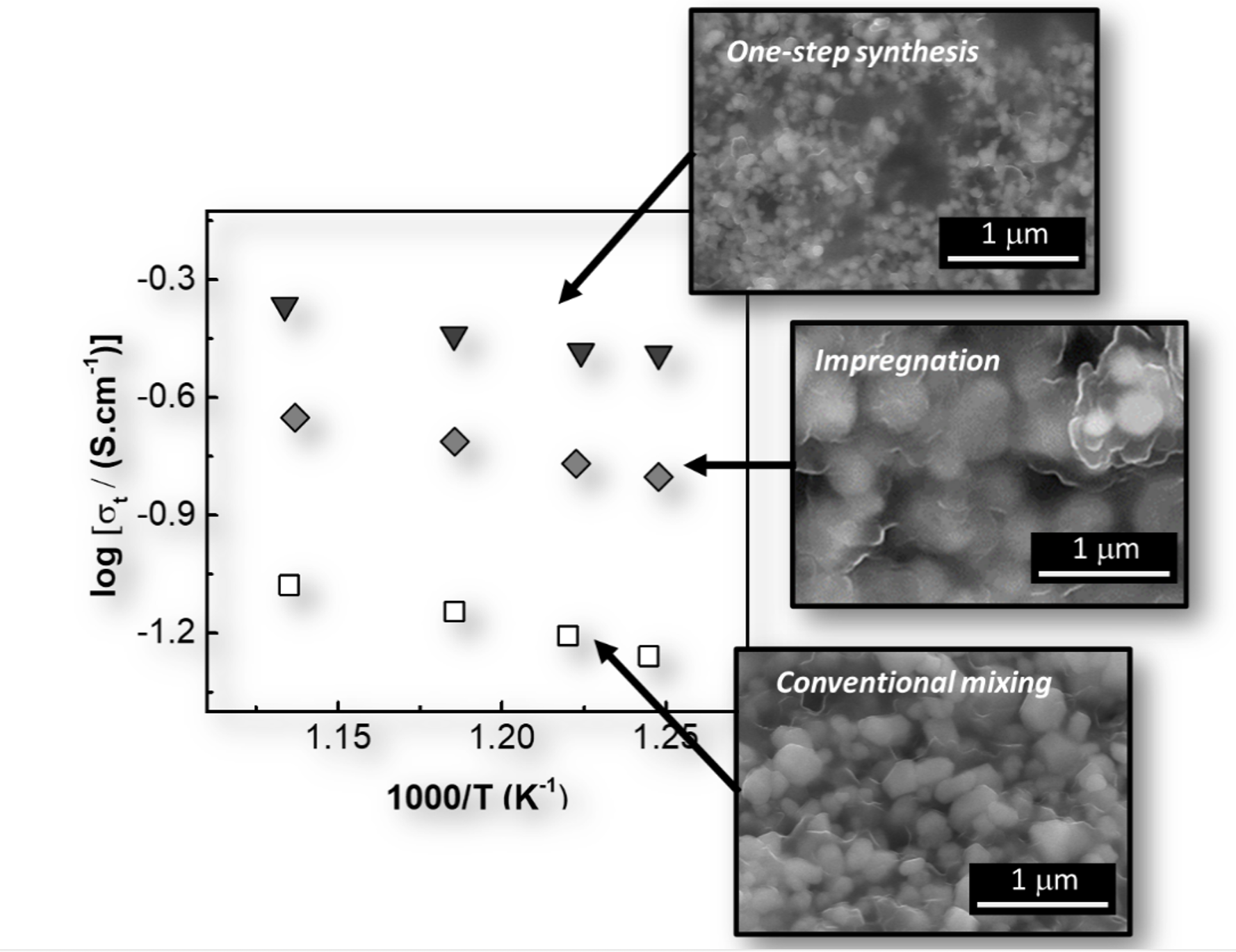 Several composites including Gd-doped ceria (GDC) and a eutectic mixture of lithium and sodium carbonates (NLC) were prepared and tested. Distinct preparation routes (chemical and ceramic, single firing or double firing with infiltration of a porous matrix) were exploited. LiAlO2 – based composites, a ceramic often used as a matrix of Molten Carbonate Fuel Cells, was also prepared as a reference. The structural, microstructural and electrical properties (by impedance spectroscopy in air) of these materials were assessed. A limited set of compositions was also used in measurements of total electrical conductivity in the 600-750 ° C range, at different oxygen partial pressures, including air (pO2 = 0.21 atm) and hydrogen diluted in nitrogen (pO2 <10-25 atm) as extreme conditions. The results obtained confirmed the possibility of modifying/optimizing the percolation of the ceramic phase via the processing route. In the range of operating temperatures of Intermediate Temperature Fuel Cells, GDC/NLC composites prepared by infiltration by molten carbonates combine a robust ceramic matrix with a high total ionic conductivity strongly influenced by the contribution of the molten salt at 600° C. In these materials, the ceramic phase is decisive in the appearance of a significant component of electronic conductivity in reducing conditions, as found for pure GDC.
Acknowledgement: Funding from projects M-ERA.NET2 (MOCO3-0009/2016) and CICECO-Aveiro Institute of Materials (UIDB/50011/2020 & UIDP/50011/2020), financed by national (Portugal) funds through the FCT/MCTES, and when applicable co-financed by FEDER under the COMPETE 2020 Program.
Twitter Poster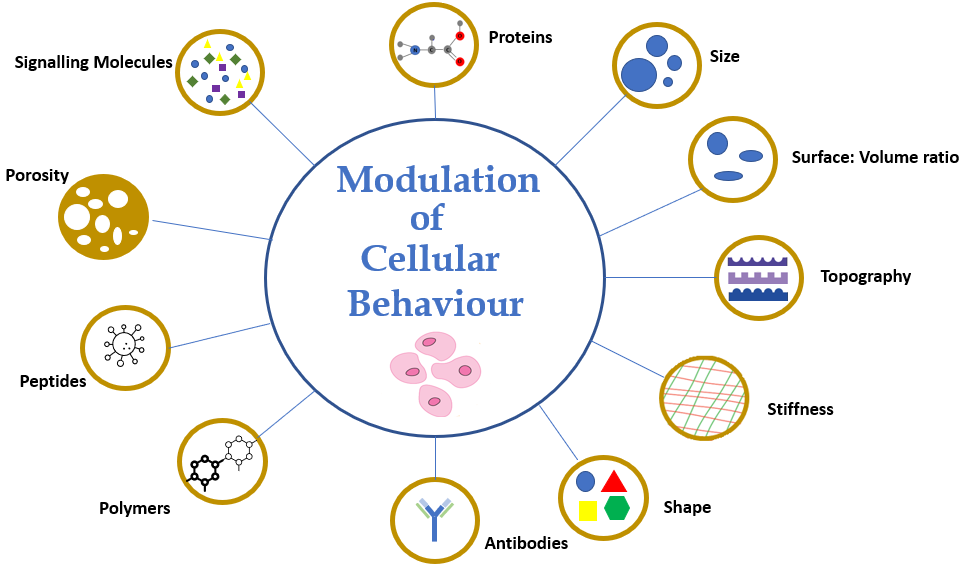 Tissue engineering (TE) is the interdisciplinary scientific field that aims for the regeneration, improvement, or replacement of biological tissues for clinical treatment of organ failure or loss. TE strategies involve the careful combination of cells, scaffolds, and biochemical and physical signals to provide a suitable environment for tissue repair. Cells’ intrinsic ability to recognize, interact and adapt to their surroundings through mechanosensing and mechanotransduction mechanisms, allows the opportunity to control cellular behaviour by customization of scaffolds characteristics and design of specific microenvironments. Several physical properties, like topography, have been shown to mediate cellular activities such as cell adhesion, proliferation and differentiation. In this work, we describe the production of disc-like shaped particles with nanogrooved topography that were subjected to further surface modifications by coating them with poly(ethyl acrylate) (PEA), fibronectin (FN) and bone morphogenic protein-2 (BMP-2), and evaluate their performance in static and dynamic culture conditions. Our results showed that nanogrooved topodiscs, for themselves, lead to the expression of osteogenic markers in hASCs after 21 days of culture, which is enhanced by the PEA/FN/BMP-2 coatings, whereas, dynamic conditions presented better cell distribuition in the cells and particles spheroids.
The authors acknowledge the financial support from the Portuguese Foundation for Science and Technology (FCT) through the projects “CIRCUS” (PTDC/BTM-MAT/31064/2017), “CICECO-Aveiro Institute of Materials” (UIDB/50011/2020 & UIDP/50011/2020). The authors also acknowledge funding from the European Research Council (ERC) through the project “ATLAS” (ERC-2014-ADG-669858).
Twitter Poster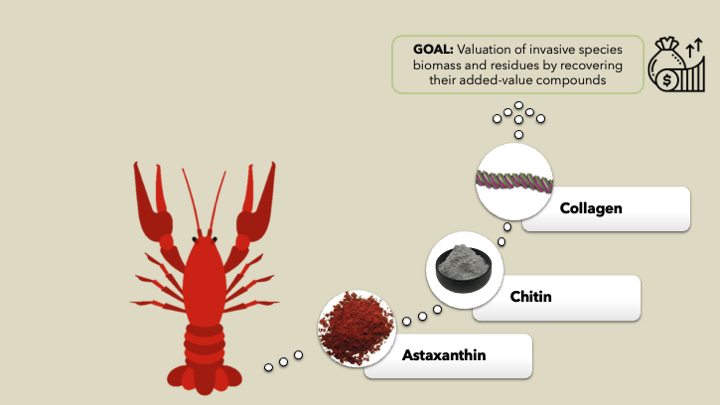 The red swamp crayfish Procambarus clarkii, native from EUA, is the most well-established invasive species in Europe, becoming the major biodiversity threat of freshwater systems 1. The success of their environmental compatibility is related to high plasticity, borrowing activity, ability to integrate into the food web at many levels and low predation rates 2. In spite of the several and diversified methods that have been proposed or used, all have high costs and noneconomical return 3. The exoskeleton of P. clarkii is composed by chitin (15-20%), proteins, including pigments (25-40%) and calcium carbonate (40-55%), which represents a considerable source of these biocompounds with biotechnological relevance. In this way, we propose the development of sustainable efficient techniques to extract astaxanthin, chitin and collagen from the invader P. clarkii in order to enrich environmental management strategies with an economic resource that can support the removal of the crayfish from invaded ecosystems.
This work was developed within the scope of the project CICECO-Aveiro Institute of Materials, UIDB/50011/2020 & UIDP/50011/2020, financed by national funds through the FCT/MEC and when appropriate co-financed by FEDER under the PT2020 Partnership Agreement. Thanks are due for the support to CESAM (UID/AMB/50017/2019), to FCT/MCTES through national funds. The authors also thank J.L. Pereira who is funded by national funds (OE) through FCT, under a framework contract (art. 23, Decree-Law 57/2016, changed by Law 57/2017); T. Veloso (SFRH/BD/147346/2019) is recipient of individual research grants by FCT financed by the FCT/MEC and co-financed by FEDER program.
Twitter Poster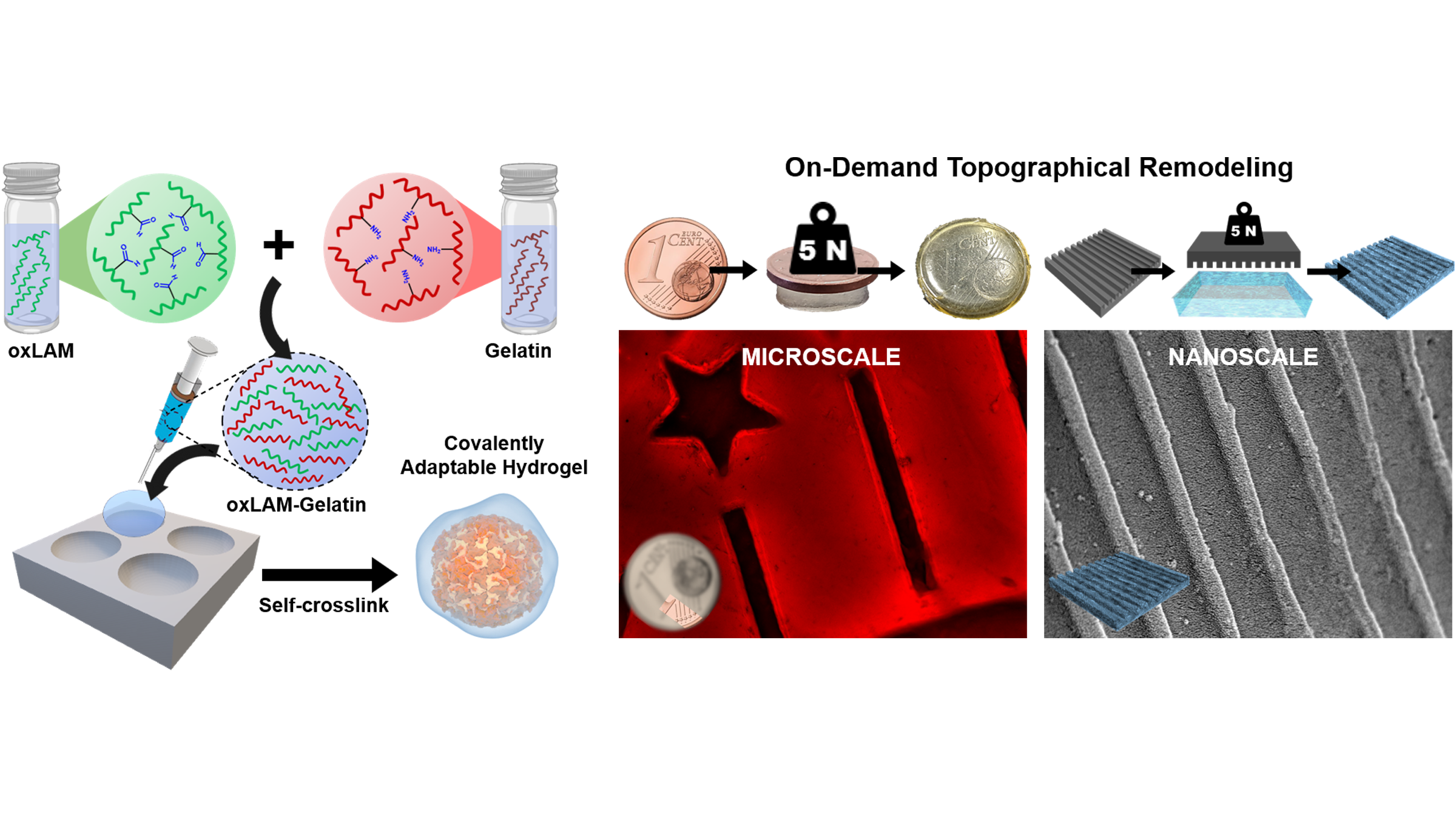 Biological tissues are not static entities but rather operate in constant adaptiveness to their surroundings. Such dynamic behavior stems from its viscoelastic extracellular matrix (ECM) that can adapt its intricate network to dynamic mechanical stimuli. This ability to convert incoming mechanical inputs into biophysical cues is vastly underexplored in hydrogels, which are typically static networks owing to their covalent crosslinks. Herein, we developed force-responsive hydrogels based on a hybrid combination of polysaccharide/polypeptide biomaterials (i.e. gelatin and aldehyde-laminarin) that can self-assemble through dynamic covalent chemistry, taking inspiration from the native Schiff base crosslinking present in ECM maturation. Such mechanochemical hydrogels can transduce mechanical forces into 3D architectural rearrangements, which was leveraged for reconfiguring their surface on-demand with any intended micro- or nanotopographies intrinsically bearing cell-adhesive motifs. Furthermore, human stem cells contacting hydrogels mechanically-sculpted with anisotropic nanopatterns sensed the underlying nanotopography and rapidly aligned parallel to the nanoridge/nanogroove intercalating array. Ultimately, such platforms are promising for bioengineering naturally anisotropic tissues or to be explored as cell-instructive building blocks in advanced tissue engineering strategies.
Pedro Lavrador acknowledges an individual PhD fellowship from the Portuguese Foundation for Science and Technology (SFRH/BD/141834/2018). This work was also supported by the Programa Operacional Competitividade e Internacionalização (POCI), in the component FEDER, and by national funds (OE) through FCT/MCTES, in the scope of the projects Margel (PTDC/BTM-MAT/31498/2017) and PANGEIA (PTDC/BTM-SAL/30503/2017). The PANGEIA project is also acknowledged for the junior researcher contract of Vítor Gaspar. This work was developed within the scope of the project CICECO-Aveiro Institute of Materials, UIDB/50011/2020 & UIDP/50011/2020, financed by national funds through the Portuguese Foundation for Science and Technology/MCTES.
Twitter Poster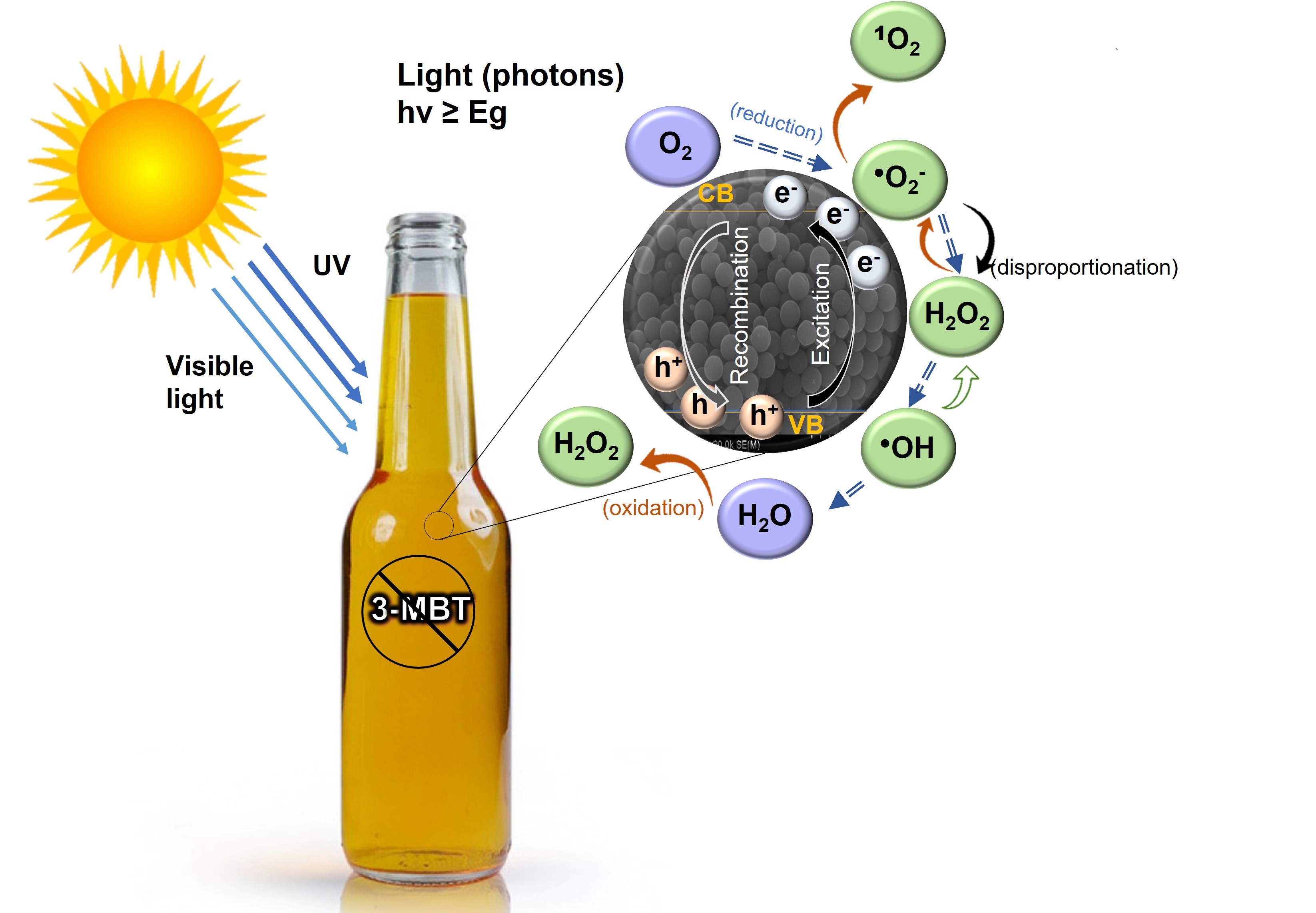 This work is part of the CLEVER project (POCI-01-0247-FEDER-039699), a partnership between BA glass, Super Bock industries and University of Aveiro. The aim of this work is to create a transparent colourless coating that will be applied on top of clear glass beer bottles. Most importantly this coating must be able to absorb radiation in the ultraviolet range (UV-A and UV-B) as well as some visible radiation (below 500 nm). If not, radiation is absorbed and photochemical reactions start, resulting in the formation of undesirable compounds which decrease the beers' quality by altering its organoleptic profile. One of these compounds is 3-methyl-2-butene-1-thiol which can be detected in very low amounts (in the parts per trillion range). The absorbance curves of traditional glasses (green, amber, and clear) are shown, along with the absorbance gain in the clear colourless glass with the application of the best transparent absorptive coating obtained through CLEVER so far, on one of its sides.
M.R.F.S. would like to acknowledge the CLEVER project (POCI-01-0247-FEDER-039699), and thank FCT for the grant (SFRH/BD/145661/2019).
Twitter Poster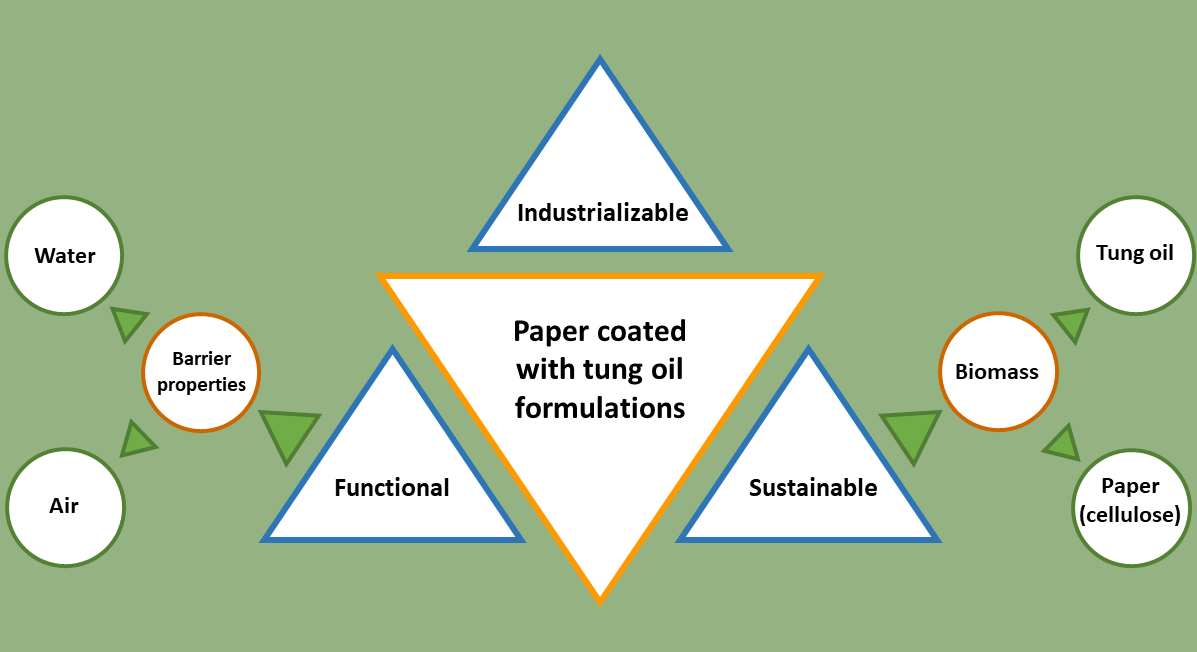 Packaging materials are widely used in our everyday life. The need for more sustainable packagings is increasing the use of paper packagings due to its biodegradability, recyclability, and availability. However, for paper to achieve its full potential as a packaging material, coatings derived from non-renewable sources are normally used, leading to the loss of paper’s biodegradable and sustainable character. Therefore, novel and more environmentally friendly coatings, capable of achieving the same (or improved) properties as those of non-renewable counterparts are of utmost importanceWith this in mind, new coating formulations were developed, based on tung oil, obtained from biomass. The impact of the type of photoinitiator (PI) was tested using formulations with two different PIs (Darocur 1173 and Irgacure 651), as well as two concentrations (5 and 10 wt%) and two paper substrates (base and commercial papers). Also, the effect on the coating pick-up was investigated by applying multiple coating layers (1, 2, and 3 layers). The samples were then irradiated with UV-light for 15 seconds with a radiance of 150 mW/cm2, and were fully characterized afterwards. The results show a considerable increase in paper’s gas and water barrier properties with the application of the coating and with the coating pick-up, without a significant difference between formulations with different PIs, nor different PI concentrations. The technology developed is of easy industrial implementation and can be a promising alternative to the fabrication of new and more sustainable packaging paper materials.
This work was carried out under the Project inpactus – innovative products and technologies from eucalyptus, Project N.º 21874 funded by Portugal 2020 through European Regional Development Fund (ERDF) in the frame of COMPETE 2020 nº246/AXIS II/2017. This work was also developed within the scope of the project CICECO-Aveiro Institute of Materials, UIDB/50011/2020 & UIDP/50011/2020, financed by national funds through the Foundation for Science and Technology/MCTES.
Twitter Poster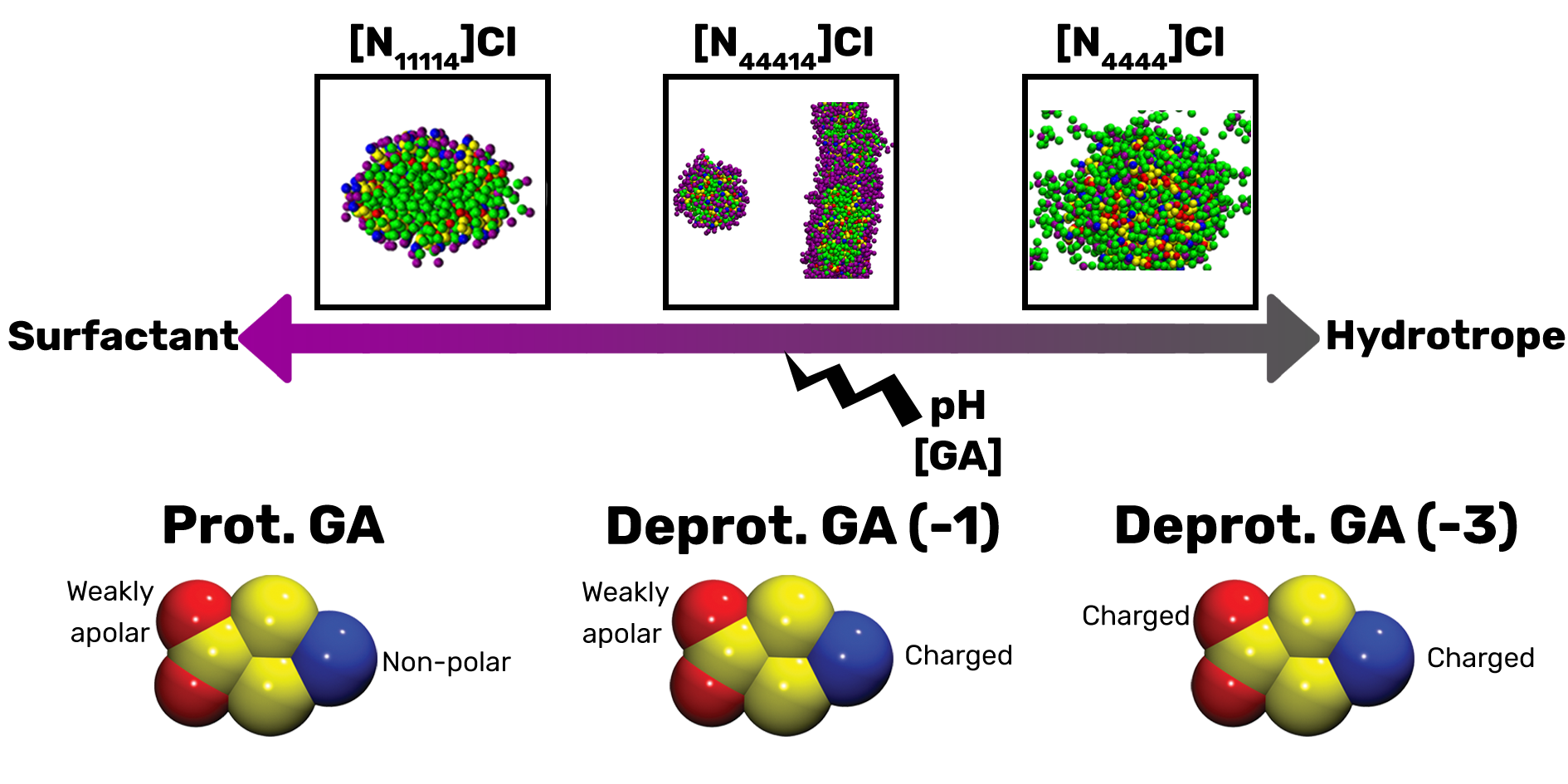 The availability and application of most biomolecules depends on their solubility in water. Moreover, their recovery often requires solubilizing agents such as surfactants and hydrotropes. Despite their increasing use, the underlying mechanisms of action are still not fully understood. Coarse-grained molecular dynamics (CG-MD) can fulfill this gap in the knowledge by providing a detailed microscopic insight of the interactions between target solutes and solubility enhancers.In this work, gallic acid (GA) was used as the target solute and three quaternary ammonium ionic liquids and salts (QAILS) were selected as solubilizers, comprising a solubilization mechanism spectrum: trimethyl-tetradecylammonium chloride ([N1,1,1,14]Cl) as a surfactant, tetrabutylammonium chloride ([N4,4,4,4]Cl) as an hydrotrope, and tributyl-tetradecylammonium chloride ([N4,4,4,14]Cl) as an intermediate molecule sharing properties from both. CG-MD simulations in GROMACS were carried out to assess the mesophase behaviour and GA solubilization in aqueous QAILS solutions. Novel CG models for GA were developed, considering the main microspecies across the full pH range.Our results indicated that dispersive interactions between the QAILS and GA are generally the solubilization drivers. Nonetheless, the charge density of GA, dependent on the pH, affected its arrangement within the QAILS structures. As the GA charge density increased, the electrostatic interactions influence also increased. The hydrotropic mechanism matched recent works in indicating the formation of hydrotrope-solute aggregates through dispersive forces. This work highlighted the possibility to use CG-MD as a transferable methodology able to complement experimental data in the understanding of partition and solubilization phenomena and streamline the screening of molecular candidates in these processes.
This work was developed within the scope of the project CICECO-Aveiro Institute of Materials, UIDB/50011/2020 & UIDP/50011/2020, financed by national funds through the FCT/MEC and when appropriate co-financed by FEDER under the PT2020 Partnership Agreement. The authors acknowledge the research contract under the project CENTRO-01-0145-FEDER-000005: SusPhotoSolutions: Soluções Fotovoltaicas Sustentáveis. N.S. acknowledges financial support from the BATRE-ARES project (ERA-MIN/0001/2015) funded by ADEME and FCT. G. Pérez-Sánchez and N.S. acknowledge the national funds (OE), through FCT – Fundação para a Ciência e a Tecnologia, I.P., in the scope of the framework contract foreseen in the numbers 4, 5 and 6 of the article 23, of the Decree-Law 57/2016, of August 29, changed by Law 57/2017, of July 19.
Twitter Poster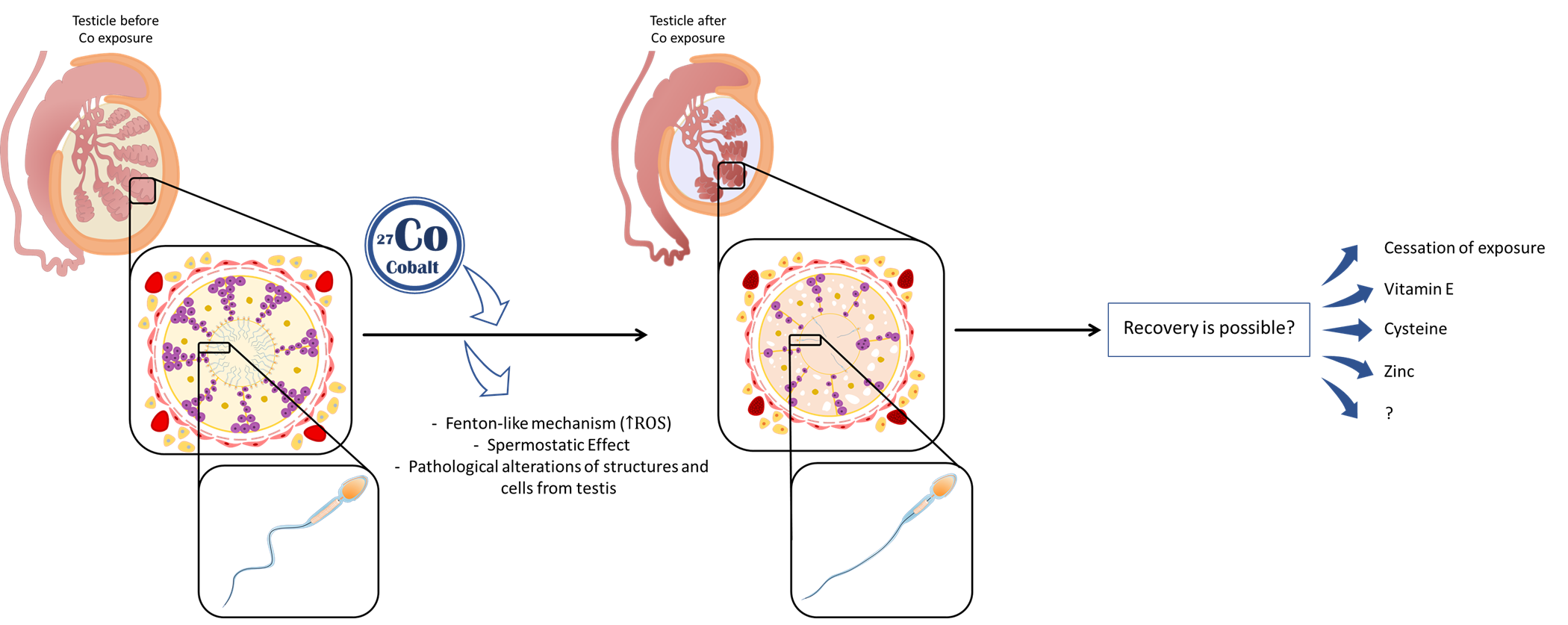 Cobalt is an essential trace element that is important at the cellular level, as it integrates the vitamin B12 complex. Despite going unnoticed, it has been increasingly used, from prostheses to rechargeable batteries, including as a metallic component of hardmetal tools (WC-Co).Although cobalt has an important biological role, excessive exposure has been shown to induce various adverse health effects. Among these, and although there is still much to uncover, are its effects on male fertility. Hence, this work aims to collect bibliographic information to better understand the influence of Co on male reproduction and how to reverse such effects. Data bases such as PubMed and Google were searched using key combinations:
Sertoli Cell and Gamete Biology research groupProject CICECO-Aveiro Institute of Materials, UIDB/50011/2020 and UIDP/50011/2020, national funds by FCT/MCTES
Twitter Poster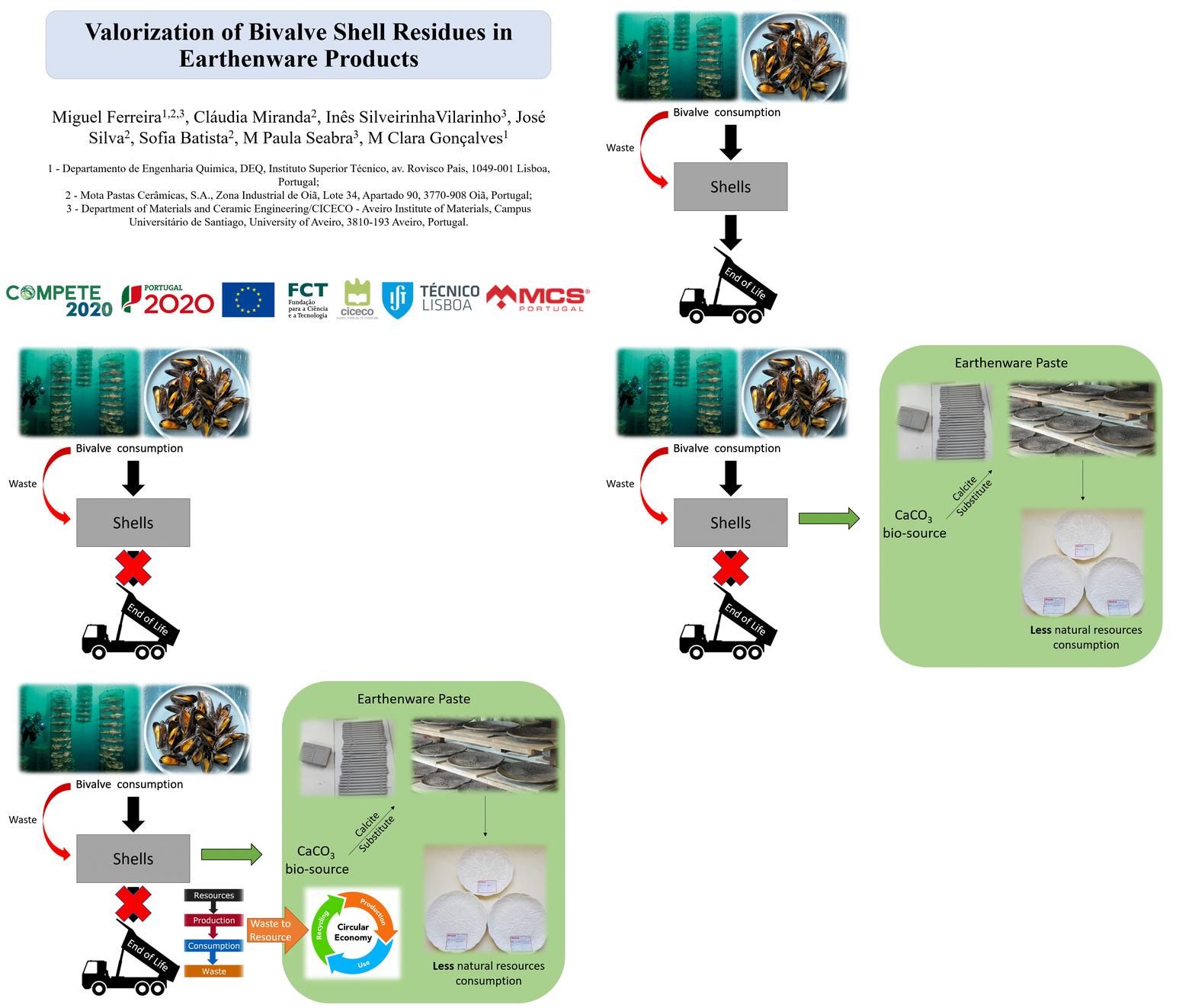 The valorization of industrial by-products and waste has been gaining importance in recent years, also with the investigation of alternatives that can reduce natural raw materials consumption. In this context, the main objective of this work is the valorization of bivalve shells residues, as calcite substitute, in earthenware pastes. The bivalve residues studied were supplied by a cultivation and processing company and after these processes, are considered waste. These residues were characterized and compared with the calcite commonly used in these formulations. Through the mineralogical and chemical characterizations and thermal analysis, it was concluded that these residues could be reused as a source of calcium carbonate, as biocalcite, not requiring any pre-treatment. Formulations were later developed with the gradual replacement of calcite (25, 50, 75 and 100%). Additionally, four maximum sintering temperatures (1025ºC, 1050ºC, 1075ºC and 1100ºC) were performed to assess the substitution influence on the product final characteristics. Furthermore, formulations exclusively with biocalcite with different particle sizes were also developed. The shrinkage, water absorption, flexural strength, colour and thermal expansion coefficient of the fired products were evaluated and no significant differences were observed. Therefore, this work proved that it is possible to use bivalve shell residues as a substitute for calcite in earthenware pastes reducing the virgin raw materials consumption and developing more sustainable products. Moreover, this application will avoid the landfill deposition of the bivalve shell residues reducing the environmental impact of the food processing industry contributing also to the circular economy and industrial symbiosis.
This work was developed within the scope of the project CICECO-Aveiro Institute of Materials, UIDB/50011/2020 & UIDP/50011/2020, financed by national funds through the Portuguese Foundation for Science and Technology/MCTES.
Twitter Poster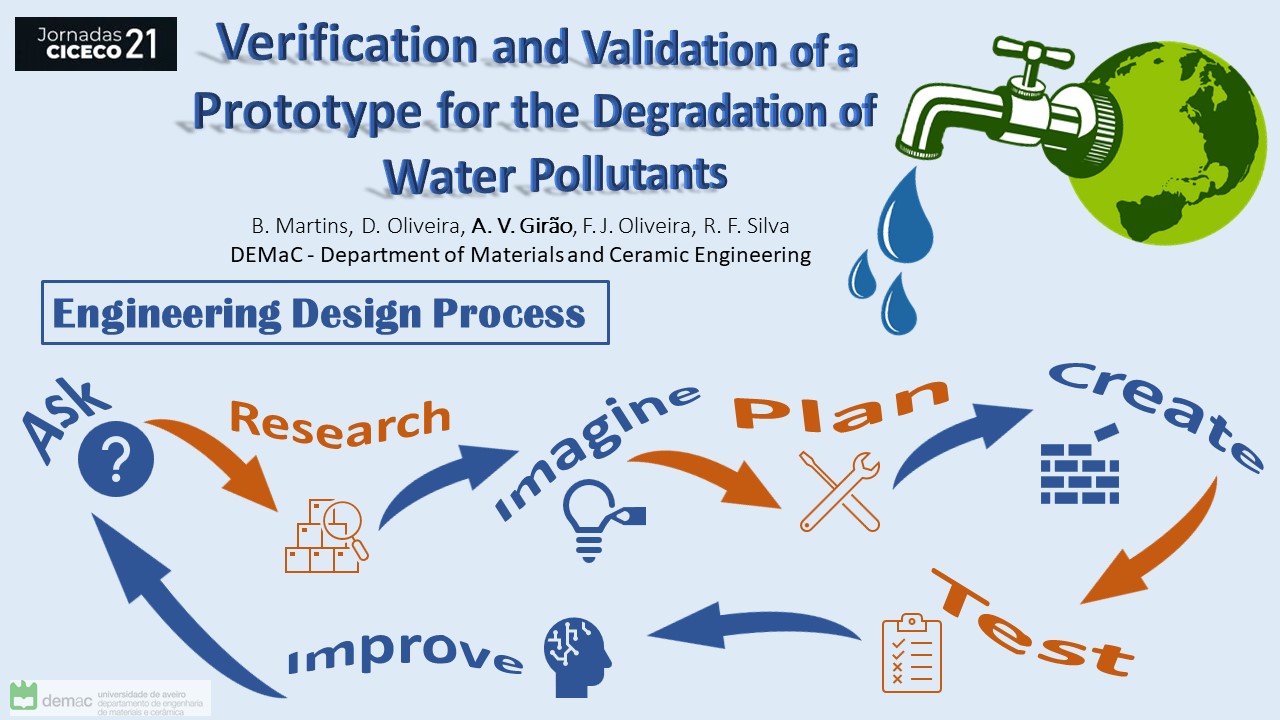 Computer simulation studies are increasingly becoming vital in Engineering Design Process. This work gathered structural and fluid dynamics studies carried out to verify and validate an actual prototype system comprising boron doped diamond electrodes. The latter are used in the electroxidation of several pollutants such as pharmaceutical compounds and/or insecticide, present in tap water (spiked). The prototype system was successfully verified and validated for water remediation and currently under the process of patent registration.
This work was developed within the scope of project CICECO-Aveiro Institute of Materials, UIDB/50011/2020 & UIDP/50011/2020 financed by national funds through the Portuguese Foundation for Science and Technology/MCTES (FCT I.P.). The research contract of A.V. Girão is funded by national funds (OE), through FCT – Fundação para a Ciência e a Tecnologia, I.P., in the scope of the framework contract foreseen in the numbers 4, 5 and 6 of article 23, of the Decree-Law 57/2016, of August 29, changed by Law 57/2017, of July 19.
Twitter Poster There is the need for better bone implants with materials that improve biological response, biocompatibility, and the healing process. PLLA has been gaining attention as a material for bone implants due to its biocompatibility, biodegradability and piezoelectric properties that have been shown to improve bone regeneration. This piezoelectric properties have origin in the crystalline zones of PLLA, for that reason the degree of crystallinity, degree of orientation and crystal morphology can influence the magnitude of the piezoelectric properties.PLLA by itself does not have the desired mechanical properties so it can be used as a coating for a metallic implant. Since the interface between metal and polymer provides weak adhesion, the metal must be previously treated by mechanical or chemical methods. In this work silanization was the method used to functionalize the metal using either a thermal treatment, UV irradiation or UV-ozone irradiation as a pre-treatment. In this work the effect of the different pre-treatment in the efficiency of the adhesion will be discussed as well as its effects on the morphology of the crystalline PLLA.
This work was developed within the scope of the project CICECO-Aveiro Institute of Materials, POCI-01-0145- FEDER-007679 (FCT Ref. UID /CTM /50011/2013), financed by national funds through the FCT/MEC and when appropriate co-financed by FEDER under the PT2020 Partnership Agreement.
Twitter Poster Niobium oxides (NbO, NbO2, NbxOy) have gained momentum in recent years as active materials in applications ranging from batteries, solar devices, chemical sensors and electrochromic windows. The possibility of tailoring their physical properties, resulting in outstanding electrical, mechanical, chemical, and magnetic properties make these materials unique.
In present work, niobium oxide thin films were deposited onto silicon, glass plates and ITO-coated glass substrates by DC magnetron sputtering. Two sets of samples were prepared. The first with different O2/Ar flow rate ratios and the second, fixing the oxygen content with different time of deposition.
As the O2/Ar flow ratio varies from 0 up to 0.4, at threshold was found, ranging from crystalline to amorphous nature, and from a nontransparent appearance with metallic-like electrical conductivity to transparent dielectric behaviour.
From the second set, the transparent NbxOy films present a compact/dense and featureless morphology with thickness from 79 up to 220 nm, depending on the time of deposition.
The maxima optical transmission, in visible range, is around 83%, and the direct band gap of 4.07 eV. Electrical measurements were performed in sheet and bulk configuration with controlled temperature (30 ºC) revealing surface conductivity in order of 10-3 S/□, that decrease with the deposition time, nonetheless bulk measurements reveal the dielectric nature of the films.
Niobium oxides (NbO, NbO2, NbxOy) have gained momentum in recent years as active materials in applications ranging from batteries, solar devices, chemical sensors and electrochromic windows. The possibility of tailoring their physical properties, resulting in outstanding electrical, mechanical, chemical, and magnetic properties make these materials unique.
In present work, niobium oxide thin films were deposited onto silicon, glass plates and ITO-coated glass substrates by DC magnetron sputtering. Two sets of samples were prepared. The first with different O2/Ar flow rate ratios and the second, fixing the oxygen content with different time of deposition.
As the O2/Ar flow ratio varies from 0 up to 0.4, at threshold was found, ranging from crystalline to amorphous nature, and from a nontransparent appearance with metallic-like electrical conductivity to transparent dielectric behaviour.
From the second set, the transparent NbxOy films present a compact/dense and featureless morphology with thickness from 79 up to 220 nm, depending on the time of deposition.
The maxima optical transmission, in visible range, is around 83%, and the direct band gap of 4.07 eV. Electrical measurements were performed in sheet and bulk configuration with controlled temperature (30 ºC) revealing surface conductivity in order of 10-3 S/□, that decrease with the deposition time, nonetheless bulk measurements reveal the dielectric nature of the films.
The authors acknowledge for financial support from FEDER funds through the COMPETE 2020 Programme and National Funds through FCT - Portuguese Foundation for Science and Technology under the projects UID/CTM/50025/2019.
Twitter Poster